

The Balkan borders of 1878 present a fascinating and daunting challenge for history buffs and gamers alike: can you redraw the map without triggering bloody wars or ethnic cleansing? This question, posed by a Twitter user, has sparked a lively discussion among fans of strategy games like Europa Universalis and Crusader Kings. The appeal lies in the thrill of bending laws and toppling empires, much like a FIFA player turning Real Zaragoza into Champions League winners.
But behind this seemingly simple map game lies a complex tapestry of ten empires and two centuries of conflict. Attempting to draw political borders that align with the linguistic and ethnic populations of the time is a monumental task. New peoples, religions, languages, and populations that don't fit neatly into any category constantly emerge.
Find Original, High-end Home Decor that spark conversation at Grand Goldman Shop.
The Historical Context of the 1878 Balkans
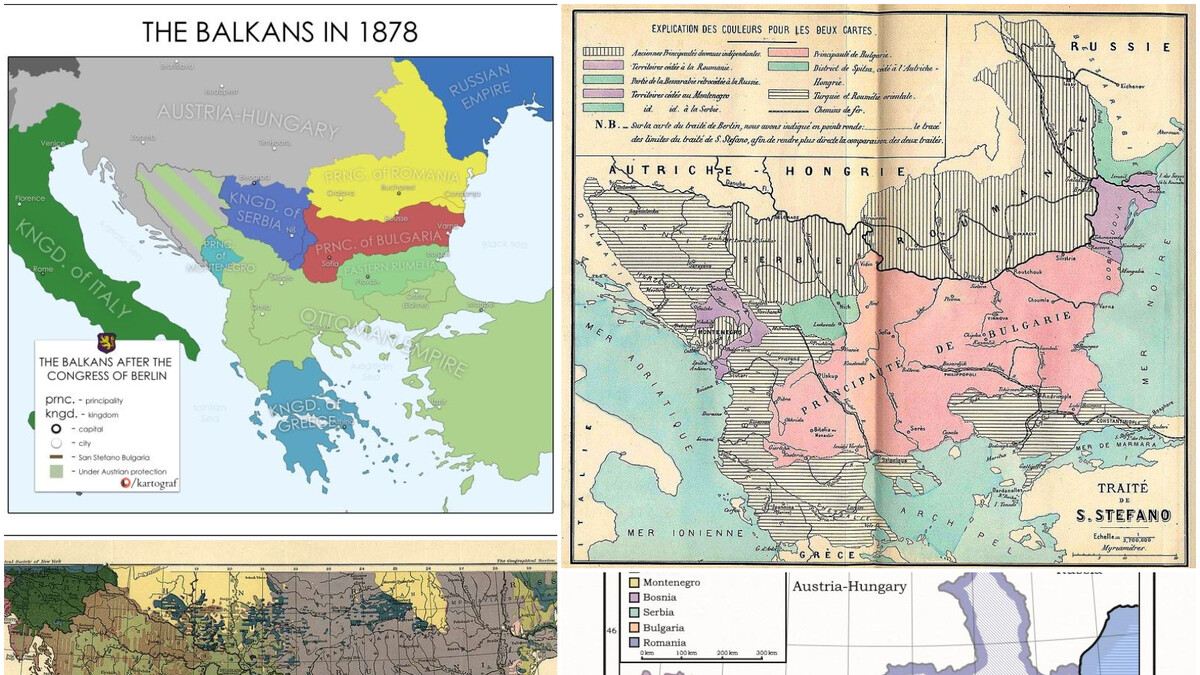
In 1878, the Balkans were largely a retreating territory of the Ottoman Empire. The region was a mosaic of ethnicities, each with its own aspirations and grievances. The Congress of Berlin in 1878 redrew the map, but it was a compromise that left many dissatisfied and set the stage for future conflicts.
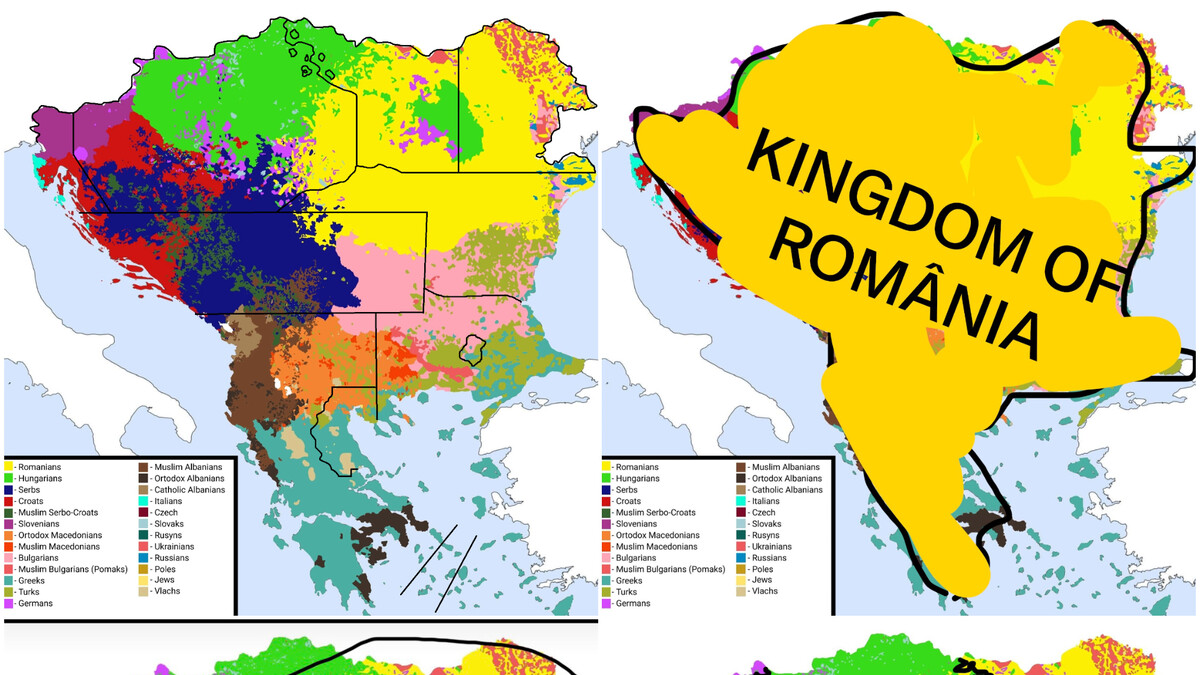
Understanding this context is crucial for anyone attempting to redraw the borders. The Ottoman Empire was losing its grip, and new nation-states were emerging, each claiming territory based on ethnic and historical rights. The challenge is to balance these claims without igniting the powder keg.
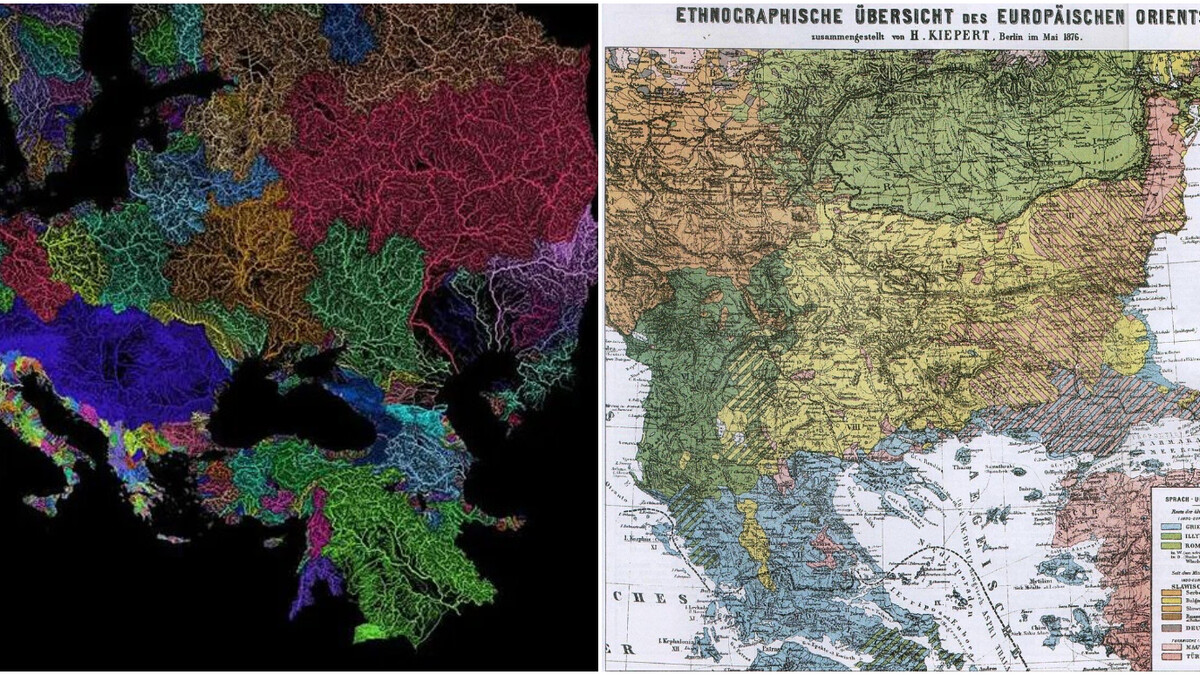
Key Players and Their Claims
Serbia, Montenegro, Romania, and Bulgaria had already achieved or were seeking independence. Austria-Hungary occupied Bosnia and Herzegovina, while Russia had influence over Bulgaria. Greece, too, had territorial ambitions. Each of these powers had ethnic kin within the Ottoman Empire, complicating any border-drawing exercise.
The map was further complicated by the presence of large Muslim populations, Albanians, and Vlachs, who did not fit neatly into the emerging nation-states. Any attempt to create homogeneous states would require massive population transfers or result in significant minorities.
Why Drawing Borders Is So Difficult
The core difficulty is that ethnic groups were intermingled, not neatly separated. Cities like Sarajevo, Skopje, and Thessaloniki were diverse, with multiple communities living side by side. Drawing borders along ethnic lines would mean dividing these cities or leaving large minorities on the wrong side.
Moreover, the concept of ethnicity in the 19th century was fluid. Many people identified by religion rather than language, and national identities were still forming. A border that seemed logical on paper could be deeply problematic on the ground.
The Hydrological Approach
Some suggest using rivers and mountains as natural borders. While this might seem logical, people don't behave like water. Communities often live on both sides of a river, and mountain ranges are not always clear dividing lines. The idea of natural borders is appealing but rarely works in practice.
Bruce Lee's advice to 'be water' doesn't apply to human geography. People have attachments to land, history, and identity that transcend topography. Any border drawn solely on physical features is likely to ignore the human element.
Lessons from History and Gaming
History shows that imposed borders often lead to conflict. The borders drawn after 1878, and later after the Balkan Wars and World War I, sowed the seeds of future conflicts. The breakup of Yugoslavia in the 1990s was a violent reminder of how unresolved territorial claims can resurface.
In gaming, players of Europa Universalis or Crusader Kings know the frustration of dealing with rebellious provinces and cultural tensions. The games simulate the difficulty of managing diverse empires, but they also allow for unrealistic solutions like mass conversions or expulsions. In reality, such actions have devastating human costs. The longer history behind the story is traced in Balkan Borders 1878: A Gaming Challenge of Ethnic Conflict. More on the surrounding debate is collected in Spain's 3D Castle Map: Explore 132 Fortresses in Stunning Detail.
What Can We Learn?
The exercise of redrawing the Balkans in 1878 is more than a game. It highlights the complexity of national identity, the dangers of ethnic nationalism, and the importance of compromise. It also underscores the value of international institutions and frameworks for managing diversity. The background to this story is set out in Tuvalu Boxer Wins Historic Commonwealth Games Medal Without a. A related thread runs through Trending: latest articles. Earlier coverage in New Lego PlayStation Set Comes With Free Astro Bot Gift shows how the argument developed.
While we can't change history, we can learn from it. The challenge of drawing borders without conflict is a reminder that peace requires more than just lines on a map; it requires respect for human rights, minority protections, and dialogue. A closer look at the same subject appears in RTVE Pays €7,260 to Cull Wild Rabbits at Las Rozas-Majadahonda. Anyone following the wider picture can start with Kindle Colorsoft Deal: Color E-Reader for Comics at $219. The same theme surfaces in Louisiana Justice of the Peace Courts: Key Investigation Findings, which takes a different angle.
- The Balkans in 1878 were a mosaic of ethnicities, making homogeneous borders impossible.
- Rivers and mountains are not reliable borders because people don't conform to geography.
- Imposed borders often lead to future conflicts, as seen in the Yugoslav Wars.
- Gaming can simulate these challenges but often simplifies or distorts them.
- Real-world solutions require compromise, minority rights, and international cooperation.
Comparing Historical and Hypothetical Borders
| Region | 1878 Historical Border | Hypothetical Ethnic Border | Challenges |
|---|---|---|---|
| Bosnia | Austro-Hungarian occupation | Mixed Serb/Croat/Muslim | No clear majority; would require partition or autonomy |
| Macedonia | Ottoman until 1912 | Bulgarian/Greek/Serb claims | Competing claims; ethnic diversity |
| Thrace | Ottoman | Greek/Turkish split | Large Muslim population; strategic importance |
| Albania | Ottoman | Albanian-majority | Emerging national identity; resistance to partition |
The table illustrates the gap between historical realities and ethnic ideals. Each hypothetical border faces significant obstacles, from mixed populations to great power interests. Context on how this played out before sits in Lidl's Silvercrest Cordless Vacuum: 2-in-1 with LED Light and Easy Emptying. A companion piece, MediaMarkt Deal: TCL 65C6K Pro QD-MiniLED TV at 599 Euros, approaches the same subject from another angle.
FAQ
What was the Congress of Berlin in 1878?
The Congress of Berlin was a meeting of European powers that revised the Treaty of San Stefano, which had ended the Russo-Turkish War. It redrew the map of the Balkans, recognizing the independence of Serbia, Montenegro, and Romania, and creating an autonomous Bulgaria. It also allowed Austria-Hungary to occupy Bosnia and Herzegovina.
Why is it so hard to draw borders in the Balkans?
The Balkans are incredibly diverse, with many ethnic groups intermingled across the region. Drawing borders that satisfy all groups is nearly impossible without causing conflict or displacing populations. Historical claims and great power interests further complicate the issue.
Can video games help us understand these challenges?
Games like Europa Universalis and Crusader Kings simulate the complexities of managing diverse empires, including cultural tensions and rebellions. They can provide insights into the difficulties of border drawing, but they also simplify realities and allow for unrealistic solutions.
What lessons can we learn from the 1878 Balkans?
The 1878 Balkans teach us that imposed borders without consideration for ethnic realities can lead to future conflicts. They highlight the need for compromise, minority rights, and international cooperation to maintain peace in diverse regions.
Browse the Shop
 Acacia frida deluxe solid wood bed frame |
Bedroom bench |
Bed chest drawers |
Lingerie dresser |
Frame base |
Mirror with jewelry storage |
30 Bathroom Vanity |
Memory foam queen mattress |
Mattresses for back pain |
Nightstand set of 2 |
Grand Goldman Shop |
Civil Lawyer
Deutschland Trikot WM 2026










