

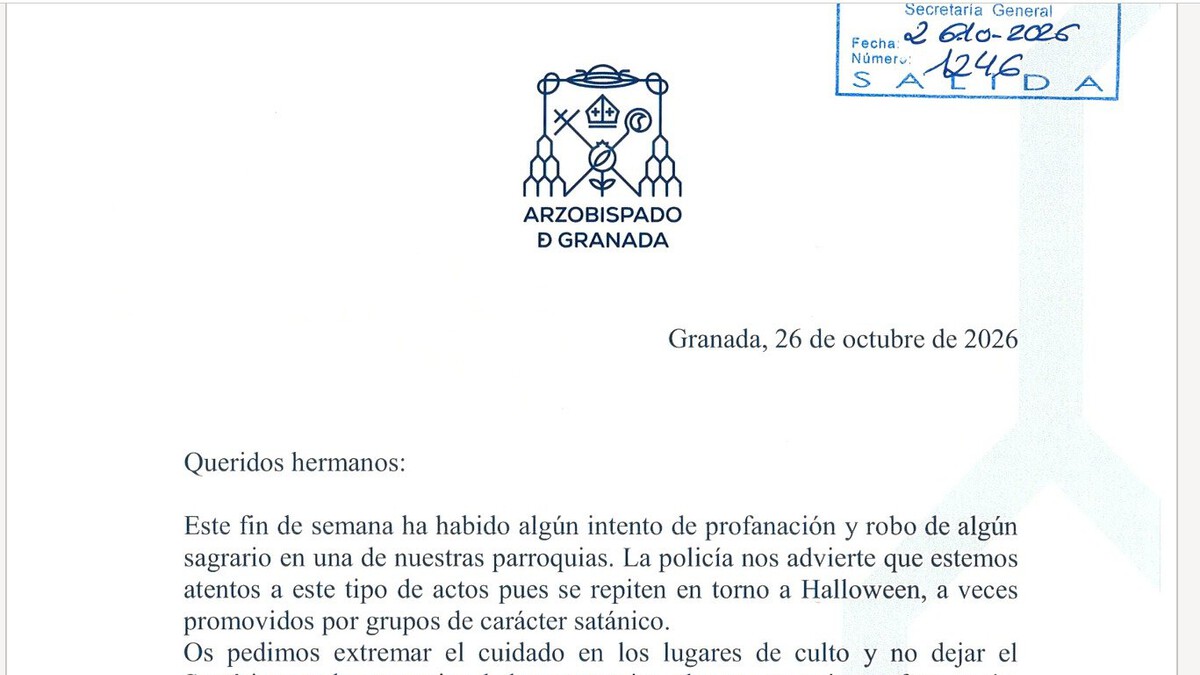
The Granada Archdiocese has issued a warning that satanic sects may exploit Halloween to profane parishes, urging priests to take extra precautions. In a letter dated October 26, the archdiocese told clergy to be vigilant against possible desecrations, citing police warnings that such acts tend to repeat around Halloween and are sometimes promoted by satanic groups.
The warning comes after reports of vandalism and thefts in churches across Spain, though the exact perpetrators and motives remain unclear. While the archdiocese did not specify which parishes had been profaned, it advised not leaving the Blessed Sacrament in tabernacles of churches that are not frequently attended.
Find Original Home Decor sparking conversation at Grand Goldman Shop.

What Prompted the Warning?
The Granada Archdiocese's letter to priests mentioned "some attempt at profanation of the Blessed Sacrament" and stated that police had warned them to watch for such acts. The archdiocese asked priests to extreme care in temples ahead of Halloween.
This is not the first time Halloween has raised concerns among Spanish religious authorities. In recent years, several incidents of vandalism and theft in churches have been reported around the holiday, though definitive links to satanic groups are rare.
In the town of Pulianas, near Granada, the local council acknowledged acts of vandalism in its cemetery, with several tombstones and flower pots smashed. The council plans to install a video surveillance system in response. However, it is unclear whether these acts are connected to satanic rituals or are simply random vandalism.
What Do We Know About the Galician Cases?
The most documented cases come from Galicia, where between August and October, four churches in Xinzo de Limia, Noia, Guitiriz, and Nigrán suffered thefts of liturgical objects and consecrated hosts. The Galician press has focused primarily on the theft of silver items.
In Noia, security cameras recorded five suspects who took two silver ciboria. Investigators have considered two possible explanations: selling the silver or a witchcraft ritual. However, neither has been confirmed, and there is no verified information attributing the crimes to satanic sects.
These cases highlight the challenge of distinguishing between ordinary theft and ritualistic profanation. While the theft of consecrated hosts is particularly alarming for Catholics, it could also be motivated by the value of the vessels that contain them.
Why Does This Matter?
For Catholics, the profanation of the Blessed Sacrament is a grave sacrilege. The archdiocese's warning reflects a genuine concern for the protection of sacred spaces and the reverence due to the Eucharist.
At the same time, the warning raises questions about the extent of the threat. Without confirmed evidence of satanic involvement, there is a risk of stigmatizing certain groups or fueling moral panic. The police warning, as cited by the archdiocese, suggests that authorities take the possibility seriously, but the lack of concrete data leaves room for speculation.
The timing around Halloween is significant. The holiday, originally a Christian observance of All Hallows' Eve, has in popular culture become associated with the occult and supernatural. This cultural shift may create an environment where certain groups feel emboldened to carry out acts of desecration, or it may simply be a period when vandalism increases.
What Should Churches and Communities Do?
The archdiocese's advice to priests is practical: secure the Blessed Sacrament in churches that are not regularly attended. This measure aims to prevent both theft and profanation. Churches are also encouraged to review their security arrangements and report suspicious activities to the police.
For communities, the key is vigilance without alarmism. Reporting vandalism and theft to authorities helps build a clearer picture of what is happening. At the same time, it is important not to jump to conclusions about satanic sects without evidence.
The Pulianas case shows that local councils can respond with measures like video surveillance. Such steps may deter vandals and help identify perpetrators. However, they also raise privacy concerns that need to be balanced. Context on how this played out before sits in Granada Archdiocese Warns of Satanic Sects Profaning Churches at Halloween.
What to Watch Next
As Halloween approaches, authorities and church officials will be monitoring incidents closely. The Granada Archdiocese's warning may be followed by similar advisories in other dioceses. Police investigations into the Galician thefts and the Pulianas vandalism could yield more information about the motives and perpetrators. The background to this story is set out in Trending: latest articles. A related thread runs through A Spanish Village Split by a Street: 211 Residents, Two Provinces.
Whether satanic sects are truly behind these acts remains an open question. The archdiocese's letter is a precautionary measure, not a confirmation of a widespread threat. For now, the focus is on protecting churches and ensuring that any incidents are reported and investigated thoroughly. Earlier coverage in Playa del Ruso: The Hidden Granada Beach Named After a Mysterious Russian shows how the argument developed. A closer look at the same subject appears in Jaca Wins 24-Hour Doctor-Staffed Mobile ICU After 3-Year Fight.
In the coming weeks, it will be important to see whether the warning leads to increased security measures in churches and whether any arrests are made. The response of local communities and the police will shape how this story develops. Anyone following the wider picture can start with New York Archdiocese Finalizes $800M Clergy Abuse Settlement. The same theme surfaces in Spain's Barbary Sheep: CSIC Study Questions Invasive Label, which takes a different angle.
FAQ
What did the Granada Archdiocese say about Halloween?
The Granada Archdiocese sent a letter to priests on October 26 warning that satanic sects may attempt to profane churches around Halloween. It advised not leaving the Blessed Sacrament in less-frequented churches and asked priests to be vigilant.
Are satanic sects actually behind the church profanations?
There is no confirmed evidence linking the incidents to satanic sects. In the Galician cases, investigators considered both theft for silver and ritual motives, but neither has been confirmed. The Granada warning is precautionary based on police advisories.
What happened in the Galician churches?
Between August and October, four churches in Xinzo de Limia, Noia, Guitiriz, and Nigrán were robbed of liturgical objects and consecrated hosts. In Noia, cameras recorded five suspects stealing two silver ciboria.
What should churches do to prevent profanation?
The archdiocese advises securing the Blessed Sacrament in tabernacles of churches that are not regularly attended. Churches should also review security measures and report suspicious activities to the police.
Browse the Shop
 Acacia frida deluxe solid wood bed frame |
Bedroom bench |
Bed chest drawers |
Lingerie dresser |
Frame base |
Mirror with jewelry storage |
30 Bathroom Vanity |
Memory foam queen mattress |
Mattresses for back pain |
Nightstand set of 2 |
Grand Goldman Shop |
Civil Lawyer
Deutschland Trikot WM 2026







