

The Iran war has confirmed what many suspected from Ukraine: modern battles are won long before the first missile is launched. In the 21st century, conflicts are decided in cyberspace, through satellite surveillance, and by algorithms processing mountains of data—all before any visible shot is fired.
This shift marks a fundamental change in how wars are fought. As the recent conflict with Iran demonstrates, the decisive blows often occur in invisible networks, far from the public eye.
Find Original Home Decor sparking conversation at Grand Goldman Shop.

The Iran War: A Case Study in Preemptive Warfare
The Iran war has provided a stark illustration of this new paradigm. According to a Financial Times report, the attack that killed Ayatollah Ali Khamenei was the culmination of years of planning and infiltration. When the first missiles finally flew, the outcome had already been determined by actions taken long before.
This mirrors the pattern seen in Ukraine, where cyberattacks and intelligence operations preceded the physical invasion. In both cases, the visible conflict was merely the final act of a drama that had been unfolding behind the scenes for years.
How Cyber and Intelligence Operations Shape Modern Conflict
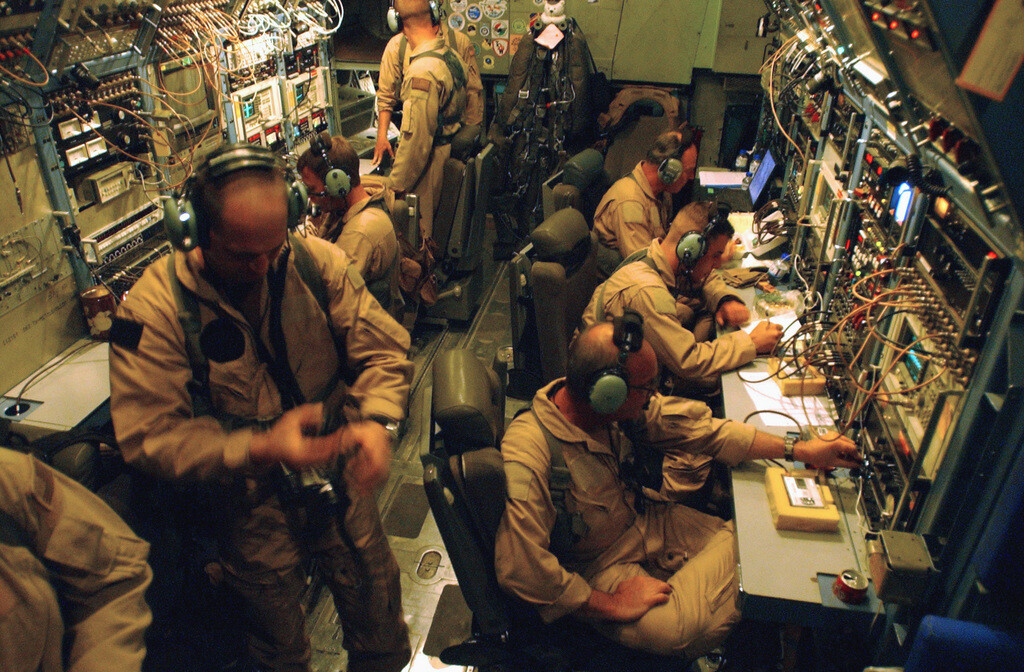
Before any shots are fired, a silent war is waged. Hackers infiltrate enemy networks, satellites monitor troop movements, and electronic warfare blinds radars. Algorithms sift through vast data sets to predict enemy actions and identify vulnerabilities.
These operations can cripple a nation's defenses without a single casualty. They can sow chaos, steal secrets, and manipulate public opinion. By the time conventional forces engage, the balance of power may already be irrevocably tilted.
- Cyber infiltration can disable critical infrastructure and command systems.
- Satellite surveillance provides real-time intelligence on enemy positions and movements.
- Electronic warfare can jam communications and blind radar systems.
- Algorithmic analysis processes massive data to anticipate and counter enemy strategies.
The Evolution from World War II to Today
In World War II, intercepting a radio signal could be as decisive as sinking a ship. Today, that principle has been magnified exponentially. The digital revolution has created new domains for conflict—cyberspace, the electromagnetic spectrum, and the information space—where battles are fought continuously, even in peacetime.
The Iran war and the war in Ukraine have shown that victory often goes to the side that dominates these invisible domains. Physical force remains important, but it is increasingly the final, rather than the first, resort.
What This Means for Global Security
For military strategists and policymakers, the implications are profound. Defense budgets must prioritize cyber capabilities, space-based assets, and artificial intelligence. Alliances must adapt to threats that transcend borders and traditional battlefields.
Moreover, the public must understand that wars are no longer confined to declared combat zones. The battlespace now includes everyday digital infrastructure, making civilian networks potential targets. This blurring of lines between peace and war poses new challenges for international law and ethics. The background to this story is set out in Iran Drone War: How Cheap UAVs Changed Modern Warfare. A related thread runs through Shed Wars: Inside Britain's Garden Room Planning Permission Battles. Earlier coverage in Iran War Bluster and Backdown: Trump's Groundhog Day shows how the argument developed.
Key Takeaways for the Future of Warfare
The Iran war has confirmed that future conflicts will be decided by who controls the invisible domains. Nations that invest in cyber, space, and information warfare will have a decisive advantage. Those that lag behind risk being defeated before they even realize they are under attack. A closer look at the same subject appears in US Army Revives Bayonet Training for Modern Warfare. Anyone following the wider picture can start with Ukraine's Remote Drone Pilots: A Revolution in Modern Warfare. The same theme surfaces in Iran War Cost Hits $37.5 Billion: Senator Warns of Forever War, which takes a different angle.
As we look ahead, the lessons from Iran and Ukraine are clear: the first missile is often the last act of a conflict whose outcome was determined long before. Understanding this new reality is essential for anyone seeking to comprehend modern warfare. Context on how this played out before sits in US Strikes Iran for 10th Time as Iran Declares 'Full-Scale War'. A companion piece, EU Sanctions Russia's Crypto Platforms in 21st Package, approaches the same subject from another angle.
FAQ
What is the main lesson from the Iran war?
The main lesson is that modern conflicts are won through cyber operations, intelligence gathering, and information warfare long before conventional forces engage. The Iran war demonstrated that the decisive battle occurs in invisible domains.
How does this compare to the war in Ukraine?
Both conflicts show that preemptive cyber and intelligence operations set the stage for military action. In Ukraine, cyberattacks preceded the invasion, just as in Iran, years of planning enabled the strike on Khamenei.
What role do algorithms play in modern warfare?
Algorithms process vast amounts of data to predict enemy movements, identify vulnerabilities, and coordinate attacks. They enable faster decision-making and more precise targeting than human analysis alone.
Why is this shift important for global security?
It means that threats can emerge from cyberspace at any time, blurring the line between peace and war. Nations must invest in cyber defense and adapt their strategies to protect critical infrastructure and maintain deterrence.
Browse the Shop
 Acacia frida deluxe solid wood bed frame |
Bedroom bench |
Bed chest drawers |
Lingerie dresser |
Frame base |
Mirror with jewelry storage |
30 Bathroom Vanity |
Memory foam queen mattress |
Mattresses for back pain |
Nightstand set of 2 |
Grand Goldman Shop |
Civil Lawyer
Deutschland Trikot WM 2026







