

The Rembrandt mystery that has baffled art historians for centuries may finally have an answer: why was a Muslim figure overpainted to look like a Dutch elder? The discovery, made during the cleaning of a recently authenticated Rembrandt painting, sheds new light on the artist's early career and the complex religious and cultural dynamics of the 17th-century Netherlands.
In 2014, a painting titled Let the Little Children Come to Me surfaced at an auction in Cologne. Initially catalogued as a work from the "Dutch school" and sold for €1.5 million, it was later confirmed to be by Rembrandt himself, painted around 1627 when he was just 21 years old. Now, as conservators cleaned the canvas, they made a startling find: beneath a later layer of paint, a man with dark skin, a black beard, and a large turban was revealed.
Find Original Home Decor sparking conversation at Grand Goldman Shop.

The Overpainting: A Dutch Elder Replaces a Muslim Figure
At some point after Rembrandt completed the painting, someone deliberately altered the figure. The original man—likely a Muslim or a Middle Eastern visitor—was transformed into a venerable white-haired elder with a wrinkled face and a traditional Dutch cap. This change raises the obvious question: why would anyone want to erase the original figure?
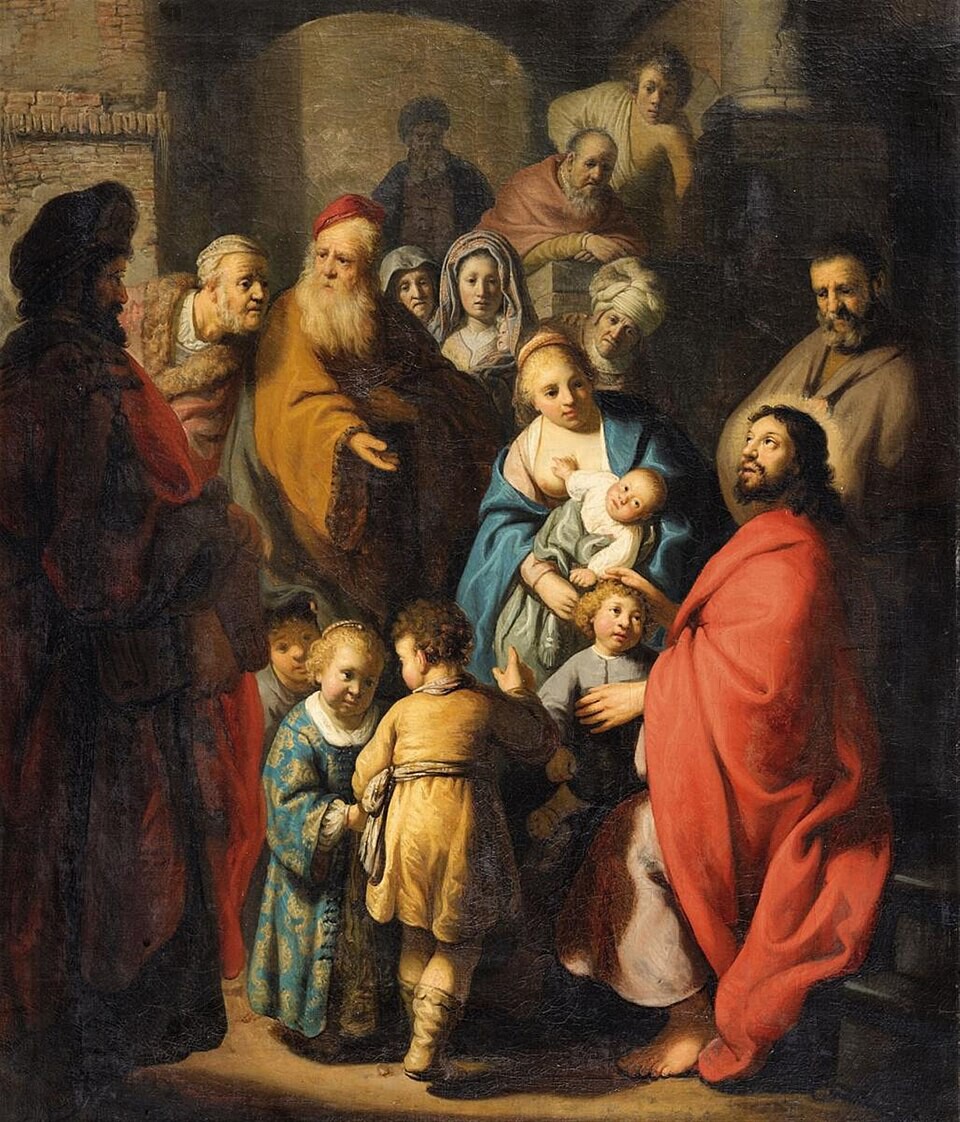
Scholars suggest several possible reasons. The alteration may have been made to align the painting with contemporary Dutch tastes or religious norms. In the 17th-century Netherlands, a rapidly growing Calvinist society, depictions of non-Christian figures could be controversial. By changing the figure into a Dutch elder, the owner might have sought to make the painting more acceptable for public display or sale.
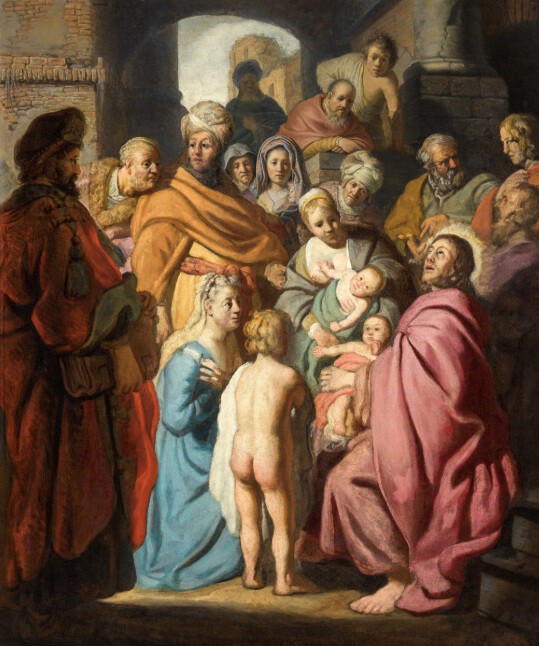
Alternatively, the overpainting could have been a practical decision. The original figure's turban and dark complexion might have been seen as exotic or even provocative, and a later owner may have wanted a more conventional portrait. Whatever the motive, the alteration effectively concealed Rembrandt's original intent for nearly four centuries.
Rembrandt's Early Years and Religious Themes
Rembrandt painted Let the Little Children Come to Me in his early twenties, a period when he was experimenting with biblical subjects and dramatic lighting. The painting depicts a scene from the Gospels where Jesus welcomes children, but the original figure may have represented a specific individual—perhaps a Muslim merchant or traveler whom Rembrandt encountered in Amsterdam.
Amsterdam in the 1620s was a bustling hub of trade and immigration, home to a diverse population that included Jews, Muslims, and Christians from across Europe and beyond. Rembrandt, known for his interest in different cultures and religions, often incorporated exotic elements into his work. The original figure's turban and dark skin are consistent with his fascination with the Orient, a common theme in Dutch art of the period.
The overpainting thus represents not just a physical change but a cultural erasure. It reflects the tensions between Rembrandt's inclusive vision and the narrower expectations of later owners.
Discovery and Authentication: From Auction to Museum
The painting's journey from obscurity to recognition is itself remarkable. When it appeared at the Cologne auction in 2014, it was misattributed and undervalued. After its purchase, experts began to study it more closely, eventually confirming Rembrandt's hand. The cleaning process, which began recently, revealed the original figure and sparked a new wave of interest.
The discovery has significant implications for our understanding of Rembrandt's creative process and the ways his works were received and modified over time. It also highlights the importance of conservation and scientific analysis in uncovering hidden histories.
- The overpainting was likely done to make the painting more palatable to a Dutch audience.
- Rembrandt's original figure may have been based on a real person he met in Amsterdam.
- The alteration concealed the painting's true subject for nearly 400 years.
- Modern technology and careful cleaning revealed the original layer.
- The discovery adds a new chapter to Rembrandt's early career and religious tolerance.
What the Discovery Means for Art History
This find challenges long-held assumptions about Rembrandt's work and the reception of his art. It shows that even well-known artists' works were subject to censorship or modification, often for reasons we can only guess. For art historians, it underscores the need to examine paintings beyond their surface. The longer history behind the story is traced in Armenian Oligarch's Giant Jesus Statue Divides Church.
The painting is now expected to go on display, possibly in a major museum, where the public can see both the original figure and the overpainted version. This dual presentation will allow viewers to appreciate the complexity of Rembrandt's vision and the layered history of the object. The background to this story is set out in Dog Owner Is Baffled To Find Someone Who Doesn’t Like Their Dog, Pulls Their Dog Back Under The Table. A related thread runs through LA's Art Deco Library: A Century of History and Hollywood. Earlier coverage in Act 3 Review: Queer Art History and Life Reflections shows how the argument developed.
| Aspect | Details |
|---|---|
| Painting title | Let the Little Children Come to Me |
| Estimated date | c. 1627 |
| Rembrandt's age | 21 |
| Auction price (2014) | €1.5 million |
| Original figure | Man with dark skin, black beard, turban |
| Overpainted figure | White-haired Dutch elder with cap |
Why This Matters to the Public
Beyond academic interest, the discovery resonates with contemporary debates about identity, representation, and cultural heritage. The erasure of a Muslim figure in a Rembrandt painting mirrors ongoing discussions about whose stories are told and whose are obscured. It also reminds us that art is not static; it carries the marks of its owners and the societies it passes through. A closer look at the same subject appears in Best UK Universities for History of Art: League Table. Anyone following the wider picture can start with Beverly Buchanan Art Review: Shanty Sculptures and Brutal History. The same theme surfaces in The Woman with the Mattress: The Radical History of Anti-Rape Art, which takes a different angle.
For museum-goers, the chance to see a Rembrandt with a hidden history is thrilling. It offers a tangible connection to the past and a reminder that even masterpieces have secrets. Context on how this played out before sits in Los Angeles Central Library: Art Deco Gem with Movie Star History. A companion piece, Bayeux Tapestry Masterpiece: Art History's Greatest Surprise, approaches the same subject from another angle.
FAQ
Why was the figure overpainted?
The exact reason is unknown, but it was likely done to make the painting more acceptable in a Dutch Calvinist society where non-Christian figures could be controversial. It may also have been a commercial decision to appeal to buyers.
How was the original figure discovered?
Conservators cleaning the painting noticed discrepancies and used scientific imaging to reveal the original layer beneath the overpaint. The cleaning process removed the later additions, exposing the original figure.
What is the painting's value now?
The painting was sold for €1.5 million in 2014 before its attribution to Rembrandt was confirmed. Its current value is likely much higher, given its newly confirmed status and the sensational discovery.
Where can I see the painting?
The painting is expected to be displayed in a museum, though the exact location has not been announced. It may tour to allow the public to see both the original and overpainted versions.
Browse the Shop
 Acacia frida deluxe solid wood bed frame |
Bedroom bench |
Bed chest drawers |
Lingerie dresser |
Frame base |
Mirror with jewelry storage |
30 Bathroom Vanity |
Memory foam queen mattress |
Mattresses for back pain |
Nightstand set of 2 |
Grand Goldman Shop |
Civil Lawyer
Deutschland Trikot WM 2026







