

Magnific One, the new AI from Spanish company Magnific, promises to take over the composition, lighting, camera, and style decisions that have long burdened users of image generators. Instead of manually translating a creative idea into a string of technical prompts, users can now rely on a dedicated creative direction layer that interprets their intent before any pixels are generated.
The tool is not a new generative model—Magnific explicitly states it has not trained a fresh image engine. Rather, One adds a pre-generation step that analyzes the prompt, styles, and references provided, then defines how the image should be visually constructed. Only after that does the underlying generation occur.
Find Original, High-end Home Decor that spark conversation at Grand Goldman Shop.
Why Magnific One Matters for AI Image Creation
AI image generators have made scene creation faster, but not necessarily simpler when aiming for a specific result. Users often know exactly what they want yet spend significant time deciding how it should look, which lens to use, or which style should dominate. That decision layer is where human intervention remains heavy—and where Magnific wants to insert its new offering.
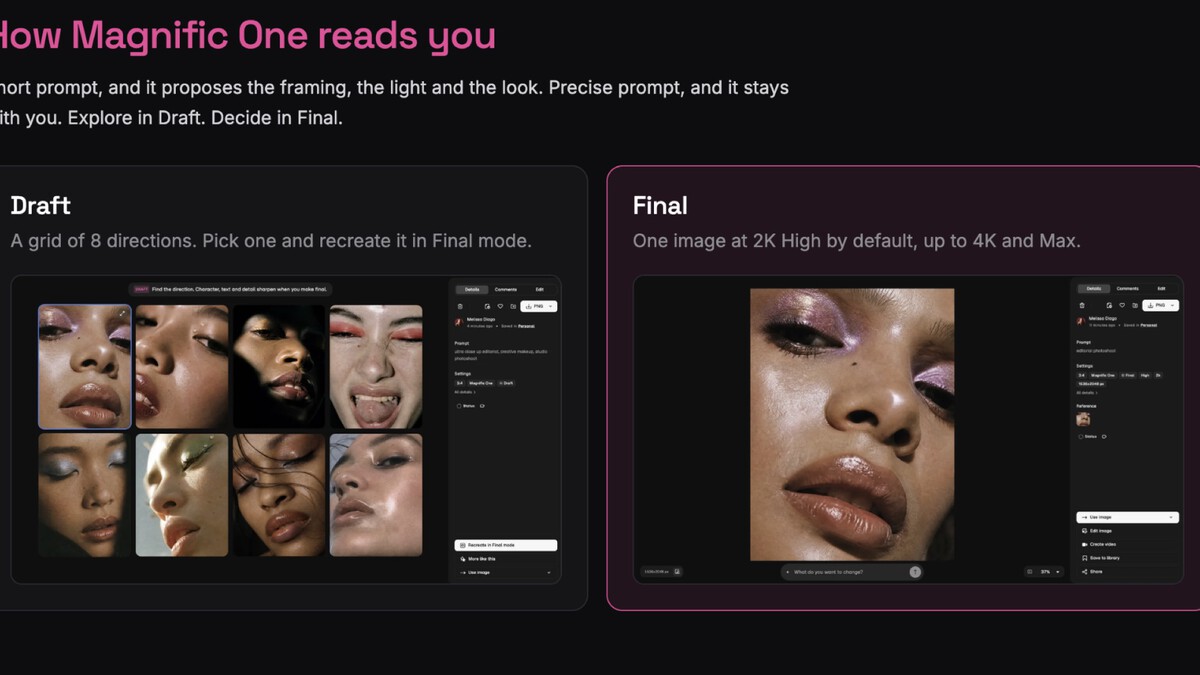
By automating the translation of creative intent into technical specifications, Magnific One aims to reduce the trial-and-error cycle. The company positions this as a way to express an idea without having to convert every creative intention into a long succession of instructions.
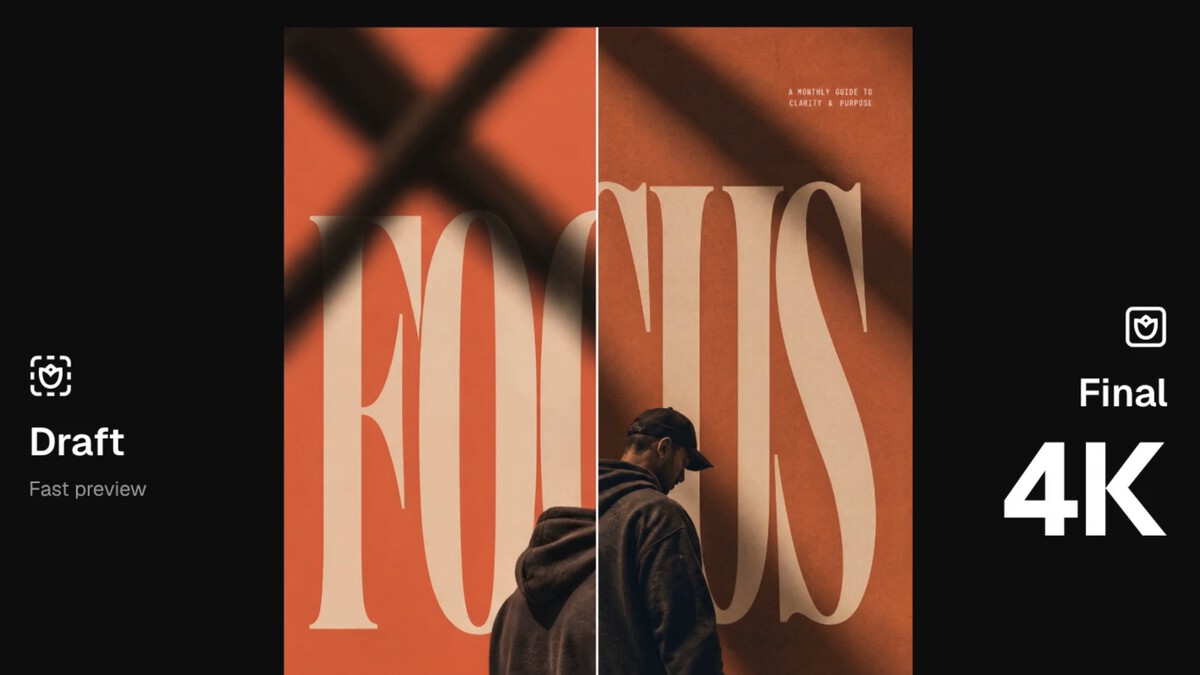
What Magnific One Actually Does
According to Magnific, the system works by first analyzing the user's prompt along with any style or reference inputs. It then develops those instructions into a coherent visual plan—deciding on framing, lighting setup, camera angle, and stylistic direction. This plan is what guides the final generation.

Crucially, the technology is proprietary to Magnific and sits entirely around the generation step, not inside a new model. The company's innovation lies in the prompting system, art direction rules, and the conditions that shape the result before production begins.

- Creative direction layer: Analyzes prompt, styles, and references to define visual construction.
- No new generative model: Magnific One wraps existing generation with its own pre-processing logic.
- Focus on decision automation: Composition, lighting, camera, and style are handled before generation.
- Spanish innovation: Magnific is a Spanish company, adding a European player to the AI imaging space.
- User benefit: Less time spent on technical prompt engineering, more on creative intent.
How Magnific One Compares to Traditional Prompting
Traditional AI image generation requires users to embed technical details directly into the prompt—terms like "85mm lens," "golden hour lighting," or "low-angle shot." This works but demands expertise and iteration. Magnific One shifts that burden to the system, which interprets the creative goal and applies appropriate technical choices automatically.
| Aspect | Traditional Prompting | Magnific One |
|---|---|---|
| Decision maker | User specifies technical details | AI layer decides composition, lighting, camera, style |
| Input | Detailed prompt with technical terms | Creative intent, styles, references |
| Iteration | Often trial-and-error | Pre-generation planning reduces guesswork |
| Underlying model | Various | Existing model wrapped by Magnific's logic |
This comparison highlights the core value proposition: moving from manual specification to guided automation. For users who struggle with the technical vocabulary of image generation, Magnific One could lower the barrier to achieving professional-looking results.
Who Benefits from Automated Creative Direction
Magnific One is likely to appeal to marketers, content creators, and designers who have a clear vision but lack deep technical knowledge of photography or lighting. By handling the decision layer, the tool lets them focus on the message rather than the mechanics.
Professional photographers and art directors might initially be skeptical, as their expertise lies precisely in those decisions. However, Magnific One could serve as a rapid prototyping tool, generating a baseline that professionals can then refine or use as a starting point for discussion.
The Spanish AI Angle
Magnific's Spanish origin adds an interesting dimension to the global AI imaging landscape, which is currently dominated by US-based companies. A European entrant focusing on creative direction rather than raw model training suggests a different competitive strategy—one that leverages workflow integration and user experience over brute-force generation capabilities.
This approach also aligns with broader trends in AI tooling, where the value is increasingly in the orchestration layer rather than the underlying model. Magnific One exemplifies that shift by building proprietary logic around existing generation technology. Context on how this played out before sits in Magnific One AI Takes Charge of Composition, Lighting, and Style Decisions.
What to Watch Next for Magnific One
The key question is how well Magnific One's creative direction layer performs in practice. Automating composition and lighting decisions is challenging because creative intent is often subjective. The system's success will depend on its ability to interpret nuanced prompts and produce results that match user expectations without excessive tweaking. The background to this story is set out in Ai Video: latest articles. A related thread runs through Magnific AI Fights the 'AI Slop' Stigma with Magnific One.
Another factor is integration. If Magnific One can seamlessly fit into existing workflows—whether through an API, plugin, or standalone interface—it could gain traction quickly. Conversely, if it requires users to abandon familiar tools, adoption may be slower. Earlier coverage in Teens Can Access Nudify Apps Despite Parental Controls shows how the argument developed. A closer look at the same subject appears in China's Humanoid Robot Market Dominance: 97% of Global Shipments.
Finally, pricing and accessibility will matter. Magnific has not disclosed details on cost or availability, but competitive pricing could make One an attractive option for small businesses and independent creators who find manual prompt engineering tedious. Anyone following the wider picture can start with Spanish Royals Visit Finland: Schoolkids Sing Perales Song. The same theme surfaces in Mayors of Navalcarnero and Arroyomolinos Under Investigation for Guadarrama, which takes a different angle.
FAQ
What is Magnific One?
Magnific One is a new AI tool from Spanish company Magnific that automates creative decisions like composition, lighting, camera angle, and style before generating an image. It adds a pre-generation layer that interprets the user's prompt and references to define how the image should be constructed.
Does Magnific One use a new generative model?
No. Magnific states that it has not trained a new generative model. Instead, its proprietary technology sits around the generation step, focusing on prompting, art direction, and rules that condition the output. The underlying generation still relies on existing technology.
How does Magnific One differ from standard AI image generators?
Standard generators require users to embed technical details in their prompts, such as lens type or lighting conditions. Magnific One shifts that decision-making to an AI layer, allowing users to express creative intent more naturally while the system handles the technical specifications.
Who is Magnific One for?
It is designed for anyone who wants to create specific images without mastering prompt engineering—marketers, content creators, designers, and even professionals seeking rapid prototyping. It lowers the barrier to achieving polished results by automating the decision layer.
Browse the Shop
 Acacia frida deluxe solid wood bed frame |
Bedroom bench |
Bed chest drawers |
Lingerie dresser |
Frame base |
Mirror with jewelry storage |
30 Bathroom Vanity |
Memory foam queen mattress |
Mattresses for back pain |
Nightstand set of 2 |
Grand Goldman Shop |
Civil Lawyer
Deutschland Trikot WM 2026










