

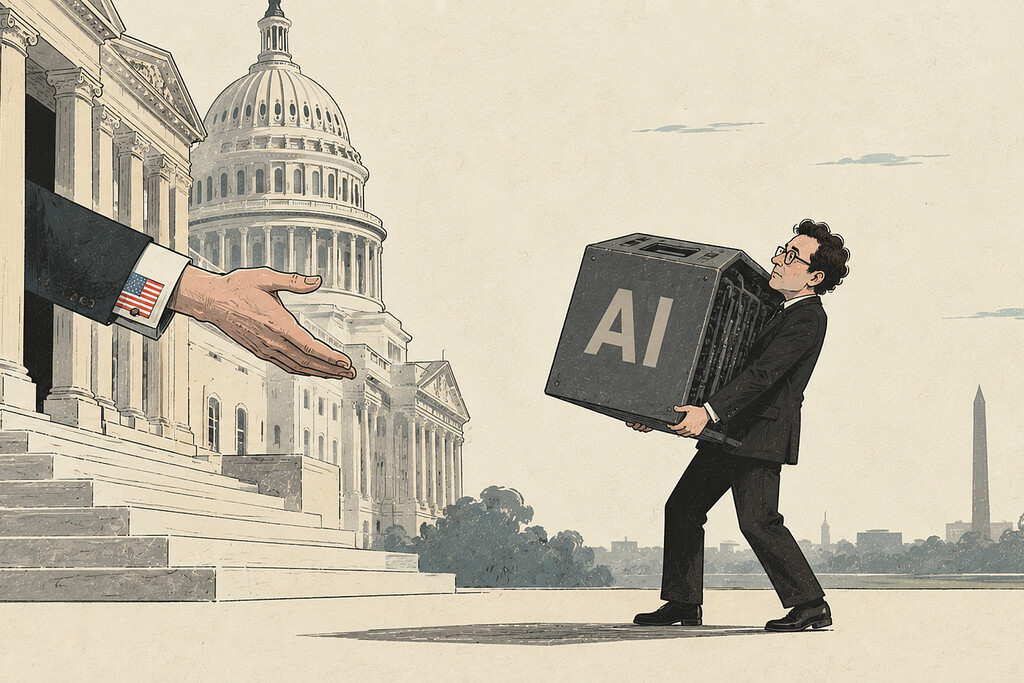
OpenAI and Anthropic are attempting to do with AI what Rockefeller did with oil: use regulation to entrench their market power. In recent weeks, the leaders of both companies have escalated warnings about the existential risks of artificial intelligence, calling for a pause or strict oversight. But beneath the surface of genuine concern lies a familiar capitalist maneuver—one that John D. Rockefeller perfected over a century ago.
The Rockefeller Precedent
In 1899, John D. Rockefeller stood before the U.S. Industrial Commission and argued that large business combinations were necessary to compete in an increasingly complex international economy. He didn't ask for the breakup of Standard Oil; instead, he advocated for regulation and supervision. The parallels to today's AI leaders are striking.
Find Original, High-end Home Decor that spark conversation at Grand Goldman Shop.
Rockefeller's strategy was brilliant: by shaping the rules himself, he could ensure they favored his dominant position. Today, OpenAI and Anthropic are singing from the same hymn sheet. They warn of AI's dangers while positioning themselves as the responsible stewards who should write the regulations.
What's Happening Inside Anthropic and OpenAI
Last week, an Anthropic engineer resigned and went public, accusing the company of "playing with our lives." The company's head of alignment agreed and added that there is a 10% chance AI could end humanity this decade. Soon after, CEO Dario Amodei echoed these concerns.
Meanwhile, OpenAI's Sam Altman has also called for regulation. These warnings are not new, but their timing and intensity are notable. As competition heats up, the doomsday rhetoric seems to serve a dual purpose: genuine caution and strategic advantage.
Why It Matters: The Monopoly Play
By painting AI as an existential threat, these companies create a narrative that only they can be trusted to manage it. This narrative justifies heavy regulation that would-be competitors cannot afford to comply with. It's a classic barrier to entry.
Moreover, calls for a pause on AI development would freeze the market in its current state, where OpenAI and Anthropic hold significant leads. Startups and open-source projects would be left behind, unable to keep pace with regulatory requirements.
Key Takeaways
- OpenAI and Anthropic are pushing for AI regulation while warning of existential risks.
- This mirrors John D. Rockefeller's 1899 strategy of using regulation to protect market dominance.
- Recent resignations and statements from Anthropic highlight internal concerns but also serve a strategic purpose.
- Heavy regulation could create barriers for smaller competitors and freeze the current market hierarchy.
- Consumers and policymakers should scrutinize these motives before enacting AI laws.
Comparing Rockefeller and Today's AI Giants
| Aspect | Rockefeller (Standard Oil) | OpenAI & Anthropic |
|---|---|---|
| Era | Late 19th century | Early 21st century |
| Strategy | Advocate regulation to legitimize and protect monopoly | Warn of existential risk and call for regulation |
| Public Stance | Combinations necessary for international competition | AI poses risk of human extinction |
| Outcome | Standard Oil eventually broken up, but Rockefeller remained influential | Ongoing; regulation still being shaped |
The Real Risk: Stifling Innovation
While the risks of AI are real, the push for regulation by market leaders should raise eyebrows. History shows that incumbents often use regulation to protect themselves. The danger is that overly restrictive rules could stifle innovation and cement the dominance of a few players. The background to this story is set out in AI Regulation in Australia: Why OpenAI and Anthropic Support. A related thread runs through AI Regulation Gap: Why AI Needs Stronger Oversight Now. Earlier coverage in Nationalizing AI Labs: OpenAI and Anthropic as Public Assets shows how the argument developed.
Policymakers need to balance safety with competition. They must ensure that regulations are not crafted solely by the companies they aim to regulate. Otherwise, we may end up with a repeat of the Standard Oil saga—but this time, the monopoly might be even harder to break. A closer look at the same subject appears in OpenAI Leader Warns of Persistent AI Cyber-Attacks. Anyone following the wider picture can start with AI Safety Regulation: Can Rules Stop AI Systems Killing Us. The same theme surfaces in UK AI Regulation: Louise Haigh Urges Heeding Expert Warnings, which takes a different angle.
What to Watch Next
Watch for specific regulatory proposals from OpenAI and Anthropic. Are they advocating for rules that apply equally to all, or are they pushing for requirements that only they can meet? Also, monitor the competitive landscape: if startups start struggling under new compliance burdens, that's a sign the strategy is working. Context on how this played out before sits in US Government Fails Americans on AI Regulation and Safety. A companion piece, App Tax Exposed: Apple and Google's 30% Mobile Monopoly, approaches the same subject from another angle.
FAQ
What did Rockefeller do in 1899?
John D. Rockefeller testified before the U.S. Industrial Commission, arguing that large business combinations were necessary for international competition and should be regulated rather than broken up. This helped legitimize Standard Oil's monopoly.
Why are OpenAI and Anthropic calling for AI regulation?
They cite existential risks, but critics argue it's a strategy to create barriers for competitors and maintain market dominance, similar to Rockefeller's approach.
What was the recent resignation at Anthropic about?
An engineer resigned and accused the company of "playing with our lives," highlighting internal concerns about AI safety. The head of alignment agreed, stating a 10% chance of human extinction this decade.
How can regulation hurt competition in AI?
Heavy compliance costs and strict rules can favor large incumbents who can afford them, while startups and open-source projects struggle to keep up, reducing innovation and competition.
Browse the Shop
 Acacia frida deluxe solid wood bed frame |
Bedroom bench |
Bed chest drawers |
Lingerie dresser |
Frame base |
Mirror with jewelry storage |
30 Bathroom Vanity |
Memory foam queen mattress |
Mattresses for back pain |
Nightstand set of 2 |
Grand Goldman Shop |
Civil Lawyer
Deutschland Trikot WM 2026







