

AI and automation are widening wage inequality, and low-paid workers are the first to feel the impact, according to a new study by researchers from the London School of Economics and the Complutense University of Madrid. The research, based on data from Spain, reveals that technological progress is not benefiting all workers equally and is, in many cases, exacerbating the gap between high and low earners.
The study's findings challenge the assumption that technological advancements automatically lead to better outcomes for everyone. Instead, they highlight a recurring pattern: each technological revolution creates winners and losers, and the losers are often those already at the bottom of the income ladder.
Find Original Home Decor sparking conversation at Grand Goldman Shop.

AI and Wage Inequality: The Spanish Case
Spain provides a stark example of how automation can deepen wage disparities. According to Eurostat, Spain's Gini coefficient—a measure of income inequality where 0 represents perfect equality and 100 represents absolute inequality—stood at 30.8 in 2023, compared to the EU average of 29.4 in 2024. Between 2000 and 2016, wage inequality in Spain increased by 6.4 Gini points, with the most intense period between 2008 and 2016, when it rose by 4.7 points in just eight years.
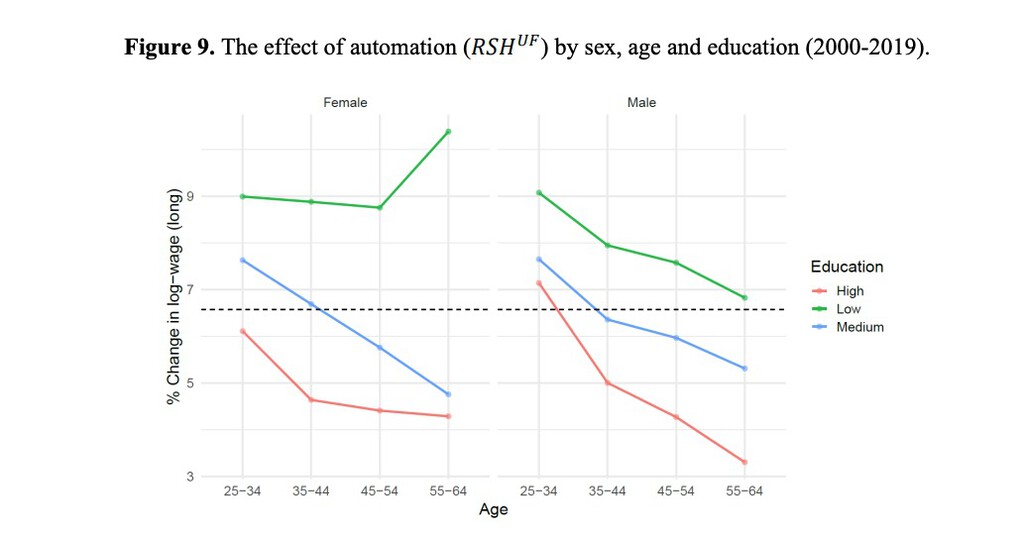
The study's most striking finding is that without the effects of automation, wage inequality in Spain would have been 21.5% lower in 2019. This suggests that automation has played a significant role in widening the gap between high and low earners.
Who Is Most Affected by Automation?
The research identifies young people and administrative workers as the most exposed to the negative effects of automation. These groups are experiencing lower hiring rates and wage reductions as their roles become automated. This is particularly concerning because it affects not only current income but also long-term career prospects.
For young workers, entering the labor market during a period of rapid automation can have lasting consequences. They may find fewer entry-level positions available and face stagnating wages, which can hinder their career progression and earning potential for years to come.
Key Takeaways from the Study
- Automation widens wage inequality: The study shows that without automation, wage inequality in Spain would have been 21.5% lower in 2019.
- Low-paid and young workers are hit hardest: These groups face lower hiring rates and wage reductions as their roles become automated.
- Administrative jobs are particularly vulnerable: Routine administrative tasks are easily automated, putting many workers at risk.
- Technological progress is not evenly distributed: The benefits of AI and automation are concentrated among high-skilled workers, while low-skilled workers bear the costs.
- Policy intervention is needed: Without measures to mitigate the negative effects, inequality is likely to worsen as AI adoption accelerates.
The Gini Coefficient: A Measure of Inequality
The Gini coefficient is a widely used measure of income inequality. A score of 0 indicates perfect equality, where everyone has the same income, while a score of 100 indicates absolute inequality, where one person has all the income. Spain's Gini coefficient of 30.8 in 2023 is higher than the EU average of 29.4 in 2024, indicating greater income disparity.
The increase in Spain's Gini coefficient between 2000 and 2016, particularly during the 2008-2016 period, coincides with the rapid adoption of automation technologies. This correlation suggests that automation has contributed to the rise in wage inequality.
How Automation Affects Different Job Sectors
The impact of automation varies across job sectors. Administrative and routine tasks are most susceptible to automation, while jobs requiring complex problem-solving, creativity, and social skills are less vulnerable. This creates a divide between workers who can adapt to new technologies and those who cannot.
| Job Sector | Risk of Automation | Impact on Wages |
|---|---|---|
| Administrative | High | Negative |
| Manufacturing | Medium | Mixed |
| High-skilled technical | Low | Positive |
| Creative and social | Low | Positive |
As the table shows, workers in administrative roles face a high risk of automation and negative wage impacts. In contrast, high-skilled technical and creative roles are less vulnerable and may even benefit from automation through increased productivity and demand. The background to this story is set out in Domino's Underpayment Class Action: Court Win for Low-Paid Worker. A related thread runs through Tech Workers Paid More but Over Half Fear AI Job Loss. Earlier coverage in Highest-Paid Jobs in Spain 2026: Salaries Up to €250,000 shows how the argument developed.
What This Means for Workers and Policymakers
The study's findings have important implications for workers and policymakers. For workers, the key takeaway is the importance of acquiring skills that are complementary to automation, such as digital literacy, critical thinking, and adaptability. Lifelong learning and reskilling are essential to stay relevant in a rapidly changing labor market. A closer look at the same subject appears in AI drives tech workers to unionize: How automation fuels. Anyone following the wider picture can start with Business: latest articles. The same theme surfaces in UK Jobs Market Mixed as Wage Growth Slows and Unemployment Falls, which takes a different angle.
For policymakers, the study underscores the need for measures to mitigate the negative effects of automation on vulnerable groups. This could include investments in education and training programs, strengthening social safety nets, and promoting policies that ensure the benefits of technological progress are shared more equitably. Context on how this played out before sits in Tech Salaries in 2026: Wage Growth Stalls as Bands Widen.
FAQ
What is the main finding of the study on AI and wage inequality?
The study found that without the effects of automation, wage inequality in Spain would have been 21.5% lower in 2019. It also identified young people and administrative workers as the most affected groups.
Why are young workers more vulnerable to automation?
Young workers are often employed in entry-level and routine jobs that are easily automated. They also have less work experience and bargaining power, making them more susceptible to wage reductions and lower hiring rates.
How can workers protect themselves from the negative effects of automation?
Workers can protect themselves by developing skills that are less susceptible to automation, such as complex problem-solving, creativity, and social skills. Continuous learning and adaptability are crucial.
What role should policymakers play in addressing automation-induced inequality?
Policymakers should invest in education and training, strengthen social safety nets, and promote equitable distribution of the benefits of technological progress. They can also consider measures like wage subsidies or tax incentives to encourage responsible automation.
Browse the Shop
 Acacia frida deluxe solid wood bed frame |
Bedroom bench |
Bed chest drawers |
Lingerie dresser |
Frame base |
Mirror with jewelry storage |
30 Bathroom Vanity |
Memory foam queen mattress |
Mattresses for back pain |
Nightstand set of 2 |
Grand Goldman Shop |
Civil Lawyer
Deutschland Trikot WM 2026







