

Intel has announced a $5.4 billion (€5 billion) investment to expand and modernize its facility in Leixlip, Ireland, boosting Europe's capacity to produce advanced semiconductors. The move is a significant vote of confidence in the region's tech sector, but it comes with caveats that temper the victory for the European Union's long-term chip ambitions.
The investment aims to increase production of Intel's Xeon 6 processors and future Xeon products built on the Intel 3 process—the most advanced node currently manufactured in Europe. However, this expansion follows Intel's cancellation of major industrial projects in Germany and Poland, raising questions about the continent's ability to attract large-scale chip fabrication.
Find Original Home Decor sparking conversation at Grand Goldman Shop.

Why Intel's Ireland Investment Matters for Europe
Europe has spent years trying to reduce its dependence on semiconductor supply chains concentrated in Asia and the United States. The EU Chips Act, launched in 2023, aims to double the bloc's share of global chip production to 20% by 2030. Intel's Leixlip expansion is a tangible step toward that goal, but it is not a new fab.
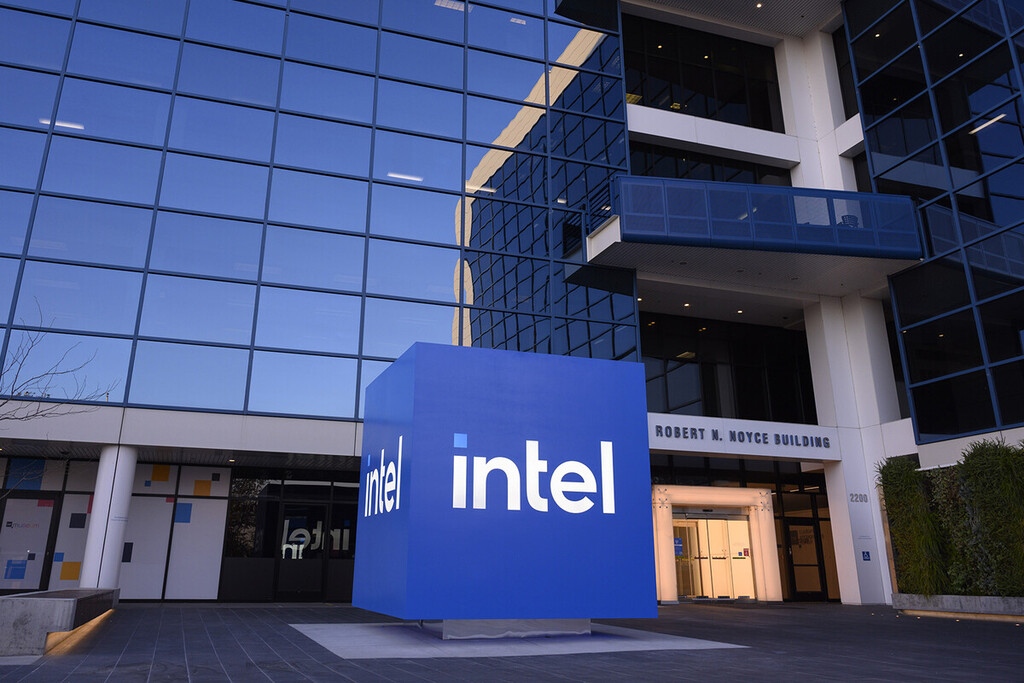
Instead of building a new factory or expanding the cleanroom, the plan focuses on upgrading Fab 34 with better equipment, updated facilities, and an extended automated network. This means the investment enhances existing capacity rather than creating entirely new production lines—a crucial distinction for understanding the scale of the impact.
What the $5.4 Billion Will Actually Fund
The funds will be used to equip Fab 34 more effectively and modernize its operations. According to Intel, the goal is to ramp up production of Xeon 6 processors, which are critical for data centers and AI workloads. The Intel 3 process, while advanced, is not the company's most cutting-edge technology—that would be Intel 18A, which is slated for production in the US and possibly Europe later.
This investment is part of Intel's broader strategy to regain manufacturing leadership after years of setbacks. The company has faced delays and lost market share to rivals like TSMC and Samsung. By upgrading its Irish facility, Intel hopes to secure a stronger foothold in Europe's growing demand for high-performance chips.
The Fine Print: What This Means for EU Chip Sovereignty
While the investment is welcome news, it does not fully offset the blow of Intel's cancelled projects in Germany and Poland. Those cancellations were seen as a major setback for the EU's goal of building a self-sufficient semiconductor ecosystem. The Leixlip expansion is an upgrade, not a greenfield fab, so it adds less new capacity than a brand-new facility would.
Moreover, the advanced chips produced in Ireland will still be part of a global supply chain that relies on components and materials from outside Europe. True sovereignty would require a more comprehensive industrial base, from design to packaging. The EU is making progress, but the path to independence is long.
- $5.4 billion investment to expand Intel's Leixlip, Ireland facility.
- Focus on Intel 3 process and Xeon 6 processors for data centers.
- Upgrade of existing Fab 34, not a new fab, so capacity gains are incremental.
- Follows cancellation of Intel's projects in Germany and Poland, highlighting challenges.
- Part of EU's broader push to double chip production share by 2030.
Intel's Global Manufacturing Strategy
Intel's decision to invest in Ireland rather than other European locations reflects a pragmatic approach. Ireland offers a stable business environment, a skilled workforce, and existing infrastructure. The Leixlip site has been operational for decades and is already Intel's largest manufacturing facility outside the US.
At the same time, Intel is investing heavily in the US, where it is building new fabs in Arizona, Ohio, and Oregon. The company's global strategy balances regional demands with cost efficiency. Europe remains an important market, but the bulk of Intel's leading-edge production will likely stay in the US for now. The background to this story is set out in TSMC Commits 250 Billion to US Semiconductor and AI Production. A related thread runs through Xiaomi Profits Fall 42% But Chip Investment Accelerates. Earlier coverage in Royal Commission into Construction Sector Announced by New shows how the argument developed.
Comparison of Intel's European Projects
| Project | Location | Status | Investment | Technology |
|---|---|---|---|---|
| Leixlip Expansion | Ireland | Announced | $5.4 billion | Intel 3 |
| Magdeburg Fab | Germany | Cancelled | ~$17 billion | Intel 18A |
| Wrocław Facility | Poland | Cancelled | ~$4.6 billion | Assembly/Test |
What to Watch Next for Europe's Chip Industry
Intel's investment is a positive signal, but it is not a game-changer on its own. The EU must continue to attract other major players and support domestic innovation. The recent approval of the EU Chips Act provides subsidies and regulatory support, but execution will be key. A closer look at the same subject appears in UAE-Linked Firms Expand Manchester Land Holdings by 39%. Anyone following the wider picture can start with Intel vs TSMC: Diverging Paths in High-NA Lithography. The same theme surfaces in Intel Chip Outperforms Apple M1 in Efficiency Benchmark, which takes a different angle.
Meanwhile, Intel's ability to deliver on its promises will be closely watched. The company has a history of missed deadlines, and the success of the Leixlip upgrade depends on timely equipment installation and workforce readiness. If Intel can demonstrate progress, it may encourage further investment in Europe's semiconductor ecosystem. Context on how this played out before sits in Tencent Boosts AI Investment Despite Chip Curbs in 2026. A companion piece, Business: latest articles, approaches the same subject from another angle.
FAQ
What is Intel's $5.4 billion investment in Ireland?
Intel is investing $5.4 billion to expand and modernize its Leixlip facility in Ireland, focusing on increasing production of Xeon 6 processors using the Intel 3 process. This is an upgrade of existing operations, not a new fab.
Why did Intel cancel its projects in Germany and Poland?
Intel cited changing market conditions and the need to prioritize investments. The cancellations were a blow to the EU's chip ambitions, as they would have added significant new capacity and advanced technology to the region.
How does this investment affect Europe's chip sovereignty?
It strengthens Europe's chip production but does not make the region self-sufficient. The upgrade adds incremental capacity and relies on global supply chains, so true sovereignty would require a broader industrial base.
What are Xeon 6 processors used for?
Xeon 6 processors are designed for data centers, cloud computing, and AI workloads. They offer high performance and efficiency, making them critical for modern digital infrastructure.
Browse the Shop
 Acacia frida deluxe solid wood bed frame |
Bedroom bench |
Bed chest drawers |
Lingerie dresser |
Frame base |
Mirror with jewelry storage |
30 Bathroom Vanity |
Memory foam queen mattress |
Mattresses for back pain |
Nightstand set of 2 |
Grand Goldman Shop |
Civil Lawyer
Deutschland Trikot WM 2026







