

Rural Spain's blue light shift is revealing a hidden trade-off in the drive for energy efficiency. A new high-resolution map shows that hundreds of small towns have swapped warm-toned streetlights for cooler, blue-rich LEDs—a change visible even from space.
The RALAN-Map EU project, led by the Complutense University of Madrid and the International Research Center of Big Data for Sustainable Development Goals, used 2023 data from the Chinese SDGSAT-1 satellite to create the first calibrated, high-resolution night-time map of the Iberian Peninsula and the Canary, Balearic, and Madeira archipelagos.
Find Original Home Decor sparking conversation at Grand Goldman Shop.

What the RALAN-Map Reveals About Rural Spain's Blue Light Shift
With a resolution of 40 meters, the map shows a clear divide: large cities have kept their warm-toned lighting, while municipalities with fewer than 5,000 residents now glow with a colder, bluer light.
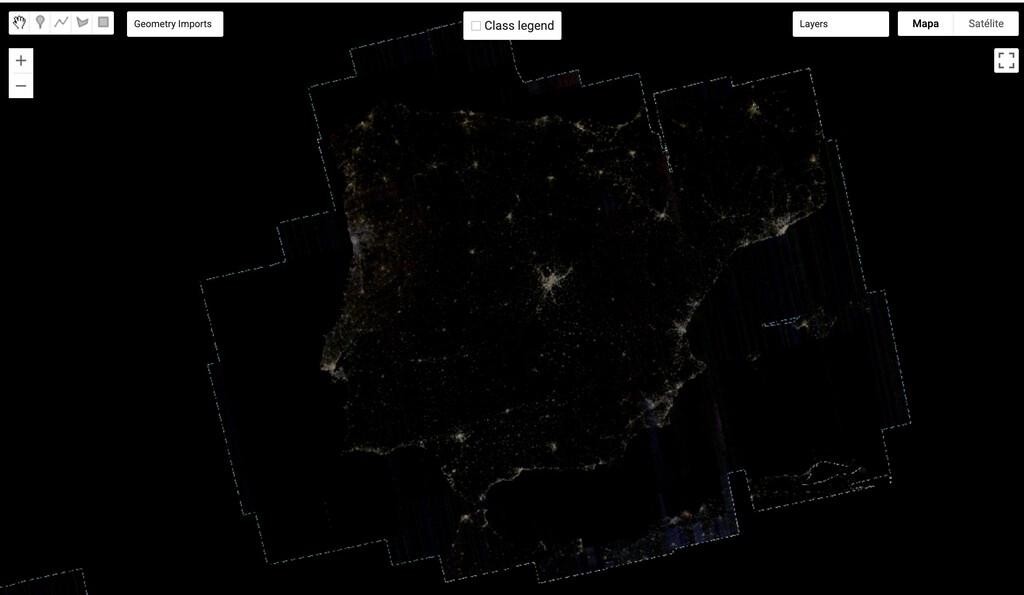
The cause is a wave of infrastructure upgrades. Many rural councils have replaced old streetlamps with LED fixtures to cut energy bills, and that modernization has changed the color temperature of the light—a shift detectable from orbit.
Why Small Towns Are Turning Blue
The motivation is straightforward: LEDs use far less electricity than legacy bulbs, offering significant savings for budget-strapped municipalities. But the cheapest options often emit light rich in blue wavelengths, which scatter more easily in the atmosphere and contribute to skyglow.
Without proper shielding or warm-color specifications, these upgrades can inadvertently increase light pollution even as they reduce power consumption.
Why the Blue Light Shift Matters for Ecosystems and Health
Blue-rich light at night is not just an aesthetic issue. It disrupts the circadian rhythms of wildlife and humans alike, affecting behaviors such as foraging, migration, and sleep.
For rural Spain, which hosts rich biodiversity and dark-sky tourism, the stakes are high. The map provides a baseline to assess how lighting changes affect these natural assets.
- Ecological impact: Blue light attracts and disorients nocturnal insects, birds, and bats, disrupting food webs.
- Human health: Exposure to blue-rich light at night can suppress melatonin and disturb sleep patterns.
- Energy paradox: LEDs save energy but may increase light pollution if not properly specified.
- Policy opportunity: The map enables targeted regulations for warm, shielded lighting in rural areas.
- Dark-sky tourism: Preserving natural darkness supports astrotourism and local economies.
Balancing Energy Savings With Light Pollution Control
The RALAN-Map offers a tool for evidence-based decision-making. Municipalities can use it to identify areas where blue light dominates and prioritize retrofits with warmer LEDs (below 3000K) and full cut-off fixtures.
According to the Complutense University, the map represents "a significant advance" for evaluating light pollution policies. It allows researchers and planners to see not just how bright an area is, but what kind of light is being used.
As rural Spain continues to modernize its lighting, the challenge will be to capture energy savings without sacrificing the night sky. The solution lies in choosing the right technology and design—not just the cheapest option.
What to Watch Next in Rural Lighting Upgrades
Several trends will shape the outcome. First, EU regulations on ecodesign and energy labeling are pushing toward more efficient lighting, but they don't always address color temperature. The background to this story is set out in Astronaut's 23-Year Photo Archive Reveals Alarming Light Pollution Growth. A related thread runs through Vantablack 310: The Blackest Black to Fix Satellite Light Pollution. Earlier coverage in Solar Ambulance: A Solution for Spain's Depopulated Rural Areas shows how the argument developed.
Second, growing awareness of light pollution is leading some regions to adopt "dark sky" ordinances that mandate warm, shielded LEDs. Third, the RALAN-Map itself will be updated, providing a feedback loop to measure progress. A closer look at the same subject appears in Dark Sky Movement: Light Pollution Steals Night Sky. Anyone following the wider picture can start with Satellite Light Pollution Exposed: Starlink Leads Violations, Guowang Worse. The same theme surfaces in Invention that exceeds 100 times more energy savings than LED bulbs, which takes a different angle.
For now, the blue glow over rural Spain serves as a reminder that sustainability is not just about saving watts—it's about the quality of light we choose. Context on how this played out before sits in Young Entrepreneur Opens Bar in Rural Spain, Defying Urban Migration Trend. A companion piece, Spain's Renewable Energy Boom: 84% Produced in Rural Areas, approaches the same subject from another angle.
FAQ
What is the RALAN-Map EU project?
RALAN-Map EU is a research initiative by the Complutense University of Madrid and the International Research Center of Big Data for Sustainable Development Goals. It produced the first calibrated high-resolution night-time light map of the Iberian Peninsula and nearby archipelagos using 2023 satellite data.
Why are rural towns in Spain switching to blue LED lights?
Many rural municipalities are replacing old streetlights with LEDs to save energy and reduce costs. However, the most common LEDs emit a cooler, blue-rich light, which is visible from space and can contribute to light pollution.
What are the effects of blue light at night?
Blue-rich light at night can disrupt the circadian rhythms of humans and wildlife, affecting sleep, foraging, and migration. It also increases skyglow, making it harder to see stars and harming nocturnal ecosystems.
How can rural areas reduce light pollution while saving energy?
Municipalities can choose LEDs with a warm color temperature (below 3000K) and use full cut-off fixtures that direct light downward. Proper shielding and dimming controls further reduce light pollution without sacrificing energy savings.
Browse the Shop
 Acacia frida deluxe solid wood bed frame |
Bedroom bench |
Bed chest drawers |
Lingerie dresser |
Frame base |
Mirror with jewelry storage |
30 Bathroom Vanity |
Memory foam queen mattress |
Mattresses for back pain |
Nightstand set of 2 |
Grand Goldman Shop |
Civil Lawyer
Deutschland Trikot WM 2026







