

MarinaTex bioplastic made from fish waste and algae is a breakthrough invention by Lucy Hughes, a student who turned discarded fish parts into a compostable alternative to plastic bags. In 2019, Hughes, then a 24-year-old product design student at the University of Sussex, developed the material after more than 100 experiments, many conducted in her university accommodation's kitchen.
Her work offers a promising solution to the global plastic pollution crisis, particularly for single-use packaging that often ends up in oceans and landfills.
Find Original Home Decor sparking conversation at Grand Goldman Shop.

What Is MarinaTex Bioplastic Made From Fish Waste and Algae?
MarinaTex is a translucent, flexible, and strong sheet that can be used for bags or food wrappers. It is made from fish waste—such as fish skins and scales—and red algae. Unlike conventional plastic, MarinaTex is designed to biodegrade within four to six weeks.
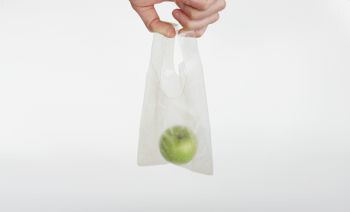
Hughes did not set out to invent a new plastic; she wanted to find a use for the waste generated by the fishing industry. She investigated remnants that typically end up in landfills or incinerators, including viscera, blood, skins, and scales. She discovered that fish scales contain proteins with resistant structures that could be harnessed to create a sturdy material.
Why MarinaTex Matters for Sustainable Packaging
MarinaTex addresses two environmental problems simultaneously: the accumulation of non-biodegradable plastic waste and the disposal of fish industry byproducts. By using waste materials, Hughes' invention reduces the demand for new raw materials and offers a circular economy solution.
The bioplastic's ability to break down in weeks rather than centuries makes it particularly attractive for packaging that is used briefly but persists in the environment for a long time. This could significantly reduce the burden of plastic pollution on ecosystems.
Key Takeaways
- MarinaTex is a bioplastic made from fish waste and red algae.
- It biodegrades in four to six weeks, unlike conventional plastic.
- The material was developed by Lucy Hughes through over 100 experiments.
- It repurposes waste from the fishing industry, reducing landfill burden.
- MarinaTex is strong, flexible, and translucent, suitable for bags and food wrappers.
How Does MarinaTex Compare to Conventional Plastic?
To understand the potential impact of MarinaTex, it's helpful to compare its properties with those of conventional plastic. The table below highlights key differences.
| Property | MarinaTex | Conventional Plastic |
|---|---|---|
| Raw materials | Fish waste and red algae | Petroleum-based |
| Biodegradability | 4-6 weeks | Hundreds of years |
| Strength | Flexible and strong | Varies, often strong |
| Transparency | Translucent | Can be transparent |
| Environmental impact | Low, uses waste | High, contributes to pollution |
While MarinaTex shows promise, it is not yet a direct replacement for all plastics. Its production scale and cost-effectiveness are still being explored. However, its development signals a shift toward bio-based materials that could mitigate plastic pollution.
What Challenges Remain for MarinaTex?
Scaling up production from a university kitchen to commercial manufacturing is a significant hurdle. Hughes' experiments were small-scale, and the process needs to be optimized for efficiency and cost. Additionally, the material's performance under various conditions—such as exposure to water, heat, and mechanical stress—requires further testing. Context on how this played out before sits in Student's MarinaTex Bioplastic Made from Fish Waste and Algae.
Regulatory approval and consumer acceptance are also factors. Bioplastics must meet food safety standards if used for packaging. Moreover, the infrastructure for composting such materials needs to be widely available for them to biodegrade properly. The background to this story is set out in Energy Utilities: latest articles. A related thread runs through Argentina Cooperative Recycles Polystyrene Into Furniture.
What's Next for MarinaTex Bioplastic Made from Fish Waste and Algae?
Since its initial development, MarinaTex has gained recognition, including the James Dyson Award in 2019. Hughes continues to work on refining the material and exploring commercial applications. The project exemplifies how innovative thinking can transform waste streams into valuable resources. Earlier coverage in Beer Waste Hops Could Triple Sunscreen Protection Naturally shows how the argument developed. A closer look at the same subject appears in Barcelona's Olive-Based Biochar Asphalt Cuts CO2 Emissions.
The future of MarinaTex depends on partnerships with industry and investment in scaling production. If successful, it could inspire similar initiatives that turn waste into biodegradable alternatives, reducing our reliance on fossil-fuel-based plastics. Anyone following the wider picture can start with Root-to-Tip Eating: How to Use Every Part of Your Produce. The same theme surfaces in Sustainable Music Festivals in Australia Cut Waste and Emissions, which takes a different angle.
FAQ
What is MarinaTex made of?
MarinaTex is made from fish waste (such as skins and scales) and red algae. These materials are abundant byproducts of the fishing industry.
How long does MarinaTex take to biodegrade?
MarinaTex is designed to biodegrade in four to six weeks under appropriate conditions, much faster than conventional plastic.
Who invented MarinaTex?
Lucy Hughes, a product design student at the University of Sussex, invented MarinaTex in 2019 after over 100 experiments.
Is MarinaTex commercially available?
As of now, MarinaTex is not widely commercially available; it is still in development and scaling phases.
Browse the Shop
 Acacia frida deluxe solid wood bed frame |
Bedroom bench |
Bed chest drawers |
Lingerie dresser |
Frame base |
Mirror with jewelry storage |
30 Bathroom Vanity |
Memory foam queen mattress |
Mattresses for back pain |
Nightstand set of 2 |
Grand Goldman Shop |
Civil Lawyer
Deutschland Trikot WM 2026







