

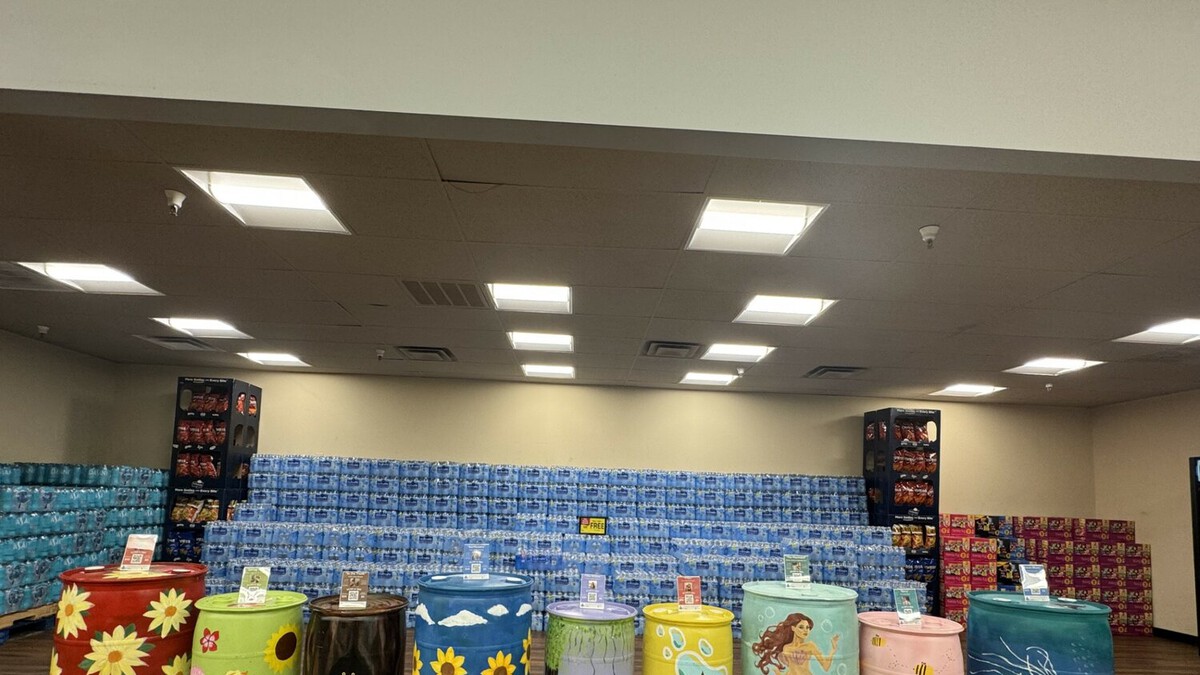
A 17-year-old student has converted discarded industrial barrels into rain barrels, preventing an estimated 170,000 liters of stormwater runoff from reaching local rivers and aquifers. Kaitlyn Tran's project earned her one of this year's Gloria Barron Prize for Young Heroes awards, and it shows how simple infrastructure can address a serious pollution problem.
Runoff is the flow of rainwater, snowmelt, or meltwater that travels over or through the land surface when precipitation exceeds the soil's capacity to evaporate and absorb it. It's a natural part of the water cycle and often beneficial, as it's the main source that fills rivers, lakes, and reservoirs.
Find Original, High-end Home Decor that spark conversation at Grand Goldman Shop.
However, as this water moves across the terrain, it can collect and carry trash, pesticides, oils, or heavy metals that may contaminate the water. There are many ways to prevent this type of runoff from reaching local waters, and it doesn't take much. In fact, a teenager from Texas has turned discarded industrial barrels into rain barrels. By her own calculations, these have prevented about 170,000 liters of runoff from reaching local waterways.
Why Stormwater Runoff Is a Growing Concern
When rain falls on roofs, roads, and parking lots, it cannot filter into the soil. Instead, it rushes toward storm drains, picking up oil, trash, and other pollutants along the way. This untreated water often flows directly into streams, rivers, and eventually the ocean, harming aquatic ecosystems and drinking water supplies.
In regions with heavy rainfall, the problem is especially acute. Impervious surfaces like concrete and asphalt exacerbate the issue, sending large volumes of polluted water into drainage systems that may overflow during storms. This can lead to localized flooding and long-term damage to water quality.
Kaitlyn Tran's project addresses this by capturing rainwater before it becomes runoff. By repurposing industrial barrels—which might otherwise end up in landfills—she created a decentralized system that intercepts rain at the source: rooftops.
How Rain Barrels Work to Prevent Pollution
Rain barrels are simple yet effective tools for managing stormwater. They collect rainwater from downspouts, storing it for later use and keeping it out of storm drains. This reduces the volume of runoff and the pollutants it carries.
The stored water can be used for irrigation, reducing demand on municipal water supplies. It can also be slowly released into the ground, where it can infiltrate and recharge groundwater aquifers. This mimics natural hydrology, helping to maintain healthy water cycles.
Tran's innovation lies not just in the barrels themselves but in the community mobilization she sparked. Her project has inspired environmental initiatives around these barrels in her locality, a region particularly vulnerable to heavy rains.
- Reduces runoff volume: Capturing rain prevents it from overwhelming storm drains and carrying pollutants to waterways.
- Conserves water: Stored rainwater can be used for gardens, reducing the need for treated municipal water.
- Recharges groundwater: Slow release allows water to infiltrate and replenish aquifers.
- Repurposes waste: Using discarded industrial barrels keeps plastic out of landfills.
- Builds community awareness: Visible barrels educate neighbors about water conservation.
The Impact of 170,000 Liters
To put 170,000 liters into perspective, that's enough water to fill a small swimming pool or meet the daily needs of hundreds of people. More importantly, it's 170,000 liters of runoff that didn't carry oil, trash, or heavy metals into local rivers and aquifers.
This reduction in pollution can have measurable benefits for aquatic life and water quality. It also lessens the burden on wastewater treatment plants, which must process stormwater during heavy rains.
Tran's project demonstrates that individual actions, when scaled, can add up to significant environmental gains. Her work aligns with broader efforts to implement green infrastructure and manage stormwater sustainably.
| Feature | Traditional Stormwater Management | Rain Barrels (Tran's Project) |
|---|---|---|
| Cost | High (infrastructure, maintenance) | Low (repurposed materials, volunteer labor) |
| Scalability | Centralized, large-scale | Decentralized, community-driven |
| Environmental Impact | Reduces runoff but may have carbon footprint | Reduces runoff and repurposes waste |
| Community Engagement | Limited | High (visible, participatory) |
| Water Conservation | Indirect | Direct (stored water for reuse) |
Who Is Affected and What's at Stake
Stormwater pollution affects everyone who relies on clean water—from residents who drink from local aquifers to wildlife that depends on healthy streams. In areas with heavy rainfall, the risk of flooding and contamination is higher, making projects like Tran's especially valuable.
Local governments and environmental agencies are increasingly recognizing the role of community-based solutions in managing stormwater. Rain barrels are a low-tech, low-cost addition to green infrastructure like rain gardens and permeable pavement.
Tran's award from the Gloria Barron Prize highlights the growing recognition of youth-led environmental action. The prize honors young people who have made a significant positive difference to the environment and their communities. Context on how this played out before sits in James Bay Project: How a Mega Dam Poisoned the Cree People.
What to Watch Next
As climate change intensifies rainfall patterns, the need for effective stormwater management will only grow. Tran's project offers a model that can be replicated in other communities, especially those facing similar challenges. The background to this story is set out in 9/11 Air Quality Records Released: 170,000 Pages Reveal Health Risks. A related thread runs through France Fires: 170 Years of Land Management Fueled the Blazes.
Watch for more initiatives that combine waste reduction with water conservation. Such projects not only mitigate pollution but also foster a sense of environmental stewardship among young people. Earlier coverage in Energy Utilities: latest articles shows how the argument developed. A closer look at the same subject appears in Biodiversity Targets Slipping Away Four Years After Cop15.
For those inspired by Tran's work, starting a rain barrel program in your own community could be a rewarding endeavor. It requires minimal resources but can yield substantial benefits for local waterways. Anyone following the wider picture can start with Colombia Farmer Fights Mining to Protect Water Sources. The same theme surfaces in South West Water Fined £8m for Sewage Spills in Cornwall and Devon, which takes a different angle.
FAQ
What is stormwater runoff and why is it a problem?
Stormwater runoff is rainwater that flows over impervious surfaces like roads and roofs, picking up pollutants and carrying them into waterways. It's a problem because it can contaminate drinking water, harm aquatic life, and cause flooding.
How do rain barrels help reduce pollution?
Rain barrels capture rainwater from downspouts, preventing it from becoming runoff. This reduces the volume of water entering storm drains and the pollutants it carries. The stored water can be used for irrigation or slowly released to recharge groundwater.
What inspired Kaitlyn Tran's project?
Kaitlyn Tran was motivated by the environmental impact of stormwater runoff in her Texas community, which experiences heavy rains. She saw an opportunity to repurpose discarded industrial barrels into rain barrels, addressing both waste and water pollution.
How can I start a similar project in my community?
Start by researching local regulations and sourcing discarded barrels. Engage neighbors and local organizations to build and distribute rain barrels. Educate the community about the benefits of capturing rainwater to reduce runoff and conserve water.
Browse the Shop
 Acacia frida deluxe solid wood bed frame |
Bedroom bench |
Bed chest drawers |
Lingerie dresser |
Frame base |
Mirror with jewelry storage |
30 Bathroom Vanity |
Memory foam queen mattress |
Mattresses for back pain |
Nightstand set of 2 |
Grand Goldman Shop |
Civil Lawyer
Deutschland Trikot WM 2026










