

Why cats always land on their feet has puzzled scientists since 1894, and new research finally sheds light on this feline mystery. The question of how cats manage to right themselves mid-air has fascinated scientists for over a century. Despite numerous studies, the exact mechanism remained unclear—until now. A recent experiment by Japanese researchers has provided fresh insights into this phenomenon, revealing the unique flexibility of the cat's spine.
The Century-Old Mystery of the Cat Righting Reflex
For decades, scientists have been trying to understand the cat righting reflex—the ability of cats to orient themselves upright during a fall. This reflex is crucial for their survival, allowing them to land safely from heights. However, the precise biomechanics involved have been difficult to unravel. Early studies focused on high-speed photography, but the internal mechanisms remained speculative.
Find Original Home Decor sparking conversation at Grand Goldman Shop.

The mystery deepened because cats lack a functional clavicle, which gives them greater flexibility in their shoulders. This anatomical feature, combined with their unique spinal structure, enables them to twist their bodies in mid-air. Yet, the exact sequence of movements and the limits of their flexibility were not fully understood until the recent study.
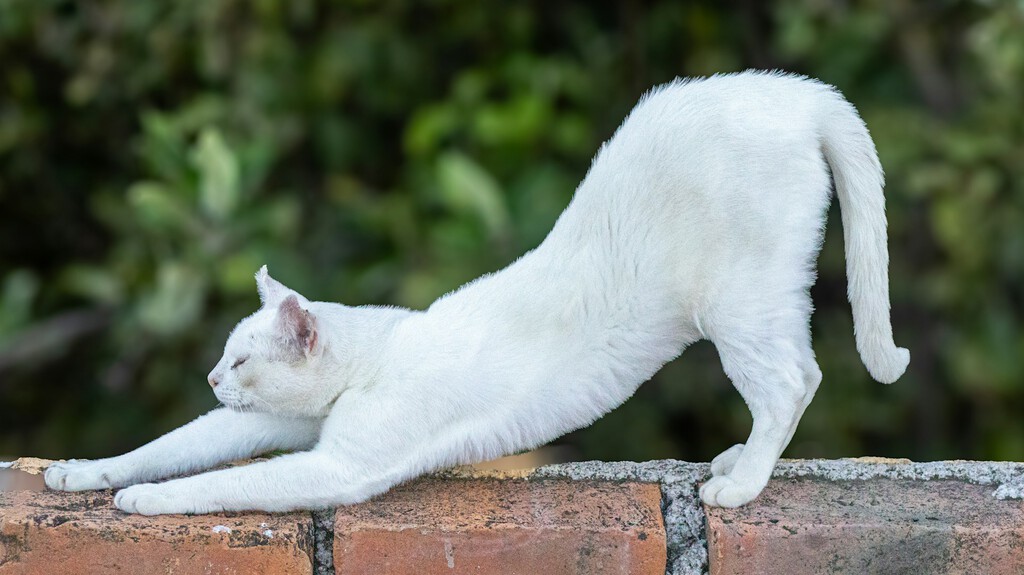
New Study Reveals Spinal Flexibility
Published in The Anatomical Record, the study took a novel approach by combining mechanical testing of cat spines with high-speed video analysis of live cats. Researchers first examined the spines of five cat cadavers to measure their range of motion and flexibility. They found that the upper spine, particularly the thoracic vertebrae, is extremely flexible, allowing for a 360-degree rotation. In contrast, the lumbar region is stiffer and more robust, providing stability.
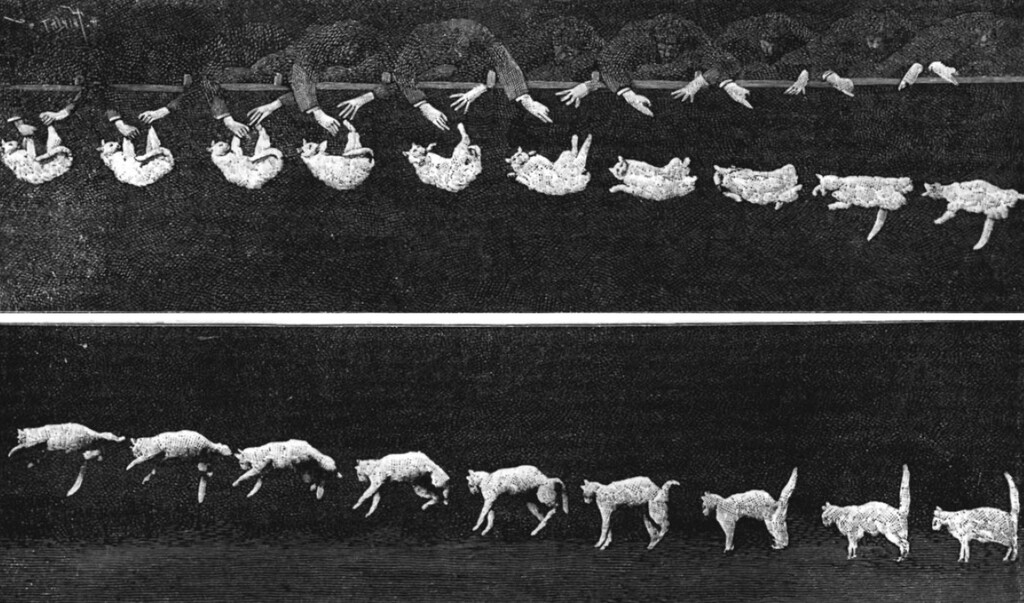
In the second part of the experiment, the team recorded two live cats as they were dropped from a height of 90 cm (about 3 feet). The videos were analyzed frame by frame, and the researchers compared the observed movements with the data from the cadaver spines. The results showed that the difference in flexibility between the thoracic and lumbar spine aligns perfectly with the cats' mid-air contortions.
How Cats Correct Their Posture in Mid-Air
When a cat falls, it relies on a series of rapid movements to right itself. First, it uses its flexible thoracic spine to rotate its front half while keeping the hind half stable. Then, it twists the lumbar region to bring the hind legs into position. This two-step process allows the cat to land on its feet even from short distances. The study's findings confirm that the spine's varying flexibility is key to this ability.
Interestingly, the cats in the experiment were dropped from just 90 cm, which is a relatively short distance. This suggests that the righting reflex is effective even in low-height falls, which is important for cats living in multi-story buildings or climbing trees.
Why This Research Matters for Cat Owners
Understanding the cat righting reflex has practical implications for cat owners and veterinarians. While cats are remarkably adept at landing on their feet, they are not invincible. Falls from significant heights can still cause serious injuries, often referred to as high-rise syndrome. Knowing that cats can right themselves from short distances might give owners a false sense of security, but it's crucial to take preventive measures.
- Supervise outdoor access: Ensure windows and balconies are secured with screens or netting.
- Provide safe climbing options: Cat trees and shelves allow cats to satisfy their climbing instincts safely.
- Regular vet check-ups: Monitor your cat's health, as conditions like obesity or arthritis can affect their agility.
- Understand their limits: Even with their righting reflex, cats can be injured in falls, so prevention is key.
Comparing Cat and Human Spinal Flexibility
The study highlights the remarkable differences between feline and human anatomy. While humans have a relatively rigid spine, cats have evolved a highly flexible column that enables their acrobatic feats. The table below summarizes the key differences.
| Feature | Cat | Human |
|---|---|---|
| Thoracic spine flexibility | Extremely flexible (360° rotation) | Limited rotation |
| Lumbar spine | Stiffer, provides stability | Moderately flexible |
| Clavicle | Reduced or absent | Fully developed |
| Righting reflex | Present from birth | Not applicable |
This comparison underscores how evolution has shaped the cat's body for agility and survival. The absence of a functional clavicle, for instance, allows the shoulders to move more freely, which is essential for the twisting motion during a fall. The background to this story is set out in 15 Cats Take Over Humans As If They Were Always Meant To. A related thread runs through 20 Attention Hogging Cats That Are Always Ready For Their Belly Rubs. Earlier coverage in Cat Medley – Cats And Their Hilarious Shenanigans shows how the argument developed.
What the Study Means for Future Research
The Japanese researchers' work opens new avenues for studying feline biomechanics. By understanding the spine's role in the righting reflex, scientists can explore how other animals achieve similar feats. Additionally, this knowledge could inform robotic designs that mimic animal locomotion. A closer look at the same subject appears in Devoted Cat Got His Hospital Job As “Security Guard” For Always Hanging Around. Anyone following the wider picture can start with Land Rights Revolution: Nick Hayes on Toad Hall and Right to Roam. The same theme surfaces in Best UK Universities for Animal Science and Agriculture, which takes a different angle.
For cat lovers, the study is a reminder of the incredible abilities of their pets. It also emphasizes the importance of protecting cats from falls, as even their impressive reflexes have limits. As research continues, we may uncover even more secrets of the feline form. Context on how this played out before sits in Energy Utilities: latest articles. A companion piece, Why Cats Always Land on Their Feet: New Science Explained, approaches the same subject from another angle.
FAQ
How do cats always land on their feet?
Cats use their flexible spine and righting reflex to twist their bodies mid-air. The thoracic spine rotates up to 360 degrees, while the lumbar spine stabilizes the hindquarters, allowing them to land upright.
At what height can cats right themselves?
Cats can right themselves from very short distances, as shown in the study where they were dropped from 90 cm. However, falls from greater heights can still cause injuries, so supervision is important.
Do all cats have the righting reflex?
Yes, the righting reflex is innate in cats, but its effectiveness can be influenced by age, health, and body condition. Kittens develop it around 3-4 weeks of age.
Why did it take so long to understand this phenomenon?
The complexity of the movement and the difficulty of studying live animals in mid-air made it challenging. Advances in high-speed video and biomechanical testing have only recently allowed detailed analysis.
Browse the Shop
 Acacia frida deluxe solid wood bed frame |
Bedroom bench |
Bed chest drawers |
Lingerie dresser |
Frame base |
Mirror with jewelry storage |
30 Bathroom Vanity |
Memory foam queen mattress |
Mattresses for back pain |
Nightstand set of 2 |
Grand Goldman Shop |
Civil Lawyer
Deutschland Trikot WM 2026







