

Chrysalis is a proposed 58-kilometer-long spaceship designed to carry 2,400 humans on a 400-year journey to Proxima b, the most promising exoplanet in the Alpha Centauri system. The concept, developed by a team of Italian engineers, social scientists, and architects, aims to turn the stuff of science fiction into a feasible plan for interstellar colonization.
The project was submitted to the Project Hyperion Design Competition, which seeks innovative solutions for long-duration space travel. Chrysalis stands out for its ambitious scale and its focus on creating a self-sustaining habitat for generations of travelers.
Find Original Home Decor sparking conversation at Grand Goldman Shop.

What Is the Chrysalis Spaceship?
Chrysalis is a cylindrical, multi-layered vessel that resembles a giant Russian nesting doll. Its architecture is divided into concentric layers, each serving a specific purpose, from habitation to life support and propulsion.
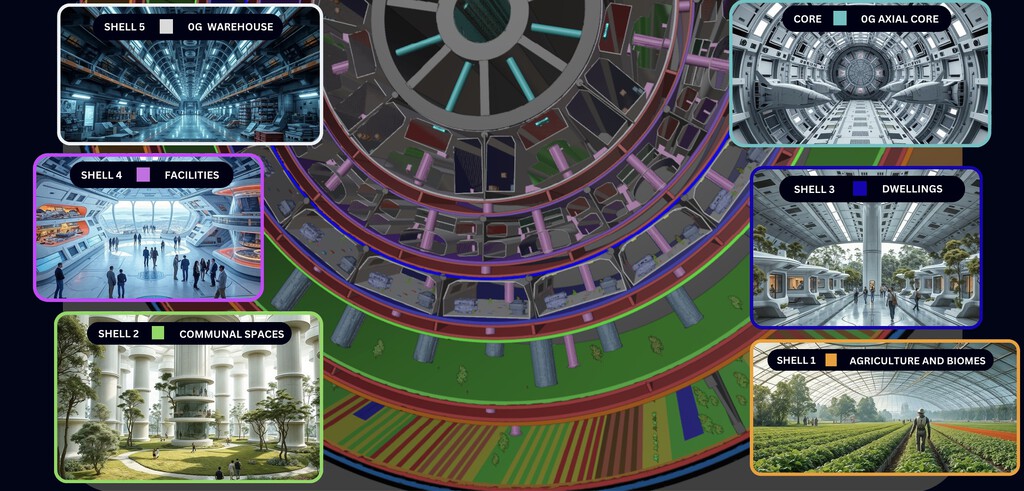
The ship would generate artificial gravity by rotating continuously, allowing passengers to live in Earth-like conditions. This is crucial for long-term health and comfort during the four-century voyage.
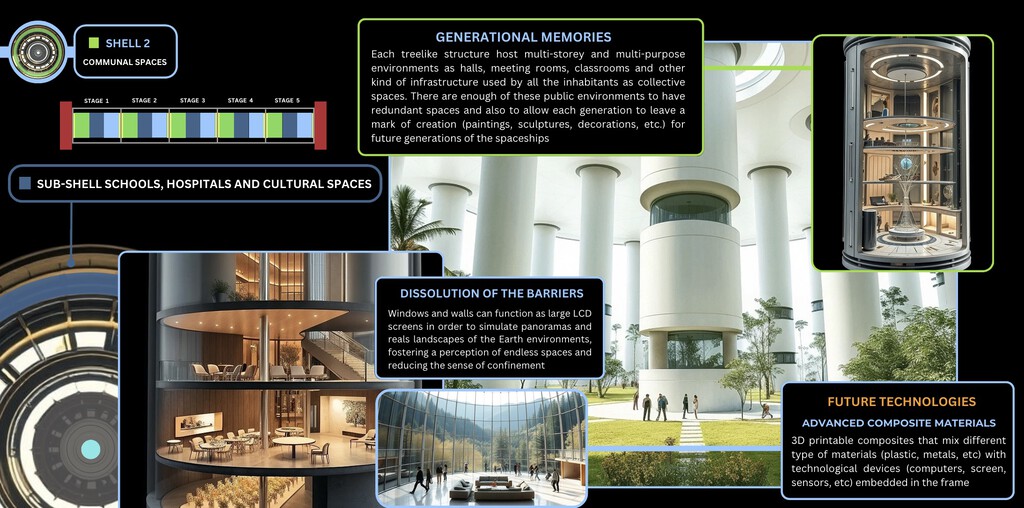
Key Features of the Chrysalis Design
- Length: Approximately 58 kilometers, making it one of the largest structures ever conceived.
- Capacity: 2,400 passengers, who would become the founding population of a new colony.
- Artificial Gravity: Achieved through constant rotation of the cylindrical hull.
- Multi-layered Architecture: Separate zones for living, agriculture, recreation, and life support systems.
- Estimated Construction Time: 20 to 25 years, though this assumes significant advances in space manufacturing.
Why Proxima b?
Proxima b is a rocky exoplanet orbiting within the habitable zone of Proxima Centauri, the closest star to our Sun. It is about 4.24 light-years away, making it the most accessible target for interstellar travel.
While we cannot yet confirm whether Proxima b has a suitable atmosphere or surface conditions, it remains the best candidate for human colonization beyond our solar system. The Chrysalis project envisions arriving after 400 years, with passengers ready to terraform or adapt to the environment.
Engineering Challenges and Feasibility
Building a 58-kilometer spaceship in space would require a massive orbital construction facility and unprecedented international cooperation. The project estimates 20 to 25 years for construction, but that timeline hinges on technologies that are still in their infancy.
Life support for 2,400 people over 400 years is another monumental challenge. The ship would need closed-loop systems for air, water, and food, likely relying on advanced hydroponics and waste recycling.
Comparison with Other Megaprojects
| Project | Length/Scale | Purpose | Estimated Timeline |
|---|---|---|---|
| Chrysalis | 58 km | Interstellar colonization | 400-year journey, 20-25 years to build |
| The Line (Saudi Arabia) | 170 km | Linear smart city | Ongoing, targeted for 2030 |
| International Space Station | 109 m | Orbital research | Operational since 1998 |
Chrysalis dwarfs even the most ambitious Earth-based megaprojects. Its layered design echoes the linear city concept of The Line, but adapted for the harsh environment of deep space.
Who Would Go and How Would Society Function?
The passengers would be a carefully selected group of 2,400 individuals, representing a diverse gene pool and a range of skills necessary for survival. They would need to establish a functioning society aboard the ship, with governance, education, and healthcare systems. Context on how this played out before sits in Chrysalis: A 58-Kilometer Spaceship for 400-Year Journey to Alpha Centauri.
Over 400 years, generations would be born and die aboard Chrysalis. The original crew would become ancestors, and the arrival at Proxima b would be a homecoming for people who have never set foot on a planet. The background to this story is set out in Fermi Explorer Mission: A 2029 Probe to Alpha Centauri. A related thread runs through Science: latest articles.
What Happens Upon Arrival?
Upon reaching Proxima b, the passengers would face the challenge of colonizing an alien world. They would need to assess the planet's resources, build habitats, and adapt to a new gravity and atmosphere. Earlier coverage in Building on Mars Without Earth Bricks: Gelatin and Yeast Solution shows how the argument developed. A closer look at the same subject appears in Moon City Dream Dashed: Water Shortage Limits Lunar Colony Size.
The ship itself could serve as an initial base, providing shelter and life support while the colonists establish infrastructure. The success of the mission would depend on the robustness of the ship's systems and the resilience of the colonists. Anyone following the wider picture can start with Astronaut Constipation Linked to Serious Digestive Problems in Space. The same theme surfaces in Cameroon's Capital Loses Green Space as Yaoundé Expands, which takes a different angle.
FAQ
How long would the Chrysalis journey take?
The journey to Proxima b is estimated to take 400 years. This duration is based on current propulsion concepts and the vast distance of 4.24 light-years.
How many people would travel on Chrysalis?
The ship is designed to carry 2,400 passengers. This number is considered sufficient to maintain genetic diversity and a functioning society over multiple generations.
What is the estimated construction time for Chrysalis?
The project estimates a construction period of 20 to 25 years. However, this assumes the availability of advanced space manufacturing techniques and significant international collaboration.
Why was Proxima b chosen as the destination?
Proxima b is the closest known exoplanet within the habitable zone of its star. Its proximity makes it the most feasible target for interstellar colonization with current or near-future technology.
Browse the Shop
 Acacia frida deluxe solid wood bed frame |
Bedroom bench |
Bed chest drawers |
Lingerie dresser |
Frame base |
Mirror with jewelry storage |
30 Bathroom Vanity |
Memory foam queen mattress |
Mattresses for back pain |
Nightstand set of 2 |
Grand Goldman Shop |
Civil Lawyer
Deutschland Trikot WM 2026







