

The Czechoslovak office desks of 1937 were not ordinary furniture; they were personal mechanical elevators that allowed clerks to glide vertically and laterally along massive walls of filing drawers. This ingenious system, captured in photographs from Prague in 1936 and 1937, automated office work decades before computers. The images, part of the Central Social Insurance Institution (Ústřední sociální pojišťovna) archive, reveal a futuristic vision of bureaucracy in action.
What Were These Mechanical Elevator Desks?
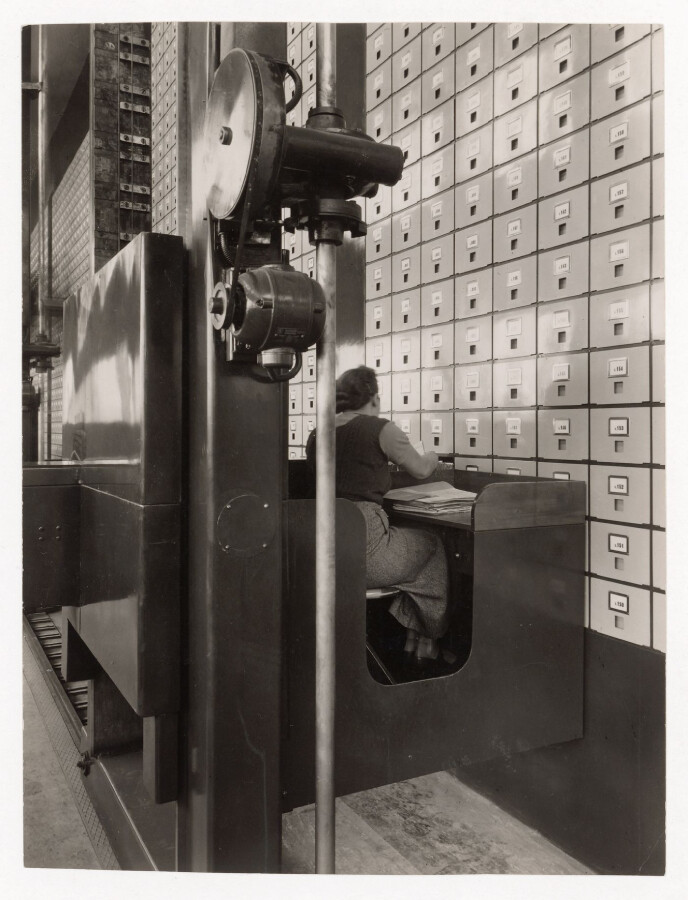
At first glance, the photograph looks like a scene from a science fiction film: three officials seated in cabin-like desks suspended several meters above the floor. These were not static workstations but mobile platforms equipped with controls to move up, down, and sideways. The clerks could navigate to any of the thousands of small filing drawers embedded in the surrounding wall.
Find Original Home Decor sparking conversation at Grand Goldman Shop.

The system was part of a larger project to automate the office—almost a century ago. The Canadian Centre for Architecture holds photographs dated as early as 1936, showing the desks in use. Each desk was essentially a personal elevator that gave the worker direct access to the files they needed without leaving their seat.
The Need for Speed: Managing Social Insurance Records
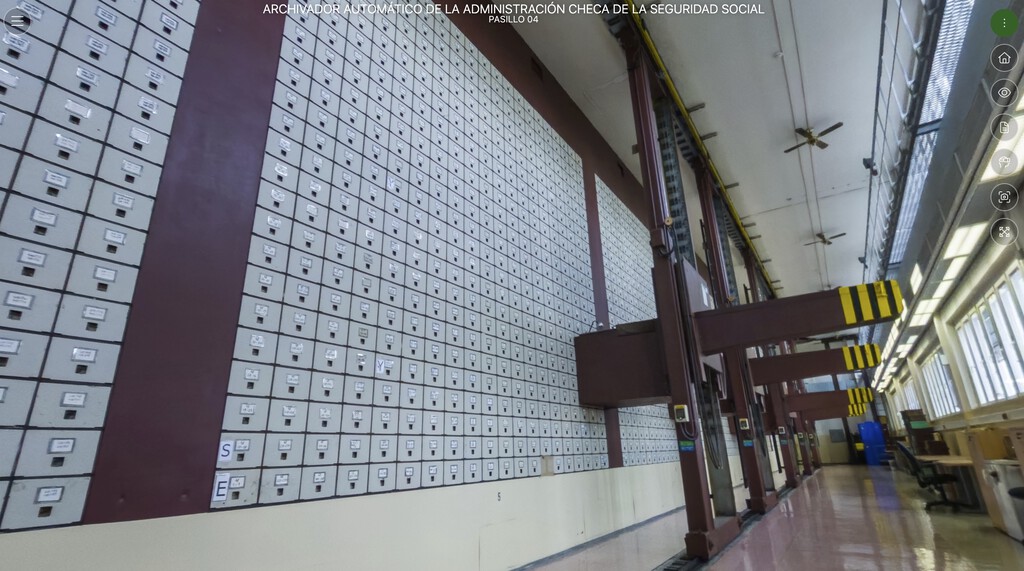
Czechoslovakia's social security system required the storage and retrieval of enormous amounts of information about workers, insured persons, and pensioners. Every record was a piece of paper, and the volume was staggering. The solution was to build a dedicated facility between 1935 and 1936 that could turn that mountain of documentation into something manageable.
The official Czech heritage catalog describes the building as an early example of purpose-built archive architecture. The mechanical desks were the centerpiece of this effort, allowing clerks to file and retrieve documents with unprecedented efficiency. This was data management before the digital age, relying on mechanical ingenuity rather than electronics.

How the System Worked
The desks operated on a system of rails and counterweights, allowing smooth vertical and horizontal movement. Clerks used hand controls to position themselves in front of the desired drawer, which they could then open and access. The entire wall was covered in small compartments, each holding a piece of the vast insurance database.
This setup eliminated the need for ladders or walking, reducing fatigue and speeding up retrieval. It also saved floor space, as the files were stored vertically rather than in rows of cabinets. The design reflected a deep understanding of workflow and ergonomics, long before such terms became buzzwords.
- Personal elevators: Each clerk had a mobile desk that moved vertically and laterally.
- Wall of files: Thousands of drawers embedded in a single wall for compact storage.
- Hand controls: Simple mechanisms for precise positioning.
- Space efficiency: Vertical storage freed up floor area.
- Early automation: Reduced manual labor and increased retrieval speed.
Why This Matters Today
These mechanical desks are a reminder that automation is not a modern invention. The desire to streamline office work and manage information efficiently has driven innovation for over a century. While today's solutions rely on software and robotics, the underlying goals remain the same: speed, accuracy, and space optimization. Context on how this played out before sits in Czechoslovak Office Desks of 1937: Mechanical Elevators for Clerks.
Moreover, the Czechoslovak system highlights the importance of thoughtful design in public services. By investing in this technology, the government improved the administration of social insurance, benefiting millions of citizens. It's a lesson in how infrastructure and tools shape the effectiveness of institutions. The background to this story is set out in Best Standing Desks: Top 7 Electric Sit-Stand Models Reviewed. A related thread runs through Stained Glass Desks: Elegance, Functionality and Style for your Home Office.
Comparison with Modern Office Automation
| Feature | 1937 Mechanical Desks | Modern Office Automation |
|---|---|---|
| Storage Medium | Paper files in drawers | Digital databases and cloud storage |
| Access Method | Mechanical elevators with hand controls | Computer interfaces and search algorithms |
| Space Efficiency | High (vertical wall storage) | Very high (virtual storage) |
| Speed | Moderate (manual movement) | Instantaneous (electronic retrieval) |
| Labor | Requires physical operation | Minimal physical effort |
The Legacy of the Czechoslovak Innovation
Although the mechanical desks were eventually superseded by electronic systems, they represent a pivotal moment in office history. They demonstrate how creative engineering can solve real-world problems, even with limited technology. Today, the photographs serve as a testament to human ingenuity and the timeless quest for efficiency. Earlier coverage in More than 15 options to personalize your office with these incredible desks! shows how the argument developed. A closer look at the same subject appears in Paco Robles Obituary: Last Survivor of 1937 Spanish Child.
Preserved in archives, these images continue to fascinate historians and designers alike. They remind us that the offices of the future have always been imagined, and sometimes built, with the tools of the present. Anyone following the wider picture can start with Paco Robles Obituary: Last Survivor of 1937 Child Migration. The same theme surfaces in Science: latest articles, which takes a different angle.
FAQ
What was the purpose of the mechanical elevator desks?
They were designed to help clerks access thousands of paper files quickly and efficiently, automating the retrieval process in the Czechoslovak social insurance institution.
When and where were these desks used?
The desks were used in Prague in the mid-1930s, specifically around 1936 and 1937, as part of the Central Social Insurance Institution.
How did the clerks operate the desks?
Clerks sat in cabin-like desks and used hand controls to move vertically and horizontally along a wall of filing drawers, positioning themselves directly in front of the needed file.
Why are these desks considered an early example of office automation?
They replaced manual walking and climbing with mechanical movement, significantly speeding up file retrieval and reducing physical effort—a precursor to modern automated systems.
Browse the Shop
 Acacia frida deluxe solid wood bed frame |
Bedroom bench |
Bed chest drawers |
Lingerie dresser |
Frame base |
Mirror with jewelry storage |
30 Bathroom Vanity |
Memory foam queen mattress |
Mattresses for back pain |
Nightstand set of 2 |
Grand Goldman Shop |
Civil Lawyer
Deutschland Trikot WM 2026







