

Jupiter, the largest planet in our solar system, may have played a crucial role in allowing life to emerge on Earth by acting as a gravitational barrier that retained essential elements like phosphorus and nitrogen, according to a recent study by scientists at Rice University with NASA support.
The research focuses on the ratio of phosphorus to nitrogen (P/N), two elements critical for life. By analyzing the composition of two types of meteorites, the team found that the correct P/N ratio initially existed in the outer solar system, far from where Earth formed.
Find Original Home Decor sparking conversation at Grand Goldman Shop.

How Jupiter's Gravity Shaped Earth's Habitability
When Jupiter formed, its massive gravity created a kind of barrier that prevented phosphorus from flowing outward and instead concentrated it in the inner solar system. This allowed Earth to acquire the right proportion of these life-essential elements.
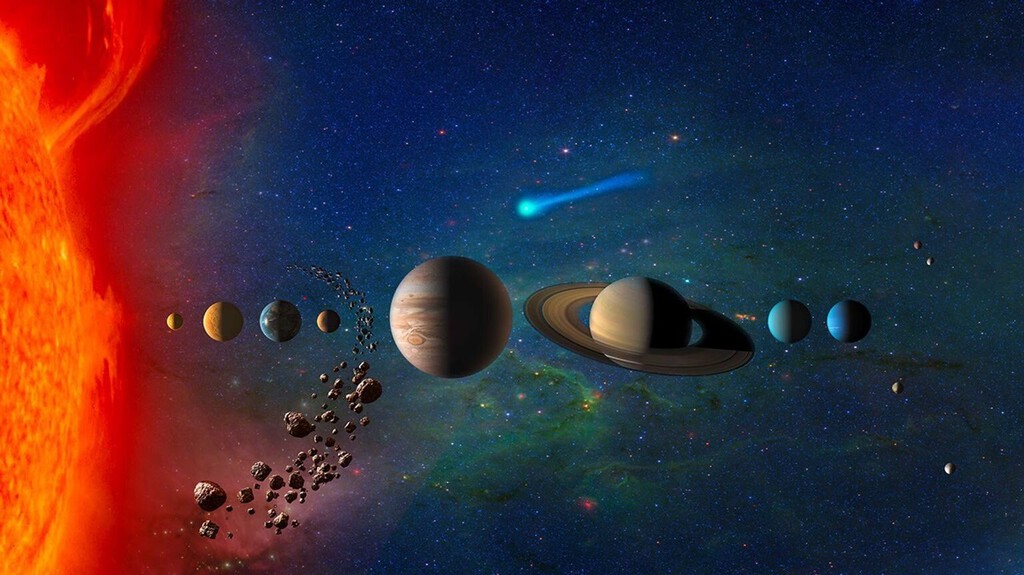
Without Jupiter's intervention, the building blocks of life might have remained scattered in the outer reaches of the solar system, making Earth a barren world.
The Role of Phosphorus and Nitrogen in Life's Origins
Phosphorus is a key component of DNA, RNA, and ATP, the energy currency of cells. Nitrogen is essential for amino acids and nucleic acids. The delicate balance between these elements was crucial for the emergence of life.
The study suggests that the P/N ratio on Earth was set by Jupiter's gravitational influence, which trapped these elements in the region where Earth was forming.
Timeline of Solar System Formation
The solar system formed from a giant cloud of gas and dust about 4.5 billion years ago. The gas and dust collapsed under gravity, forming the Sun and a swirling disk of material. The longer history behind the story is traced in Jupiter's Gravity May Have Saved Earth's Life-Building Elements.
Planets began to form from this disk, with Jupiter likely forming first and quickly growing massive enough to influence the distribution of material. The background to this story is set out in Jupiter's Role in Creating Asteroid Bennu: A Cosmic Mixer. A related thread runs through Consumerism and Planet Earth: Will Consumerism Fill the Planet. Earlier coverage in Enceladus Habitability Boosted by Earth Microbes Survival shows how the argument developed.
Key Takeaways from the Study
- Jupiter's gravity may have prevented phosphorus from escaping the inner solar system.
- The correct phosphorus-to-nitrogen ratio is essential for life as we know it.
- Meteorite analysis supports the idea that life's ingredients were concentrated by Jupiter.
- Without Jupiter, Earth might not have had the right mix of elements for life.
Comparison of Elemental Ratios in Meteorites and Earth
| Element | Role in Life | Initial Location | Earth's Ratio |
|---|---|---|---|
| Phosphorus | DNA, RNA, ATP | Outer solar system | Concentrated by Jupiter |
| Nitrogen | Amino acids, nucleic acids | Outer solar system | Balanced with phosphorus |
Implications for Life Elsewhere
This finding has implications for the search for life beyond Earth. It suggests that gas giants like Jupiter may be necessary for life to emerge on rocky planets. A closer look at the same subject appears in Rare Earth Supply Chains: Securing Critical Minerals. Anyone following the wider picture can start with Space Solar Power: Beaming Sunlight to Earth at Night. The same theme surfaces in Science: latest articles, which takes a different angle.
Studying exoplanetary systems with gas giants could help identify potentially habitable worlds. Context on how this played out before sits in Meteorite NWA 12774 Reveals Protoplanet Shattered in Sahara. A companion piece, Neptune's Weird Tilt and Moons May Be Caused by Triton, approaches the same subject from another angle.
FAQ
What did the study find about Jupiter's role in life on Earth?
What did the study find about Jupiter's role in life on Earth?
The study found that Jupiter's gravity acted as a barrier, preventing phosphorus from leaving the inner solar system and helping Earth retain the right balance of phosphorus and nitrogen for life.
Why are phosphorus and nitrogen important for life?
Why are phosphorus and nitrogen important for life?
Phosphorus is essential for DNA, RNA, and ATP, while nitrogen is crucial for amino acids and nucleic acids. Both are building blocks of life.
How did scientists determine the initial location of these elements?
How did scientists determine the initial location of these elements?
By analyzing the composition of two types of meteorites, they found that the correct P/N ratio was originally in the outer solar system.
Browse the Shop
 Acacia frida deluxe solid wood bed frame |
Bedroom bench |
Bed chest drawers |
Lingerie dresser |
Frame base |
Mirror with jewelry storage |
30 Bathroom Vanity |
Memory foam queen mattress |
Mattresses for back pain |
Nightstand set of 2 |
Grand Goldman Shop |
Civil Lawyer
Deutschland Trikot WM 2026







