

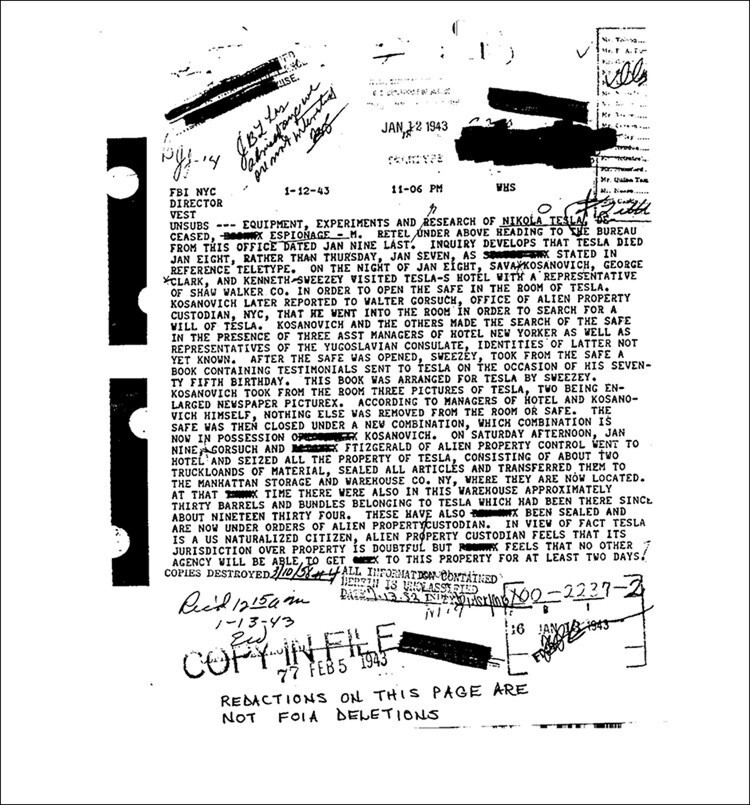
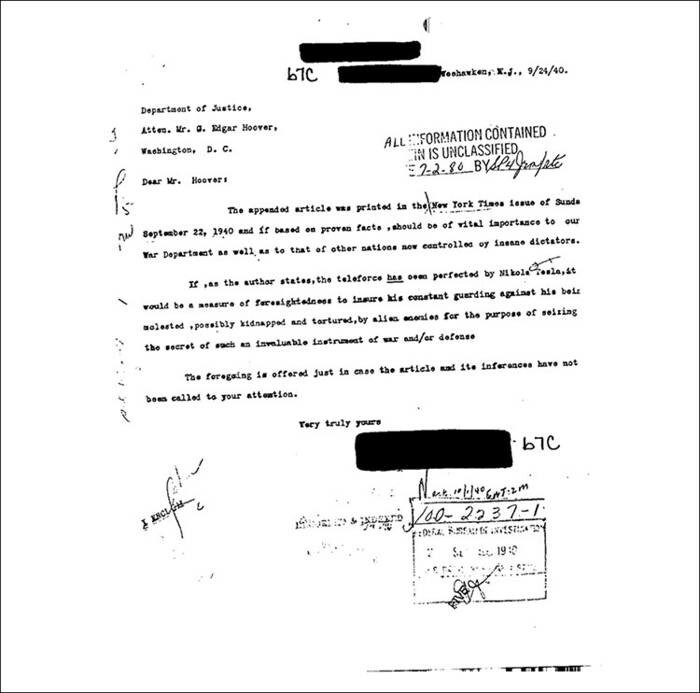
Nikola Tesla's so-called Death Ray remains one of the most tantalizing legends in the history of science, a weapon he insisted could strike targets hundreds of kilometers away and, in his own words, end all wars. What is far less known is that the inventor tried to sell this particle-beam concept to Great Britain for $30 million, a deal documented in files that were declassified years ago.
Tesla built his reputation on real achievements: alternating current, early X-ray work, fluorescent lighting methods, and years of research into wireless power transmission. That genuine legacy is exactly why his claims about a futuristic weapon were taken seriously by governments on both sides of the Atlantic.
Find Original Home Decor sparking conversation at Grand Goldman Shop.

What Was Nikola Tesla's Death Ray?
Tesla's weapon was not a laser in the modern sense. He described a system that would accelerate particles through a vacuum tube and fire a concentrated beam capable of bringing down aircraft and armies at extreme range. He eventually branded the concept Teleforce.
The idea did not emerge in isolation. Throughout the 1920s, several inventors publicly claimed to have built a "death ray" that could destroy planes from a distance. None of them could demonstrate a working device, and Tesla was no exception, yet his scientific credentials gave his version unusual weight.
A claim he defended for the rest of his life
In the early 1930s, Tesla formally announced that he had developed Teleforce successfully. He continued to champion the invention until his death, presenting it as a defensive shield that would make conventional warfare obsolete.

That framing mattered. Tesla was not pitching a weapon of conquest but a deterrent, a machine he believed would make borders and armies irrelevant because no fleet or air force could survive approaching it.

The $30 Million Offer to Great Britain
According to the declassified documents, Tesla negotiated with British officials over a sale price of $30 million for the Death Ray. The sum was enormous for the era, reflecting both the scale of the claimed capability and the desperation of the interwar arms race.
The United States also showed strong interest in the invention. Government attention on both sides of the Atlantic shows how seriously the claim was treated, even without a public demonstration.
Why governments kept listening
The 1930s were defined by fear of aerial bombing. A weapon that could stop aircraft at long range promised to neutralize the single greatest military threat of the age, which is precisely why officials kept taking meetings.
No deal was ever completed. The historical record shows interest and negotiation, not a delivered weapon, and no verified working prototype of Teleforce has ever surfaced.
Key Takeaways From the Tesla Death Ray Story
- Tesla claimed his Death Ray, later called Teleforce, could destroy targets hundreds of kilometers away.
- He tried to sell the weapon to Great Britain for $30 million, according to declassified documents.
- The United States also expressed serious interest in the invention.
- Multiple inventors made similar death ray claims in the 1920s, but none could prove them.
- Tesla promoted Teleforce for the rest of his life despite never demonstrating it publicly.
Fact, Myth, and the Teleforce Legacy
The Death Ray sits precisely on the line between myth and reality. Tesla's underlying physics research was real, and particle-beam concepts would later be studied by actual military programs, but the specific device he described was never shown to function.
This pattern of visionary claims outrunning verifiable proof follows Tesla through much of his later career, and it is a cautionary tale for anyone evaluating bold technological promises today. Context on how this played out before sits in Tesla's Death Ray: The $30 Million Weapon He Tried to Sell.
| Element | What the Record Shows |
|---|---|
| Invention name | Death Ray, later branded Teleforce |
| Claimed capability | Destroy aircraft and targets hundreds of km away |
| Buyer approached | Great Britain, with US interest also documented |
| Asking price | $30 million |
| Public demonstration | None ever verified |
| Outcome | No completed sale or proven prototype |
Why the Story Still Matters
The episode reveals how scientific celebrity shapes national security decisions. Tesla's name alone opened doors that other inventors never reached, and governments were willing to negotiate over a weapon no one had seen operate. The background to this story is set out in Science: latest articles. A related thread runs through Czechoslovak Office Desks of 1937: Mechanical Elevators for Clerks.
It also shows how deterrence logic gets wrapped around unproven technology, a theme that echoes through modern defense debates over directed-energy weapons and missile defense. Earlier coverage in Spanish Startup Kreios Space Nears VLEO Satellite Breakthrough shows how the argument developed. A closer look at the same subject appears in China's 3.2 Petabit Fiber Sets New Data Speed Record.
For readers tracing how ambitious ideas move from laboratory to marketplace, Tesla's negotiation is a vivid case study in hype, credibility, and the price of a promise. Anyone following the wider picture can start with UK's Secret Kamikaze Plan to Destroy Argentina's Five Fighter Jets. The same theme surfaces in UK Police Blamed for Letting US Military Take Over Airbase Trial, which takes a different angle.
FAQ
Did Nikola Tesla actually build a working Death Ray?
There is no verified evidence that Tesla built a functioning Death Ray or Teleforce device. He claimed success in the early 1930s and defended the claim for the rest of his life, but no public demonstration or working prototype was ever documented.
How much did Tesla want for the Death Ray?
Declassified documents indicate Tesla negotiated with Great Britain over a price of $30 million for the weapon. The United States also showed interest, but no sale was ever completed.
What was Teleforce?
Teleforce was Tesla's name for his proposed particle-beam weapon, which he said could fire a concentrated beam at targets hundreds of kilometers away. He presented it as a defensive weapon that would end war by making attack impossible.
Why did governments take the claim seriously?
Tesla's real scientific achievements gave his claims unusual credibility, and the 1930s fear of aerial bombing made any potential defense against aircraft strategically valuable. That combination kept officials in both Britain and the US engaged in talks.
Browse the Shop
 Acacia frida deluxe solid wood bed frame |
Bedroom bench |
Bed chest drawers |
Lingerie dresser |
Frame base |
Mirror with jewelry storage |
30 Bathroom Vanity |
Memory foam queen mattress |
Mattresses for back pain |
Nightstand set of 2 |
Grand Goldman Shop |
Civil Lawyer
Deutschland Trikot WM 2026







