

Haier has unveiled its 2026 TV lineup, and the message is clear: the company is betting on MiniLED technology and massive screens up to 115 inches, while skipping OLED entirely. The Chinese manufacturer aims to convince buyers that bigger is better and that picture quality doesn't require OLED.
The announcement comes after a tough year for the Spanish TV market. According to Haier, Spaniards bought 15% fewer televisions in 2025 compared to the previous year, and manufacturers ended up with a stock surplus that nearly reached 30% of the units shipped to stores. In that context, Haier managed to grow 15% in Spain, a market it entered just three years ago.
Find Original Home Decor sparking conversation at Grand Goldman Shop.

Why Haier Is Doubling Down on MiniLED
Haier's strategy for 2026 rests on two pillars: MiniLED as the preferred technology and screen sizes that go far beyond the mainstream. Javier Juristo, director of Haier's TV business unit in Spain, sums it up: "Our mission is not to battle on price." Instead, the company wants to compete on image quality, sound, size, and connectivity.
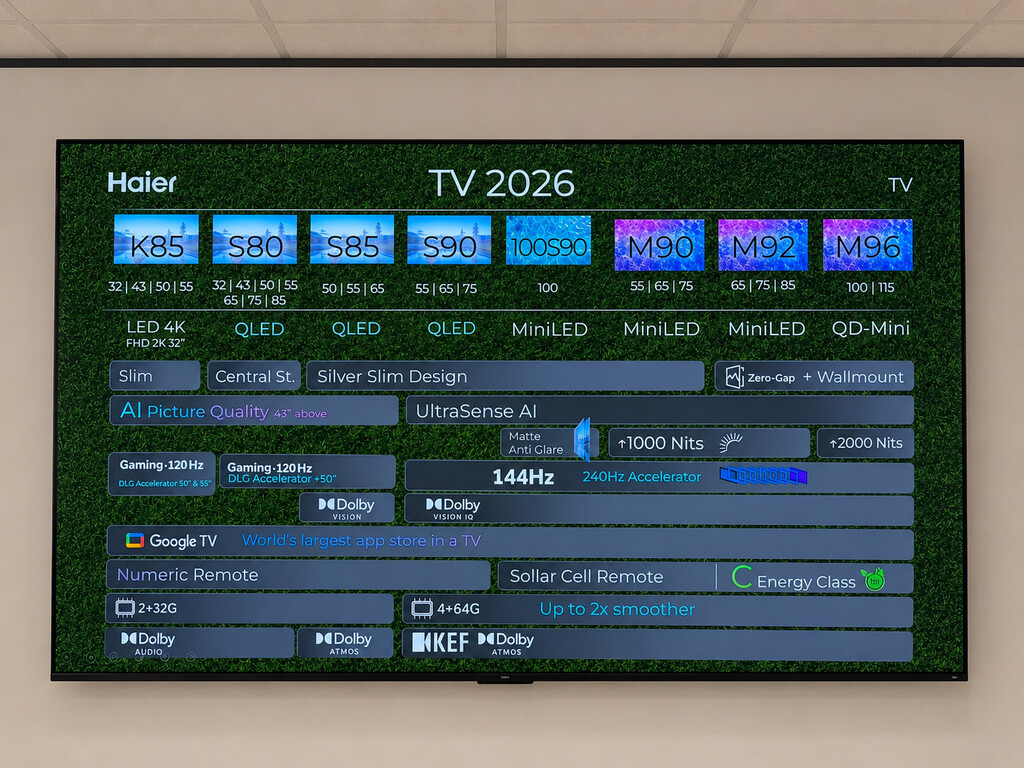
By choosing MiniLED over OLED, Haier avoids the high production costs and burn-in risks associated with OLED panels. MiniLED also allows for very high brightness levels, which is crucial for large screens in bright living rooms. Haier believes this combination—big size plus high brightness—is what consumers want, especially with the 2026 World Cup on the horizon as a major sales driver.
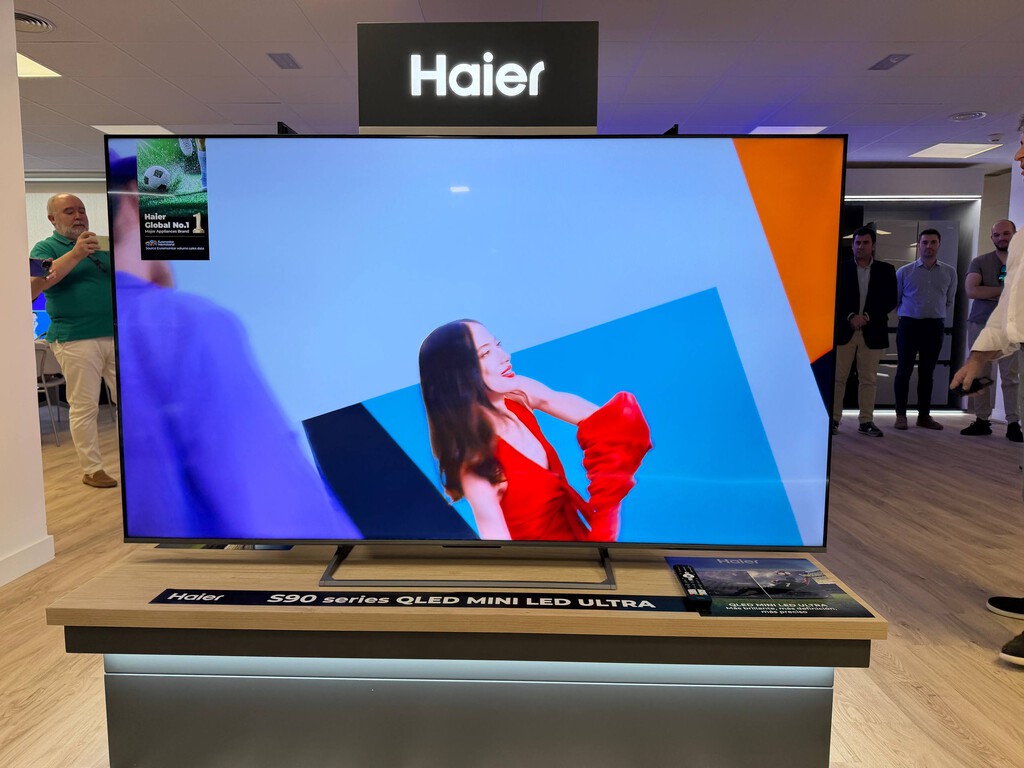
Key Takeaways from Haier's 2026 TV Strategy
- No OLED: Haier is skipping OLED and focusing on MiniLED for its 2026 lineup.
- Up to 115 inches: The company is pushing extremely large screen sizes to stand out.
- Premium over price: Haier aims to compete on features, not on being the cheapest option.
- Spain growth: Despite a 15% market decline in 2025, Haier grew 15% in the country.
- World Cup catalyst: The 2026 World Cup is expected to boost TV sales, and Haier is positioning itself to capitalize.
How Haier's 2026 TVs Compare to Other Technologies
To understand Haier's bet, it's helpful to compare MiniLED with OLED and traditional LED. The table below outlines the main differences based on Haier's positioning and general industry knowledge.
| Feature | Haier MiniLED (2026) | OLED | Standard LED |
|---|---|---|---|
| Brightness | Very high | Moderate | Moderate |
| Risk of burn-in | None | Yes | None |
| Max screen size | Up to 115 inches | Typically up to 97 inches | Up to 98 inches |
| Price for large sizes | Competitive | Very high | Lower |
As the table shows, MiniLED offers advantages in brightness and size without the burn-in concerns of OLED. For Haier, this makes MiniLED the ideal technology to push huge screens at more accessible price points than OLED would allow.
The Spanish Market Context
Spain's TV market had one of its worst years in 2025. According to Haier, purchases fell 15%, and the gap between what manufacturers shipped and what consumers bought approached 30%. This left retailers and brands with excess inventory. Despite this, Haier's 15% growth suggests its focus on premium features is resonating with Spanish consumers. The background to this story is set out in OLED vs MiniLED and RGB MiniLED: The 2026 TV Battle for Picture Quality. A related thread runs through Hisense IFA 2026: RGB MiniLED TVs and AI Kitchen Appliances. Earlier coverage in Samsung 65-Inch MiniLED TV at Carrefour: Lowest Price shows how the argument developed.
With the 2026 World Cup as a major catalyst, the industry hopes to recover lost ground. Haier's aggressive push into large-screen MiniLED TVs could position it well to capture demand from soccer fans looking for a big-screen experience. Juristo emphasizes that Haier's growth is not an anomaly but the result of reading the market correctly: in TVs, it's no longer about who cuts prices the most, but who offers the most attractive proposition. A closer look at the same subject appears in Samsung 65-Inch MiniLED TV Drops to €699 at Carrefour. Anyone following the wider picture can start with Samsung 65-Inch MiniLED TV at Carrefour Outlet Price. The same theme surfaces in TCL 98T8D 98-Inch QD-MiniLED TV Hits Lowest Price, which takes a different angle.
Whether Haier's bet on MiniLED and giant screens pays off remains to be seen. But for consumers, more competition in the large-screen segment could mean better features at lower prices. As the 2026 models roll out, buyers will have more options than ever for creating a home theater experience. Context on how this played out before sits in LG 65QNED70B6C Review: MiniLED 65-Inch TV Under 500 Euros. A companion piece, Carrefour Discounts 75-Inch TCL MiniLED Google TV to €849, approaches the same subject from another angle.
FAQ
Why is Haier not making OLED TVs?
Haier has chosen to focus on MiniLED because it offers high brightness and large screen sizes without the burn-in risk and high production costs of OLED. This aligns with its strategy to compete on features rather than price.
What sizes will Haier's 2026 TVs come in?
Haier's 2026 lineup includes screens up to 115 inches, emphasizing very large sizes for an immersive viewing experience. The exact size range has not been detailed, but the focus is clearly on the premium large-screen segment.
How did Haier perform in Spain in 2025?
Despite a 15% decline in the overall Spanish TV market, Haier grew 15% in the country. The company attributes this to its focus on premium features and a compelling product mix.
Will the 2026 World Cup boost TV sales?
The industry expects the World Cup to be a major sales driver, as major sporting events typically spur TV upgrades. Haier is positioning its large-screen MiniLED TVs to capitalize on this demand.
Browse the Shop
 Acacia frida deluxe solid wood bed frame |
Bedroom bench |
Bed chest drawers |
Lingerie dresser |
Frame base |
Mirror with jewelry storage |
30 Bathroom Vanity |
Memory foam queen mattress |
Mattresses for back pain |
Nightstand set of 2 |
Grand Goldman Shop |
Civil Lawyer
Deutschland Trikot WM 2026







