

Archaeologists in Senon, northeastern France, have unearthed a remarkable Roman coin hoard: three amphorae containing approximately 40,000 coins dating back 1,800 years. The discovery, made during construction work, offers a rare glimpse into the region's ancient past.
Senon, a small town near the borders with Belgium, Luxembourg, and Germany, was once a significant settlement of the Mediomatrici, a Celtic tribe whose capital was nearby Metz. The excavation revealed layers spanning from the Gallic period to the mid-4th century AD.
Find Original Home Decor sparking conversation at Grand Goldman Shop.

Uncovering the Roman Coin Hoard
The find was almost accidental, as is often the case in preventive archaeology. According to the National Institute for Preventive Archaeological Research (INRAP), the coins were found during the expansion of a road. The three amphorae—large ceramic containers used for transporting goods—were buried together, suggesting they were intentionally hidden.
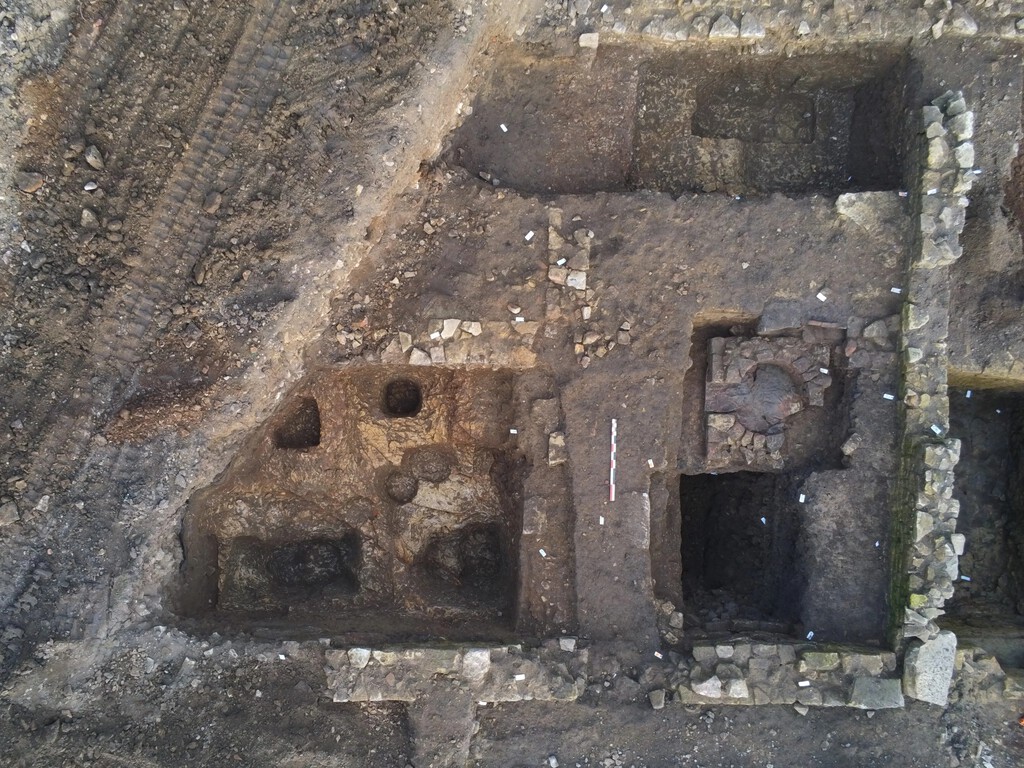
The coins themselves are still being studied, but initial assessments indicate they date to around the 3rd century AD. Such hoards are typically associated with periods of unrest, when people buried their valuables for safekeeping.
Significance of the Discovery
This Roman coin hoard is one of the largest ever found in France. It provides valuable insights into the economy and daily life of the region during the Roman era. The sheer number of coins suggests a substantial sum, possibly linked to military payments or trade.
Moreover, the amphorae themselves are of interest. They were likely produced locally, indicating active pottery workshops in the area. The coins, mostly bronze and silver, will undergo cleaning and analysis to determine their exact origin and date.
What the Coins Reveal About Roman Gaul
The hoard offers a snapshot of a turbulent time. The 3rd century AD was marked by invasions and political instability, which may have prompted the burial of wealth. Similar hoards have been found across Gaul, but the size of this one is exceptional.
Researchers hope to trace the coins' circulation and understand why they were never recovered. Perhaps the owner died or fled, leaving the treasure hidden for nearly two millennia. The background to this story is set out in Viking Silver Treasure Unearthed in Denmark by Gardener. A related thread runs through Roman Treasure Hoards: Why 7.5 Million Coins Were Buried and Never Recovered. Earlier coverage in Wales Roman Treasure: 15,000 Silver Coins May Set Record shows how the argument developed.
Preservation and Future Research
The coins are now being cleaned and catalogued at INRAP facilities. This painstaking process will take months, but it will reveal details about the minting techniques and the economy of the time. A closer look at the same subject appears in 2,600 Medieval Coins Unearthed in Kolomna Reveal Hidden Power. Anyone following the wider picture can start with Paris Notre-Dame Roman City Unearthed: The 1965 Discovery. The same theme surfaces in Roman Theater in Málaga Unearthed After 35 Years: Seating Found Intact, which takes a different angle.
The site itself has been protected, and further excavations may uncover more about the ancient settlement. Senon's position near major trade routes likely contributed to its prosperity, and this hoard is a testament to that. Context on how this played out before sits in Ancient Child Burial with Sword Unearthed in France. A companion piece, Neanderthal Woodworking: 40,000-Year-Old Craft Unearthed in Spain, approaches the same subject from another angle.
FAQ
What was found in Senon, France?
Archaeologists found three amphorae containing around 40,000 Roman coins dating back 1,800 years. The discovery was made during road construction.
Why are these coins significant?
The hoard is one of the largest in France and provides insights into the economy and history of Roman Gaul, particularly during the 3rd century AD.
What will happen to the coins?
The coins will be cleaned, studied, and likely displayed in a museum. They will help researchers understand coin circulation and minting in the region.
How old are the coins?
The coins are approximately 1,800 years old, dating to the 3rd century AD, a period of significant instability in the Roman Empire.
Browse the Shop
 Acacia frida deluxe solid wood bed frame |
Bedroom bench |
Bed chest drawers |
Lingerie dresser |
Frame base |
Mirror with jewelry storage |
30 Bathroom Vanity |
Memory foam queen mattress |
Mattresses for back pain |
Nightstand set of 2 |
Grand Goldman Shop |
Civil Lawyer
Deutschland Trikot WM 2026







