

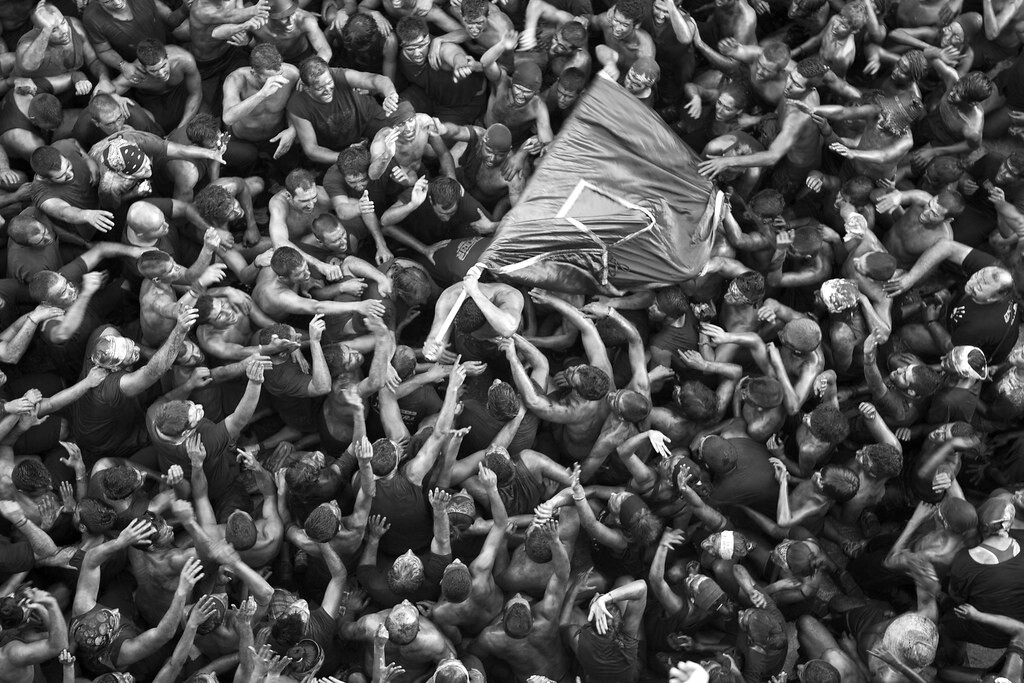
In Baza, Granada, a 530-year tradition continues: chasing and throwing paint at a man who attempts to recover the Virgin of Piedad. This unique festival, held every September 6, draws thousands of participants and spectators to the streets of this Andalusian town.
Antonio Vera, dressed as a court jester, ran through the streets this year, just as generations of locals have before him. His mission: reach the church clean and retrieve the Virgin. His fate: to fail, as all his predecessors have for over five centuries.
Find Original, High-end Home Decor that spark conversation at Grand Goldman Shop.
The Legend of the Virgin of Piedad
The tradition dates back to 1490, during construction of the Merced church. A worker from Guadix struck a wall and discovered a buried statue of the Virgin. According to legend, the find prompted the phrase "¡Baza, Guadix, piedad de mí!" (Baza, Guadix, pity me!), which gave the image its name: the Virgin of Piedad.
The discovery sparked a dispute between Baza and Guadix over ownership of the statue, a conflict that persists in local lore to this day. The festival reenacts this struggle, with the runner representing Baza's attempt to claim the Virgin.
How the Paint Tradition Works
Each year, thousands of hands covered in paint chase a single man dressed as a jester. When they catch him, there are no blows—only paint: on his face, his hair, every inch of a suit embroidered with suns and sunflowers. It's not a paintball battle, but it's close.
Participants fill bottles with black ink, and everyone ends up looking like victims of a squid attack. Showers are set up, and rivers of black ink swirl through the streets of Baza until they reach the sewers. The event has only been suspended during the Spanish Civil War and the forced pause of the pandemic in 2020 and 2021.
Why Losing Is the Point
The runner's destiny, like that of his ancestors for over 500 years, is to lose. The festival celebrates the futility of the struggle and the shared identity of the town. It's a ritual of collective participation, where the community comes together to uphold a tradition that has survived for centuries. Context on how this played out before sits in Baza's 530-Year Paint Tradition: Running for the Virgin of Piedad.
The paint symbolizes the chaos and confusion of the dispute, while the runner's inevitable failure represents the unresolved nature of the conflict. Yet, the festival is also a celebration of local pride and resilience. The background to this story is set out in Trending: latest articles. A related thread runs through Spanish Towns Bet on Where a Bull Will Poop in Quirky Contest.
What to Watch Next
As the tradition continues, it remains a vital part of Baza's cultural heritage. Visitors can experience the spectacle each September, witnessing firsthand the unique blend of history, legend, and community spirit. Earlier coverage in Why Asian Students Outperform Spanish Peers in PISA 2025 shows how the argument developed. A closer look at the same subject appears in Spain's 1,500 Museums: Are Local Treasures Worth the Risk.
For those interested in similar cultural festivals, exploring other Spanish traditions can provide deeper insight into the country's rich folklore. Anyone following the wider picture can start with Netflix Publishes Box Office for La Bola Negra in Historic First. The same theme surfaces in Spanish Game Dev's Server Blocked by LaLiga IP Bans During Matches, which takes a different angle.
FAQ
What is the Baza paint tradition?
The Baza paint tradition is an annual festival in Baza, Granada, where a man dressed as a jester attempts to reach the church and retrieve the Virgin of Piedad while being chased and pelted with black paint by thousands of participants.
When does the festival take place?
The festival is held every September 6 in Baza, Granada, Spain.
Why is the runner always supposed to lose?
The runner's failure symbolizes the unresolved dispute between Baza and Guadix over the Virgin of Piedad and celebrates the community's shared identity and resilience.
Has the festival ever been canceled?
The festival has only been suspended during the Spanish Civil War and the COVID-19 pandemic in 2020 and 2021.
Browse the Shop
 Acacia frida deluxe solid wood bed frame |
Bedroom bench |
Bed chest drawers |
Lingerie dresser |
Frame base |
Mirror with jewelry storage |
30 Bathroom Vanity |
Memory foam queen mattress |
Mattresses for back pain |
Nightstand set of 2 |
Grand Goldman Shop |
Civil Lawyer
Deutschland Trikot WM 2026







