

The location of a French nuclear-powered aircraft carrier was inadvertently leaked by a runner aboard who posted a Strava activity, revealing the vessel's position in the Mediterranean Sea. The incident, reported by Le Monde, highlights the growing security risks posed by fitness tracking apps.
Le Monde journalists spotted a Strava post showing someone running in circles in the middle of the Mediterranean, dozens of kilometers off the coasts of Turkey and Cyprus and hundreds from Egypt. The odd pattern raised suspicions, and a quick check on Copernicus, the European Union's Earth observation program, confirmed the presence of a large ship near the recorded location.
Find Original Home Decor sparking conversation at Grand Goldman Shop.

How a Simple Run Exposed a Carrier
Strava is a popular app for athletes to share routes, times, and performance data. While harmless for most users, it becomes a security concern when military personnel use it on active deployments. In this case, the runner was a Navy officer aboard the carrier, and the public post effectively disclosed the ship's whereabouts in near real-time.
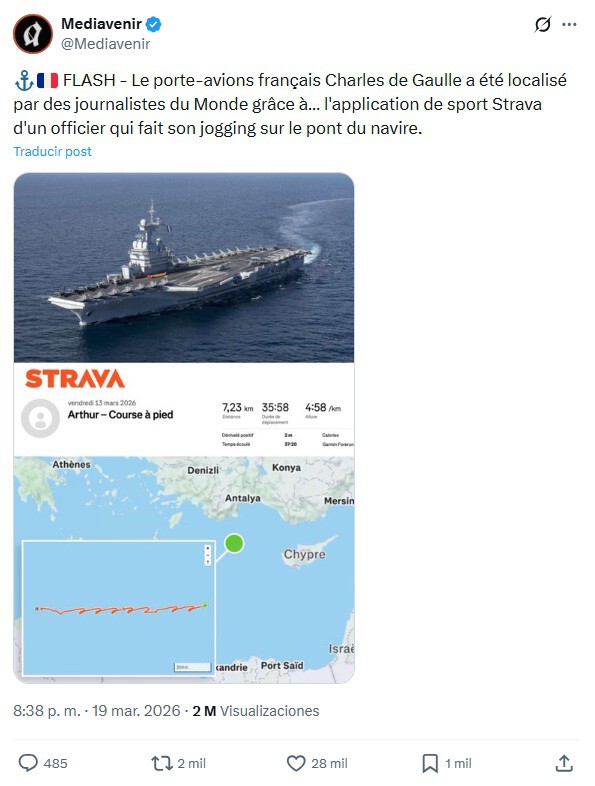
The French Navy has not commented on the incident, but it underscores the challenges of maintaining operational security in an age of ubiquitous social media and wearable technology. The carrier, which is powered by nuclear reactors, is a key asset in France's military strategy.
Why It Matters: Operational Security in the Digital Age
The leak is not an isolated incident. In recent years, Strava has been used to reveal the positions of ships, bodyguards, and even military bases. Le Monde has published several articles warning about these risks. The app's heatmap feature, which aggregates user data, has previously exposed sensitive locations.
For military organizations, such leaks can compromise missions, endanger personnel, and provide adversaries with valuable intelligence. The French Navy, like other armed forces, likely has strict rules about social media use during operations. However, enforcement is difficult when personal devices and apps are involved.
What This Means for Military Personnel and Privacy
The incident raises questions about the balance between personal privacy and operational security. Service members often use fitness apps to maintain health and morale, but the data they share can have unintended consequences.
Experts recommend that military personnel disable location tracking on fitness apps or use them only in secure areas. Some armed forces have banned such apps on deployments. The French Navy may need to review its policies to prevent future leaks. The background to this story is set out in US Aircraft Carrier Arrives in Middle East to Relieve USS Lincoln. A related thread runs through Trump Orders Steam Catapults for Navy Aircraft Carriers. Earlier coverage in French Navy Warning Shots Near UK MP: Channel Incident Explained shows how the argument developed.
Key Takeaways
- Strava activity by a French Navy officer revealed the location of a nuclear-powered aircraft carrier in the Mediterranean.
- Le Monde used Copernicus satellite imagery to confirm the ship's presence near the posted route.
- Operational security risks from fitness apps are growing, with previous incidents involving ships and bodyguards.
- Military policies may need updating to address personal device use during sensitive operations.
- Privacy vs. security is an ongoing challenge for armed forces worldwide.
Comparison of Fitness App Security Risks
| App | Feature | Risk Level | Mitigation |
|---|---|---|---|
| Strava | Public route sharing | High | Disable location or use privacy zones |
| Garmin Connect | Activity maps | Medium | Set activities to private |
| Apple Fitness | Workout routes | Low | Limited sharing options |
| Fitbit | GPS tracking | Medium | Turn off GPS for outdoor workouts |
What to Watch Next
The French Navy is likely to investigate the incident and may tighten regulations on social media and fitness app use during deployments. The case also adds pressure on app developers to consider security features for sensitive users. A closer look at the same subject appears in China's Type 004 Aircraft Carrier: A Technological Leap at Dalian Shipyard. Anyone following the wider picture can start with Captain Chris Philp Hunter-Killer Takes on French Navy. The same theme surfaces in France Sold Brazil a 265-Meter Aircraft Carrier With a Toxic Surprise, which takes a different angle.
As wearable technology becomes more prevalent, the risk of similar leaks will only increase. Military organizations worldwide must adapt their security protocols to address this digital threat. Context on how this played out before sits in Trump Orders Steam Catapults for New Aircraft Carrier. A companion piece, South Korea's KF-21 Fighter Nears Operational Service Milestone, approaches the same subject from another angle.
FAQ
What happened with the French aircraft carrier and Strava?
A French Navy officer aboard a nuclear-powered aircraft carrier posted a Strava activity that revealed the ship's location in the Mediterranean. Journalists from Le Monde spotted the post and confirmed the ship's presence using satellite imagery.
Why is this a security concern?
Revealing the location of a military vessel can compromise missions and endanger personnel. Adversaries could use such information to track or target the ship.
Has this happened before?
Yes, Strava has previously been used to expose the positions of ships, bodyguards, and military bases. Le Monde has reported on multiple such incidents.
What can military personnel do to prevent leaks?
They should disable location tracking on fitness apps, use privacy settings, and avoid posting activities during sensitive operations. Military organizations should also enforce strict social media policies.
Browse the Shop
 Acacia frida deluxe solid wood bed frame |
Bedroom bench |
Bed chest drawers |
Lingerie dresser |
Frame base |
Mirror with jewelry storage |
30 Bathroom Vanity |
Memory foam queen mattress |
Mattresses for back pain |
Nightstand set of 2 |
Grand Goldman Shop |
Civil Lawyer
Deutschland Trikot WM 2026







