

Spain's Harrier fighters have overcome a longstanding fuel limitation with a groundbreaking aerial refueling from an A330 MRTT, marking a significant leap in naval aviation capabilities. This first-of-its-kind operation for the Spanish Navy enhances mission range and persistence, potentially reshaping future maritime operations.
For decades, Harrier operations have been constrained by the amount of fuel they can carry at takeoff from a carrier. This limitation dictated mission duration, radius of action, and the ability to sustain operations far from the ship. Now, with aerial refueling, those constraints are being lifted.
Find Original Home Decor sparking conversation at Grand Goldman Shop.

What Happened: First Aerial Refueling of a Spanish Harrier
In a historic maneuver, a Spanish Harrier was refueled mid-air by an A330 MRTT (Multi Role Tanker Transport) of the Spanish Air and Space Force. This achievement demonstrates the compatibility between the Harrier and the modern tanker, opening new operational possibilities.
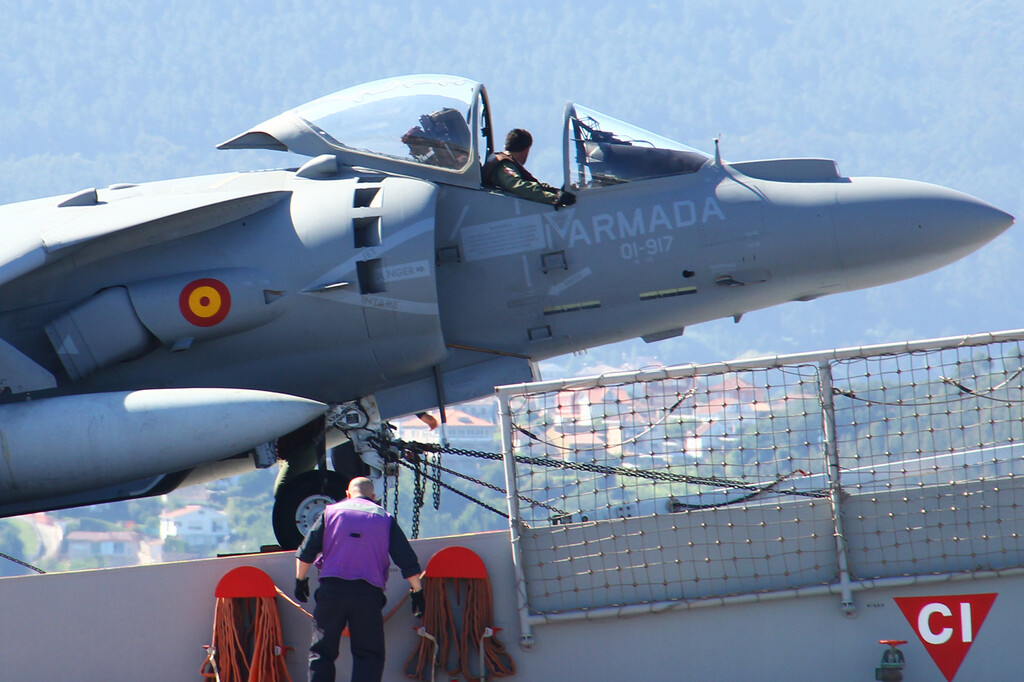
The A330 MRTT is a highly capable tanker, and its integration with the Harrier fleet signifies a major step forward in interoperability and force projection. The operation, while technical in nature, has profound implications for how the Spanish Navy can deploy its Harrier force.
Why It Matters: Breaking the Fuel Barrier
The Harrier's dependence on fuel available at takeoff has always been a critical factor in mission planning. Pilots often had to calculate every maneuver meticulously to ensure they had enough fuel to return to the carrier, especially during operations in adverse conditions.
With aerial refueling, Harriers can now stay airborne longer, extend their combat radius, and maintain a presence in contested areas without the constant worry of fuel shortages. This capability is particularly crucial in modern naval warfare, where persistence and reach are increasingly important.
Key Benefits of Harrier Aerial Refueling
- Extended mission range: Harriers can now operate farther from the carrier, covering larger areas and responding to threats at greater distances.
- Increased persistence: With the ability to refuel in the air, Harriers can remain on station longer, providing continuous support to naval operations.
- Enhanced flexibility: Mission planners can adjust tactics in real-time without being constrained by fuel calculations.
- Improved interoperability: The successful refueling demonstrates seamless cooperation between the Navy and Air Force, a key factor in joint operations.
- Greater payload options: With less fuel needed at takeoff, Harriers can carry more weapons or equipment, increasing their combat effectiveness.
Comparing Harrier Capabilities: Before and After Aerial Refueling
| Aspect | Before Aerial Refueling | After Aerial Refueling |
|---|---|---|
| Mission Range | Limited by onboard fuel | Significantly extended |
| Time on Station | Short, constrained by fuel | Extended, enabling sustained presence |
| Payload Capacity | Reduced due to fuel needs | Increased, more weapons/equipment |
| Operational Flexibility | Limited by fuel calculations | Enhanced, dynamic retasking possible |
Who Affects: Spanish Navy and Beyond
This development directly impacts the Spanish Navy's Harrier fleet, which has been a cornerstone of Spain's naval aviation. The ability to refuel in the air means that the Navy can project power more effectively and support coalition operations with greater endurance. The longer history behind the story is traced in Spain's Harrier Fighters Overcome Fuel Limit with A330 MRTT.
Moreover, this achievement strengthens Spain's position in joint and allied operations, as interoperability with tanker aircraft is a key enabler for combined missions. It also sets a precedent for other Harrier operators, such as Italy and the United States, to explore similar capabilities. The background to this story is set out in Spain's Harrier Fleet Gets Life Extension to 2032 Without F-35. A related thread runs through Airbus Opens Second A330 MRTT Conversion Center in Seville. Earlier coverage in Spain Coach Reveals No Man-Marking for Messi in World Cup Final shows how the argument developed.
What to Watch Next: Implications for Naval Aviation
The successful refueling is just the beginning. The Spanish Navy will likely integrate this capability into its operational doctrine, training pilots and crews to maximize the benefits. Future exercises will test the limits of extended range and persistence, potentially leading to new tactics and strategies. A closer look at the same subject appears in Spain Coach Luis de la Fuente Reveals No Man-Marking for Messi in. Anyone following the wider picture can start with 20mph Speed Limits: The Future of Urban Driving. The same theme surfaces in Trending: latest articles, which takes a different angle.
Additionally, this milestone may accelerate the development of similar capabilities in other Harrier-operating nations, fostering greater cooperation and standardization. As naval aviation continues to evolve, the ability to refuel in the air will become increasingly essential for maintaining a competitive edge. Context on how this played out before sits in F-47 vs China's Sixth-Gen Fighters: Who Really Leads the Race. A companion piece, Inside Ukrainian Unit Training Chinese Fighters for War, approaches the same subject from another angle.
FAQ
What is the significance of the first aerial refueling of a Spanish Harrier?
It marks the first time a Spanish Harrier has been refueled mid-air, overcoming a longstanding fuel limitation and significantly enhancing mission range and persistence. This capability allows the Harrier to operate farther from the carrier and stay airborne longer.
How does aerial refueling change Harrier operations?
Aerial refueling extends the Harrier's combat radius, increases time on station, and provides greater flexibility in mission planning. It also allows the aircraft to carry more payload since less fuel is needed at takeoff.
Which aircraft performed the refueling?
The refueling was carried out by an A330 MRTT (Multi Role Tanker Transport) of the Spanish Air and Space Force, demonstrating interoperability between the Navy and Air Force.
What does this mean for future naval operations?
It enhances the Spanish Navy's ability to project power and sustain operations at greater distances, and it sets a precedent for other Harrier operators to adopt similar capabilities, improving joint and allied interoperability.
Browse the Shop
 Acacia frida deluxe solid wood bed frame |
Bedroom bench |
Bed chest drawers |
Lingerie dresser |
Frame base |
Mirror with jewelry storage |
30 Bathroom Vanity |
Memory foam queen mattress |
Mattresses for back pain |
Nightstand set of 2 |
Grand Goldman Shop |
Civil Lawyer
Deutschland Trikot WM 2026







