

The Tajo-Segura water transfer remains a flashpoint in Spanish water politics, with supporters calling it irreplaceable and critics decrying its environmental toll. The 2025/26 hydrological year saw 522 cubic hectometers (hm³) sent to the southeast, the fourth-highest volume since the aqueduct began operating in 1979. This surge has reignited tensions between Toledo and Murcia, highlighting the enduring conflict over water resources.
Record Transfer Volumes Spark Fresh Controversy
The Tajo-Segura aqueduct closed the 2025/26 year with 522 hm³ transferred, a figure that Murcia's Water Councilor Joaquín Buendía hailed as "historic." Only three previous years exceeded this amount: 600 hm³ in 2000/01, 571 hm³ in 1999/00, and 546 hm³ in 1998/99. These numbers underscore the transfer's critical role in sustaining agriculture and urban supply in Spain's arid southeast.
Find Original, High-end Home Decor that spark conversation at Grand Goldman Shop.
However, in Toledo, Councilor for Environment, Tagus River, and Sports Rubén Lozano expressed "indignation," arguing that the river still fails to meet minimum ecological flows as it passes through the city. His concern reflects a long-standing grievance: the transfer diverts water from the Tagus basin, often leaving insufficient volumes for local ecosystems and communities.
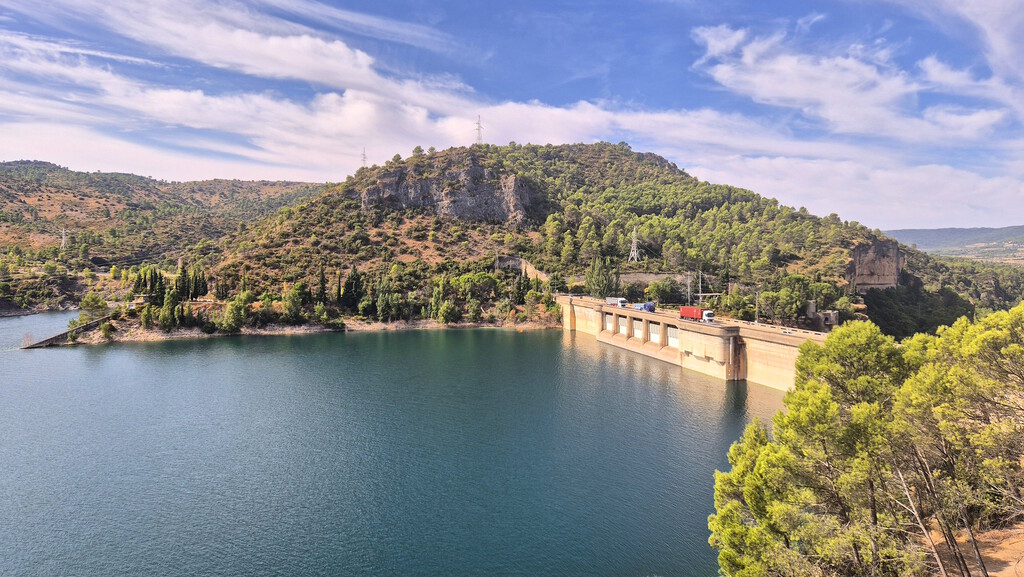
The Historical Promise and Reality of the Aqueduct
The Tajo-Segura infrastructure spans 286 kilometers, connecting the Bolarque reservoir in Guadalajara to the Talave reservoir in Albacete. It was designed to transport up to 600 hm³ annually—400 for irrigation, 110 for urban supply, and 90 for losses. Yet, historical data reveals that actual deliveries have consistently fallen short of this target, averaging well below the original projection.
This gap between promise and reality fuels the debate. For recipient regions like Murcia, every transferred hectometer is vital for agriculture, which consumes the bulk of the water. For donor regions, the shortfall means that the Tagus often carries less water than needed to satisfy environmental and local demands.
Why the Transfer Is Considered Irreplaceable
Defenders of the Tajo-Segura argue that it is indispensable for the economy of the southeast. The transfer supports high-value export agriculture, including fruits and vegetables, and provides drinking water for millions of residents and tourists. Without it, they contend, the region would face severe economic and social consequences.
Moreover, the infrastructure represents a massive public investment that would be difficult to replace. Alternative sources such as desalination are expensive and energy-intensive, making the transfer a cost-effective solution for now. This sense of irreplaceability is why Murcia officials vow to defend it at any cost.
Environmental and Political Challenges
The January 2023 river basin plan introduced ecological flows aimed at protecting the Tagus. These regulations have reduced the amount of water available for transfer, further straining relations between the basins. Toledo's complaint that minimum flows are still not met suggests that even these measures may be insufficient. Context on how this played out before sits in Tajo-Segura Water Transfer: Why It Remains Irreplaceable for Spain.
Politically, the issue pits regional governments against each other, with the central government often caught in the middle. The recent war of words between Lozano and Buendía is just the latest episode in a decades-long saga. As climate change intensifies droughts, the pressure to balance human and environmental needs will only grow. The background to this story is set out in Trending: latest articles. A related thread runs through Beringia's Lost Link: Bison Hunters Who Crossed from Asia to America 13,800.
What to Watch Next
Attention now turns to the implementation of the 2023 basin plan and whether it will be enforced strictly. If Toledo's claims are validated, further restrictions on transfers could follow, prompting legal and political battles. Meanwhile, Murcia will continue to lobby for maintaining or increasing current volumes. Earlier coverage in Spain's PISA 2025 Results: Gen Z Reading Scores Hit Historic Low shows how the argument developed. A closer look at the same subject appears in Young Entrepreneur Opens Bar in Rural Spain, Defying Urban Migration Trend.
The European Union's water framework directive also looms large, as Spain must comply with its requirements for ecological flows. Any failure could result in fines and mandatory corrective actions. Stakeholders on both sides are watching closely, knowing that the outcome will set a precedent for other water-stressed regions. Anyone following the wider picture can start with Invasive Acacia Tree in Spain: A Fiery Threat After Wildfires. The same theme surfaces in Renfe Rejects Speed Cut for Avril S106 Trains Despite Bogie Cracks, which takes a different angle.
FAQ
What is the Tajo-Segura water transfer?
The Tajo-Segura water transfer is an aqueduct system in Spain that moves water from the Tagus River basin to the Segura River basin. It was built to supply water for irrigation and urban use in the southeast, which suffers from chronic water scarcity.
Why is the transfer controversial?
The transfer is controversial because it diverts water from the Tagus basin, often leaving insufficient flows for local ecosystems and communities. Donor regions like Toledo argue that the river fails to meet minimum ecological flows, while recipient regions insist the water is essential for their economy.
How much water was transferred in 2025/26?
In the 2025/26 hydrological year, 522 cubic hectometers (hm³) were transferred. This is the fourth-highest annual volume since the aqueduct began operating in 1979.
What are the alternatives to the Tajo-Segura transfer?
Alternatives include desalination, water reuse, and improved irrigation efficiency. However, these options are often more expensive and energy-intensive, making the transfer a cost-effective solution for now.
Browse the Shop
 Acacia frida deluxe solid wood bed frame |
Bedroom bench |
Bed chest drawers |
Lingerie dresser |
Frame base |
Mirror with jewelry storage |
30 Bathroom Vanity |
Memory foam queen mattress |
Mattresses for back pain |
Nightstand set of 2 |
Grand Goldman Shop |
Civil Lawyer
Deutschland Trikot WM 2026







