

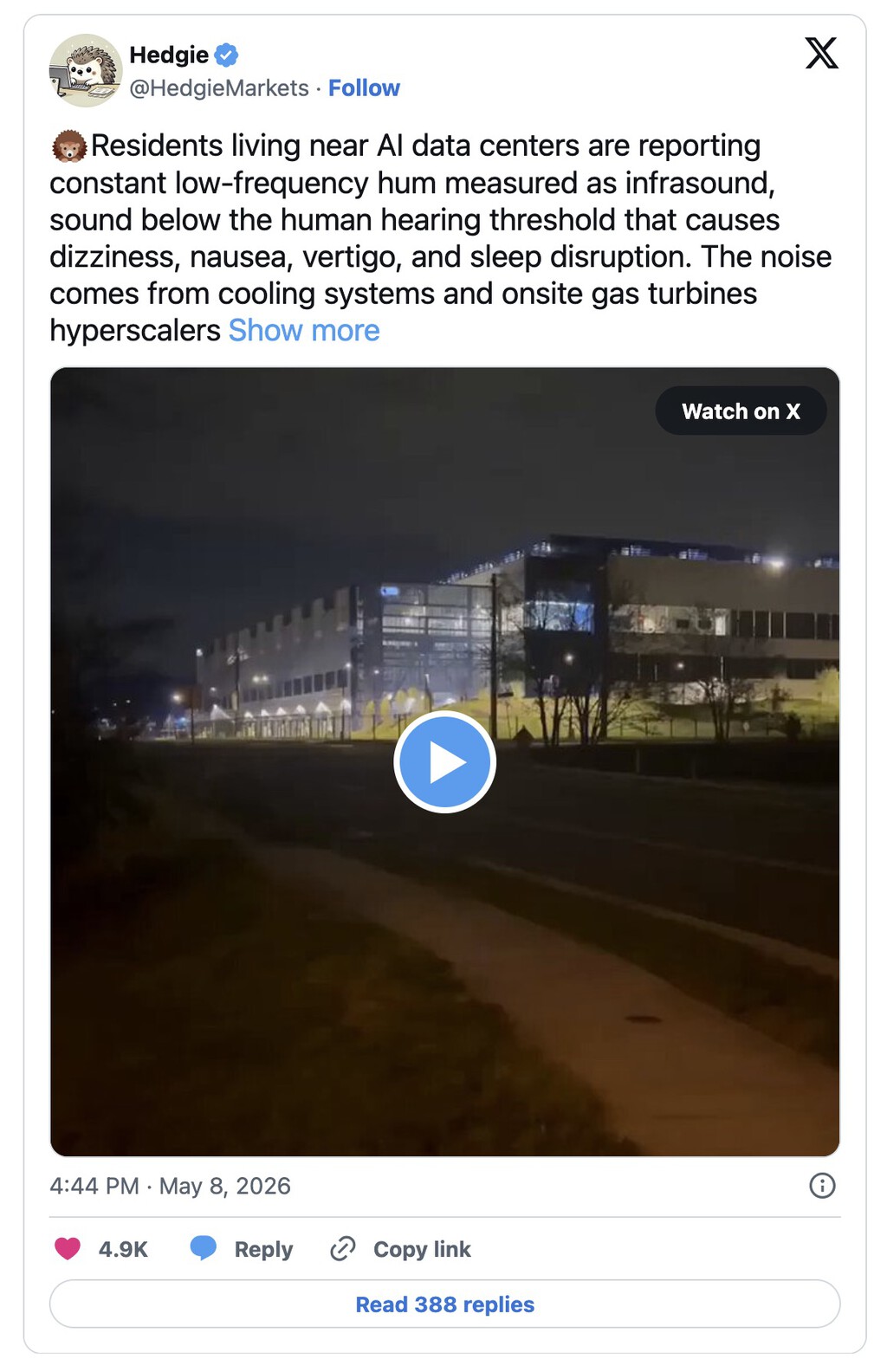
Data center infrasound is emerging as a serious health concern for residents living near these facilities, as low-frequency noise below the human hearing threshold can cause dizziness, nausea, vertigo, and sleep disturbances. Unlike audible noise, infrasound is felt rather than heard, and current regulations fail to address it.
What Is Data Center Infrasound and Why Is It Harmful?
Infrasound refers to sound waves with frequencies below 20 Hz, which are generally inaudible to humans. However, these low-frequency vibrations can travel long distances and penetrate walls, affecting people even hundreds of meters away. Residents near data centers report feeling a constant, unshakable vibration that leads to anxiety, nausea, and chronic insomnia.
Find Original Home Decor sparking conversation at Grand Goldman Shop.

Data centers house numerous servers and cooling systems that generate continuous low-frequency noise. While the equipment meets existing noise regulations, the infrasound component is often overlooked. This gap in regulation means that affected individuals have little recourse, as the facilities are technically compliant.
Why Current Regulations Miss the Infrasound Problem
Most noise ordinances focus on audible sound levels measured in A-weighted decibels (dBA), which de-emphasize low frequencies. Infrasound falls outside this spectrum, so it escapes scrutiny. Moreover, the health effects of infrasound are not yet fully understood by regulators, leading to a lack of standards.
As data centers continue to expand, especially in rural and suburban areas, more communities may face this invisible threat. Without updated regulations that account for low-frequency noise, residents have limited options for protection.
Health Effects Reported by Residents
People living near data centers have reported a range of symptoms, including dizziness, nausea, vertigo, and difficulty sleeping. These symptoms are consistent with studies on infrasound exposure, which have shown effects on the vestibular system and sleep patterns. The constant vibration can also lead to increased stress and anxiety.
Because infrasound is not audible, it can be challenging for residents to convince authorities that they are experiencing a real problem. Medical professionals may also be unfamiliar with infrasound-related health issues, making diagnosis difficult. The background to this story is set out in Coastal Towns Youth Mental Health Series Ripple Effects. A related thread runs through Ai Video: latest articles. Earlier coverage in AI Data Centers Can Raise Local Temperatures by 2.2°C, Study Finds shows how the argument developed.
What Can Be Done to Mitigate Infrasound?
Mitigation strategies for infrasound are still in development. Some potential approaches include better isolation of equipment, using active noise cancellation, and designing facilities to minimize low-frequency emissions. However, these solutions can be costly and may not be widely adopted without regulatory pressure. A closer look at the same subject appears in AI Servers Break Old Memory Rule: RAM Moves to Shared Pools. Anyone following the wider picture can start with China's Underwater Data Centers: A Commercial Reality for AI. The same theme surfaces in How City Light and Noise Disrupt Your Sleep and Health, which takes a different angle.
Community engagement and awareness are crucial. Residents can document their experiences and push for local ordinances that address infrasound. Additionally, further research is needed to establish safe exposure limits and inform policy. Context on how this played out before sits in Clear-Air Turbulence: The Invisible Threat to Your Flight. A companion piece, Data Center Infrasound: The Invisible Health Threat, approaches the same subject from another angle.
Key Takeaways
- Infrasound from data centers is inaudible but can cause serious health issues like nausea and insomnia.
- Current noise regulations do not account for low-frequency noise, leaving residents unprotected.
- Data centers can be compliant with regulations while still emitting harmful infrasound.
- Mitigation requires updated regulations, better technology, and community advocacy.
- More research is needed to understand the full health impacts of infrasound.
Comparison of Noise Types and Regulations
| Noise Type | Frequency Range | Audibility | Health Effects | Regulated? |
|---|---|---|---|---|
| Audible noise | 20 Hz - 20 kHz | Heard | Annoyance, hearing damage | Yes (dBA limits) |
| Infrasound | < 20 Hz | Felt | Dizziness, nausea, insomnia | No (generally) |
| Low-frequency noise | 20-200 Hz | Heard/felt | Annoyance, stress | Partially |
FAQ
What is infrasound and how does it affect health?
Infrasound is sound below 20 Hz, inaudible to humans. It can cause dizziness, nausea, and sleep problems by affecting the body's balance and nervous system.
Why are data centers a source of infrasound?
Data centers use heavy machinery like cooling systems and servers that produce continuous low-frequency vibrations, which can propagate as infrasound.
Are there regulations for infrasound from data centers?
Most regulations focus on audible noise and do not specifically address infrasound, so data centers can be compliant while still emitting harmful levels.
What can residents do if affected by infrasound?
Residents can document symptoms, report to local authorities, and advocate for updated noise ordinances that include low-frequency limits.
As the demand for data centers grows, the issue of infrasound pollution is likely to intensify. Communities and regulators must work together to ensure that health concerns are addressed. For related energy and utility news, see how Finlandia detiene la tala de Google para centros de datos highlights environmental impacts. Staying informed about such developments is crucial for holding companies accountable.
Browse the Shop
 Acacia frida deluxe solid wood bed frame |
Bedroom bench |
Bed chest drawers |
Lingerie dresser |
Frame base |
Mirror with jewelry storage |
30 Bathroom Vanity |
Memory foam queen mattress |
Mattresses for back pain |
Nightstand set of 2 |
Grand Goldman Shop |
Civil Lawyer
Deutschland Trikot WM 2026







