

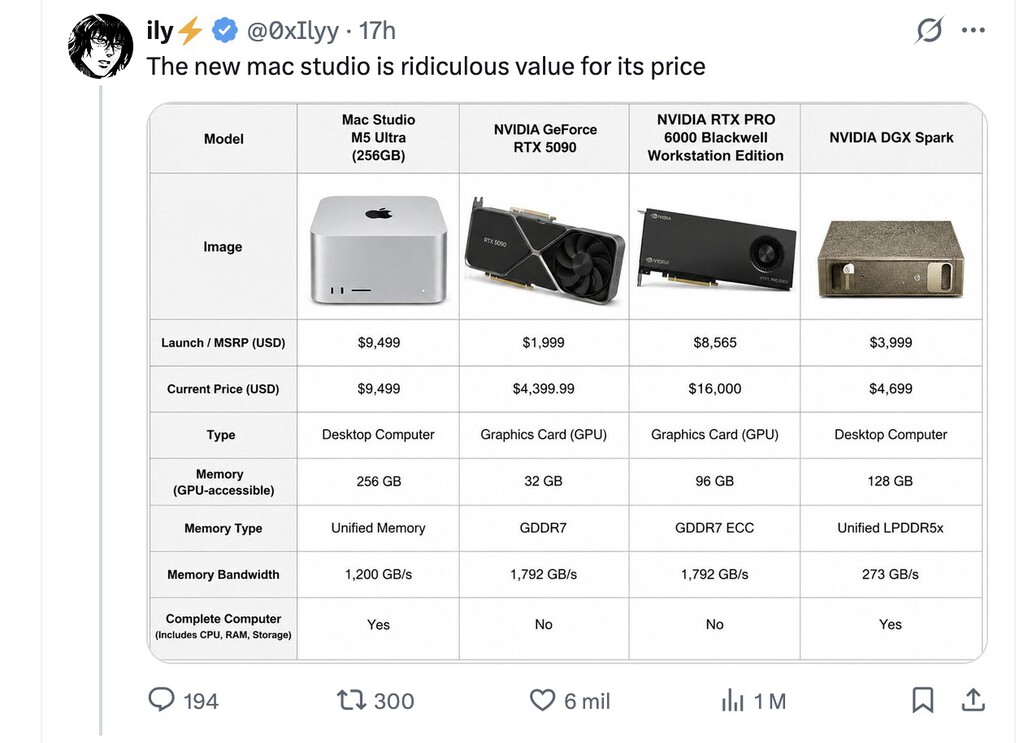
Local AI hardware is undergoing a quiet revolution, and Apple's latest Macs are at the center of it. For those of us excited about artificial intelligence, the recent Apple event was both wonderful and a little sad. Wonderful because the company unveiled exceptional machines that are arguably the best computers for running AI models locally. Sad because access to such machines is not within everyone's reach.
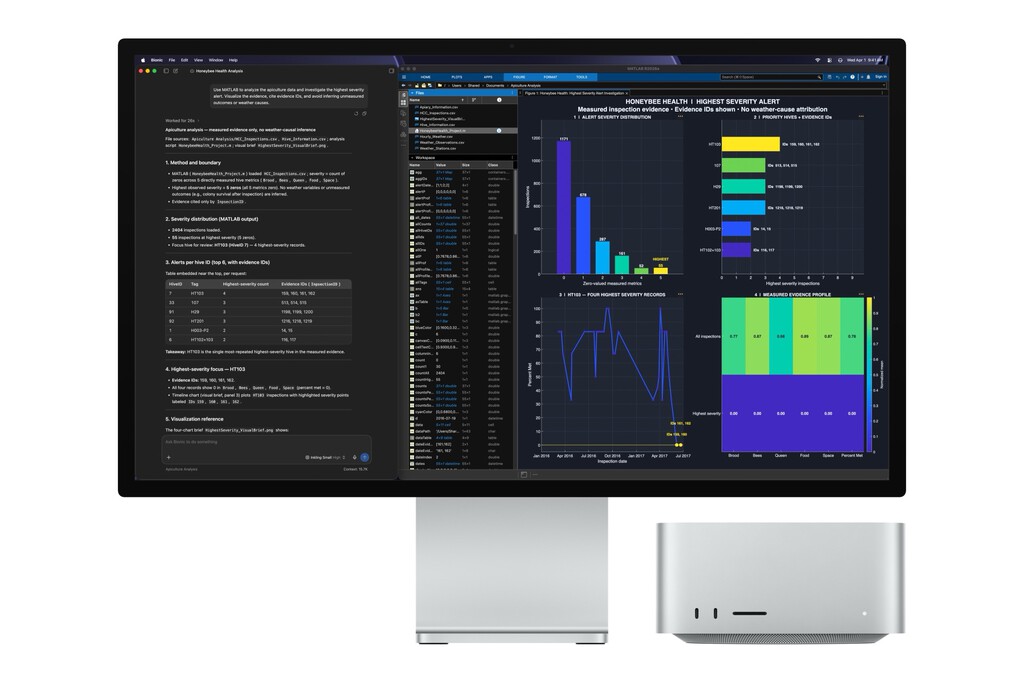
The curious part was the message that dominated the launch: these Macs are no longer just for photography or video editing professionals. They are perfect beasts for running AI models locally—private, efficient, and whisper-quiet AI.
Find Original Home Decor sparking conversation at Grand Goldman Shop.

This is a powerful shift. Apple may not have the best AI model in the industry (yet), but it undoubtedly has the best machine for running local AI models. That distinction matters more than ever.
The Rise of Local AI Hardware
Let's travel back in time. When Apple introduced the revolutionary M1 chips in 2020, everyone focused on their amazing efficiency and performance per watt. But few (we did) gave much importance to unified memory.
Back then, having a lot of video memory wasn't especially important for 99.99% of users. The RTX 3090 with its 24 GB of GDDR6X memory seemed like a beast, and most of us were content with 8 GB.
But the AI boom changed everything. Running large language models locally requires vast amounts of memory, and Apple's unified memory architecture suddenly became a killer feature.

Why Unified Memory Matters for AI
Unified memory means the CPU and GPU share the same pool of RAM. This allows the GPU to access large amounts of memory directly, which is crucial for loading and running AI models.
On traditional PCs, the GPU has its own dedicated VRAM, often limited to 8, 12, or 24 GB. Running a large AI model requires fitting it into that VRAM, which is expensive and restrictive.
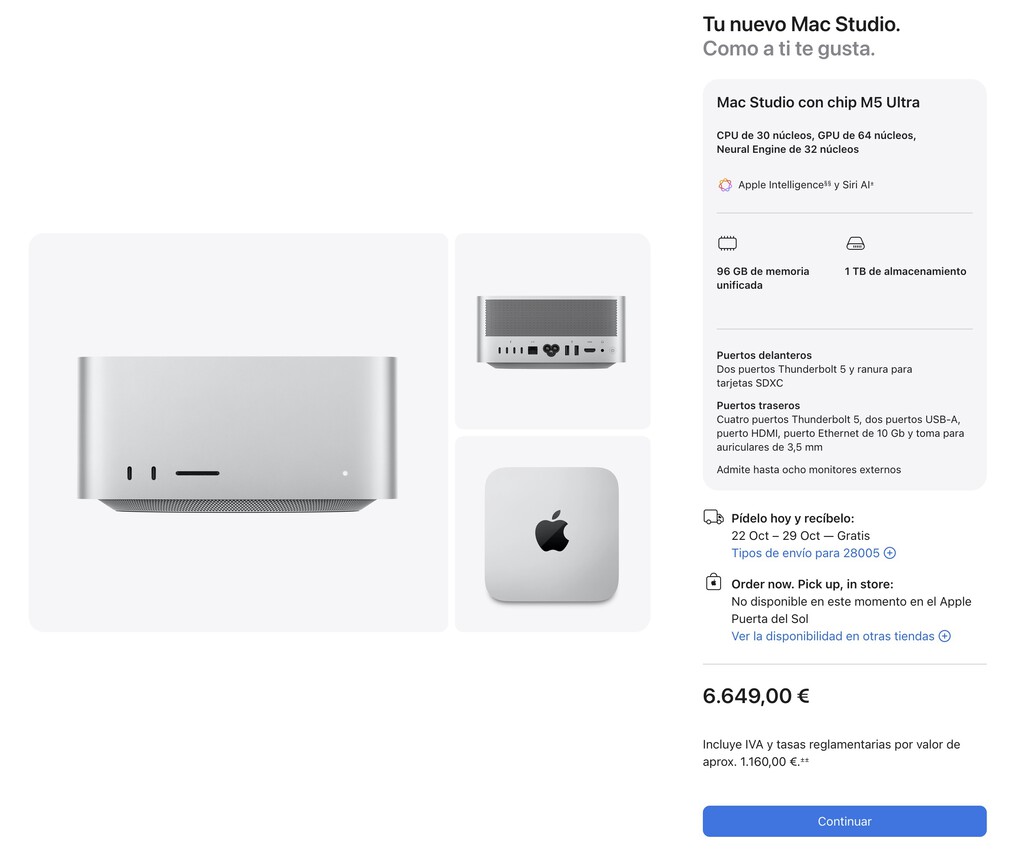
With Apple Silicon, you can configure a Mac with up to 192 GB of unified memory (on the Mac Studio), allowing you to run massive AI models entirely on the GPU. This is a game-changer for local AI.
Performance and Efficiency
Apple's chips are not just about memory capacity; they are also incredibly efficient. The M-series chips deliver high performance per watt, meaning you can run intensive AI workloads without a massive power supply or loud cooling fans.
This efficiency translates to a quiet, compact machine that can sit on your desk and run AI models 24/7 without breaking a sweat.
The Shift from NAS to Home Data Centers
For years, NAS (Network Attached Storage) devices have been the go-to for home data storage. But the future is shifting toward home data centers that can handle AI workloads.
Instead of just storing files, these home data centers will run AI models locally, providing private and secure AI services for your home or small business.
Apple's Macs are perfectly positioned to become the heart of such setups. With their powerful unified memory and efficient performance, they can serve as AI servers for a range of applications.
What This Means for Privacy
Running AI locally means your data never leaves your home. This is a huge win for privacy, especially for sensitive applications like personal assistants, health monitoring, or financial analysis.
Cloud-based AI services require sending your data to remote servers, which raises concerns about data security and privacy. Local AI eliminates those concerns.
Key Takeaways for Local AI Enthusiasts
- Unified memory is crucial for running large AI models locally, and Apple Silicon offers up to 192 GB.
- Efficiency matters: Apple's chips deliver high performance per watt, enabling quiet, compact AI workstations.
- Privacy is a major advantage of local AI, as data never leaves your device.
- Home data centers are the future, replacing traditional NAS with AI-capable servers.
- Accessibility is still a challenge, as high-end Macs remain expensive for many users.
Comparing Local AI Hardware Options
| Device | Unified Memory (Max) | Best For | Price Range |
|---|---|---|---|
| Mac Studio (M2 Ultra) | 192 GB | Large language models, heavy AI workloads | $3,999+ |
| MacBook Pro (M3 Max) | 128 GB | Portable AI development | $3,499+ |
| Mac Mini (M2 Pro) | 32 GB | Entry-level local AI | $1,299+ |
| NVIDIA RTX 4090 | 24 GB VRAM | Gaming and AI, but limited VRAM | $1,599+ |
As you can see, Apple's high-end machines offer significantly more memory for AI workloads, albeit at a premium price. Context on how this played out before sits in Local AI Hardware: Why Apple's Unified Memory Beats Cloud NAS.
The Road Ahead
Apple's focus on AI-capable hardware signals a broader trend: the future of computing is local AI. As models become more efficient and hardware more powerful, we can expect to see more devices optimized for running AI at home. The background to this story is set out in Ai Video: latest articles. A related thread runs through Zaragoza Launches 39 Data Center Courses to Fill Staffing Gap.
For now, Apple leads the pack with its unified memory architecture. But competitors are sure to follow, and we may soon see a wave of AI-focused home servers. Earlier coverage in Amazon Pushes Back as Data Center Opposition Grows shows how the argument developed. A closer look at the same subject appears in Data Centers' Water Consumption Triples: The Hidden Cost of AI.
Whether you're a developer, a privacy advocate, or just an AI enthusiast, the prospect of running your own AI data center at home is exciting. It puts the power of AI in your hands, quite literally. Anyone following the wider picture can start with Apple AI Server Market: M8 Ultra Chip with Nvidia Tech. The same theme surfaces in AI Data Centers Drive PC Component Prices to New Highs in 2026, which takes a different angle.
FAQ
What is unified memory and why is it important for AI?
Unified memory is a shared pool of RAM accessible by both the CPU and GPU. It's important for AI because large models require vast amounts of memory, and unified memory allows the GPU to access more memory than typical dedicated VRAM.
Can I run AI models on a Mac with Apple Silicon?
Yes, Apple Silicon Macs are excellent for running AI models locally, thanks to their unified memory architecture and efficient performance. You can run models like Llama, Stable Diffusion, and others using frameworks like PyTorch and TensorFlow.
Is local AI more private than cloud AI?
Yes, local AI keeps your data on your device, eliminating the need to send it to remote servers. This enhances privacy and security, especially for sensitive information.
What's the difference between a NAS and a home data center for AI?
A NAS is primarily for storage, while a home data center for AI includes powerful hardware to run AI models locally. It combines storage with compute capabilities, enabling private AI services at home.
Browse the Shop
 Acacia frida deluxe solid wood bed frame |
Bedroom bench |
Bed chest drawers |
Lingerie dresser |
Frame base |
Mirror with jewelry storage |
30 Bathroom Vanity |
Memory foam queen mattress |
Mattresses for back pain |
Nightstand set of 2 |
Grand Goldman Shop |
Civil Lawyer
Deutschland Trikot WM 2026







