

GPS fails indoors, leaving your phone's blue dot confused in shopping malls, parking garages, and train stations. This common frustration stems from the fundamental limits of satellite navigation signals, which weaken and scatter when they pass through walls and roofs. Now, a new satellite system called Pulsar, developed by Xona Space Systems, has demonstrated that it can deliver signals strong enough to be tracked inside a building—a significant step toward solving the indoor navigation problem.
Why GPS Fails Indoors
We often use "GPS" as a catch-all term, but it specifically refers to the United States' Global Positioning System. Our phones also combine signals from Galileo (EU), GLONASS (Russia), and BeiDou (China), collectively known as GNSS (Global Navigation Satellite System). While these systems have different architectures, they share a common weakness: their signals are transmitted from thousands of kilometers away and are already weak by the time they reach the ground.
Find Original Home Decor sparking conversation at Grand Goldman Shop.

When you step inside a building, those signals must penetrate walls, ceilings, and other obstacles. The attenuation can be so severe that the receiver loses lock entirely. Even if some signal gets through, it may bounce off surfaces (multipath), causing errors of several meters or more. This is why your phone might show you on the street next door or stop updating altogether.
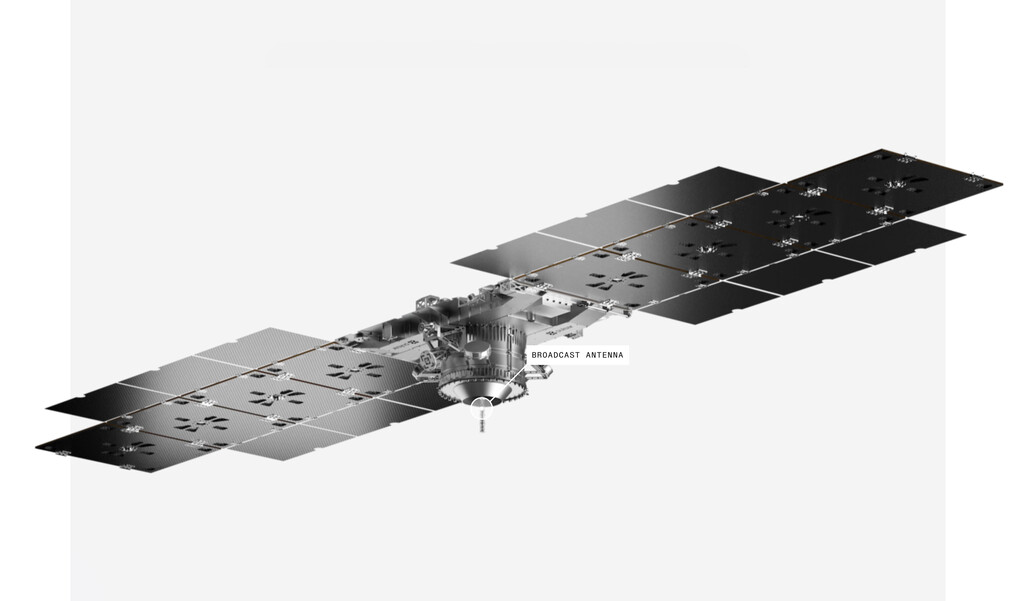
Pulsar-0: A New Hope for Indoor Navigation
Xona Space Systems is developing a commercial satellite navigation system called Pulsar, designed to provide higher-power signals and better accuracy than traditional GNSS. Their first dedicated satellite, Pulsar-0, has successfully transmitted signals that were tracked from inside a building. This demonstration is notable because it directly addresses the indoor penetration problem.

The test showed that Pulsar signals can be acquired and used for positioning even when traditional GNSS signals are unavailable. However, this is just the first step. A full constellation of satellites, compatible receivers, and widespread coverage are still needed before you can rely on Pulsar for everyday indoor navigation.
How Pulsar Differs from Traditional GNSS
Pulsar operates in a different frequency band and uses a higher transmit power, which helps signals penetrate buildings more effectively. Additionally, Xona plans to offer high accuracy and low latency positioning, which could benefit applications like autonomous vehicles, drones, and emergency services.
The table below compares key characteristics of traditional GNSS and the proposed Pulsar system. The background to this story is set out in How to Keep Outdoor Cats Safe Indoors: A Complete Guide. A related thread runs through Meta Tracks Keystrokes, Mouse Data to Train AI Systems. Earlier coverage in Science: latest articles shows how the argument developed.
| Feature | Traditional GNSS (GPS, Galileo, etc.) | Pulsar (Xona) |
|---|---|---|
| Signal penetration indoors | Poor; often unusable | Demonstrated indoor tracking |
| Accuracy | Several meters (varies) | Targeted high accuracy (centimeter-level) |
| Availability | Global, but degraded indoors | Planned global, with improved indoor coverage |
| Status | Operational | Early demonstration (Pulsar-0) |
What This Means for Everyday Users
If Pulsar or similar systems succeed, you could navigate inside large venues like airports, malls, and hospitals without relying on Wi-Fi or Bluetooth beacons. This would make location-based services more reliable and enable new applications, such as finding a specific store in a mall or a gate in an airport. A closer look at the same subject appears in Spanish Startup Kreios Space Nears VLEO Satellite Breakthrough. Anyone following the wider picture can start with Satellite Bodyguards: New Defense Against Orbital Threats. The same theme surfaces in Satellite Life Extension: How a 2009 Spacecraft Got a Mechanic in Orbit, which takes a different angle.
For now, however, the technology is not yet available to consumers. Xona must launch more satellites, build ground infrastructure, and work with device manufacturers to integrate Pulsar receivers. The timeline for full deployment is uncertain, but the successful Pulsar-0 test is a promising milestone. Context on how this played out before sits in Garmin Fenix 9 and 9 Pro: Solar Charging, 57-Day Battery and Satellite. A companion piece, GPS Fails Indoors: Pulsar Satellite Offers a Solution, approaches the same subject from another angle.
Key Takeaways
- GPS and other GNSS signals weaken indoors, causing navigation failures.
- Xona's Pulsar-0 satellite has demonstrated indoor signal tracking.
- Pulsar uses higher power and different frequencies to penetrate buildings.
- Full commercial service requires a satellite constellation and receiver support.
- This technology could enable reliable indoor navigation in the future.
FAQ
Why does GPS stop working inside buildings?
GPS signals are weak by the time they reach Earth and cannot easily penetrate walls, roofs, and other structures. The signal attenuation and multipath reflections cause receivers to lose lock or produce inaccurate positions.
What is Pulsar and who is developing it?
Pulsar is a satellite navigation system under development by Xona Space Systems. It aims to provide higher-power signals that can be received indoors and offer high accuracy.
When will Pulsar be available for everyday use?
There is no announced date. Xona has only demonstrated the technology with a single satellite (Pulsar-0). A full constellation and compatible devices are needed before commercial service.
Can my phone use Pulsar today?
No, current smartphones do not have Pulsar receivers. The technology is still in the demonstration phase and is not yet integrated into consumer devices.
Browse the Shop
 Acacia frida deluxe solid wood bed frame |
Bedroom bench |
Bed chest drawers |
Lingerie dresser |
Frame base |
Mirror with jewelry storage |
30 Bathroom Vanity |
Memory foam queen mattress |
Mattresses for back pain |
Nightstand set of 2 |
Grand Goldman Shop |
Civil Lawyer
Deutschland Trikot WM 2026







