

La Atalaya, the Francoist psychiatric hospital on the outskirts of Ciudad Real, has spent half a century inspiring legends, myths, and even video games. But behind the ghost stories and psychophonies lies a much sadder truth: a building that never served its purpose and whose tragic history was devoured by mythology.
If you're a fan of true crime, you've probably heard of Carles Porta and his documentaries like 'Crims'. But Ciudad Real has its own dark chronicle, one of the most obscure and unknown stories in Spain. And that makes it all the more interesting to unravel.
Find Original Home Decor sparking conversation at Grand Goldman Shop.

The Origins of La Atalaya: A Francoist Plan for Tuberculosis Sanatoriums
Every city has its cursed hill, and on the outskirts of Ciudad Real, La Atalaya stands out with privileged views and a legend that has been feeding itself for decades. We have it all: the white lady, ghostly voices, and something much more prosaic and sad—a building that never fulfilled its objective and harbors a tragedy that mythology ended up devouring.
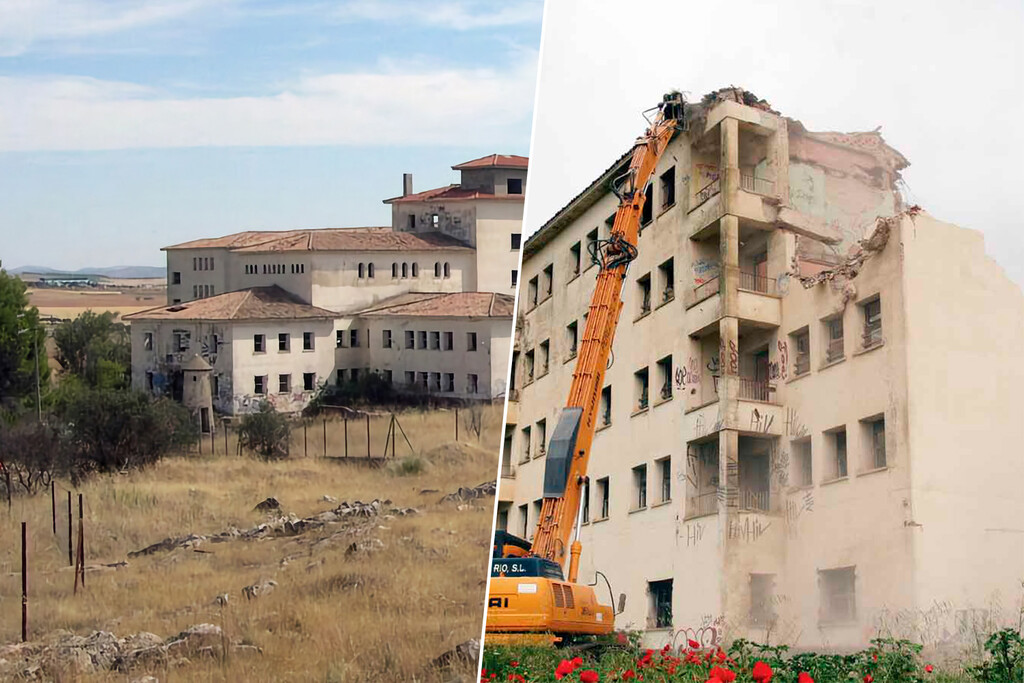
With a 't' for tuberculosis and trauma, not terror. In 1943, the Ciudad Real city council bought the land. At the request of the Tuberculosis Board, La Atalaya was part of a Francoist plan for thirty-five anti-tuberculosis sanatoriums across Spain. The hill met the condition required by the national competition: enough isolation to prevent contagion, but not so much as to hinder access.
Construction began in 1954, and by February 1955, the first floor was ready, with a capacity for three hundred beds. The problem was that medicine moved faster than bricks: by the time the building could open, antibiotics had already begun to revolutionize tuberculosis treatment.
Why La Atalaya Never Fulfilled Its Purpose
The discovery of streptomycin and other antibiotics in the 1940s and 1950s transformed tuberculosis from a deadly disease into a treatable one. The need for large, isolated sanatoriums declined rapidly. La Atalaya, designed as a cutting-edge facility, became obsolete before it could even welcome its first patients.
Instead of serving as a sanatorium, the building was repurposed. Over the decades, it housed a psychiatric hospital, a nursing home, and even a military facility. But its imposing presence and abandonment fueled local legends.
- 1943: The land is purchased for a tuberculosis sanatorium.
- 1954: Construction begins on the hill.
- 1955: First floor completed with 300 beds.
- 1960s: Antibiotics make sanatoriums obsolete.
- Later uses: Psychiatric hospital, nursing home, military facility.
- Present: Abandoned and surrounded by urban legends.
The Legends and Myths Surrounding La Atalaya
Over the years, La Atalaya has accumulated a rich folklore. Tales of apparitions, mysterious lights, and unexplained sounds have drawn paranormal enthusiasts and curious visitors. The white lady, a common figure in Spanish ghost stories, is said to roam the corridors. Psychophonies—recordings of supposed ghostly voices—have been captured by amateur investigators.
These stories have been amplified by television programs and social media, turning La Atalaya into a minor tourist attraction. But while the legends are entertaining, they often overshadow the real history of the place.
La Atalaya in Video Games and Pop Culture
The eerie atmosphere of La Atalaya has also inspired video game developers. Its decaying architecture and dark history make it a perfect setting for horror games. Some independent Spanish games have used the hospital as a backdrop, further cementing its status as a cultural icon of the macabre.
This pop culture presence has helped keep the legend alive, but it also risks reducing a complex historical site to a mere haunted house.
The Real Tragedy: A Building Without a Purpose
Beyond the ghost stories, La Atalaya represents a failure of planning and a testament to the rapid advances in medicine. The Francoist regime invested in infrastructure that was outdated before it was finished. The building's subsequent uses as a psychiatric hospital and nursing home were attempts to salvage a structure that never found its true calling. Context on how this played out before sits in La Atalaya: The Francoist Psychiatric Hospital That Inspired Legends.
The tragedy is not one of ghosts, but of wasted resources and missed opportunities. The patients who might have benefited from the sanatorium never arrived, and the building's later occupants faced their own challenges in a facility not designed for their needs. The background to this story is set out in The Terror: Devil in Silver Review: Psychiatric Hospital Horror. A related thread runs through Trending: latest articles.
| Year | Event |
|---|---|
| 1943 | Land purchased for tuberculosis sanatorium |
| 1954 | Construction begins |
| 1955 | First floor completed (300 beds) |
| 1960s | Antibiotics render sanatoriums obsolete |
| 1970s-2000s | Used as psychiatric hospital, nursing home, military facility |
| Present | Abandoned, subject of legends and video games |
What to Watch Next: The Future of La Atalaya
Today, La Atalaya stands as a decaying monument to a bygone era. Efforts to preserve or repurpose the site have been sporadic. Some locals advocate for turning it into a museum or cultural center, while others prefer to let it fade into history. Earlier coverage in The 40 Hardest Video Games of All Time: A Brutal Challenge shows how the argument developed. A closer look at the same subject appears in Assassin's Creed Black Flag Remake PS5 Bundle Deal at Fnac.
As urban exploration and dark tourism grow in popularity, La Atalaya may see increased attention. But any future use should respect the site's complex history and the real people who suffered there. Anyone following the wider picture can start with DJI Mic Mini 2 Review: Affordable Wireless Lavalier for Creators. The same theme surfaces in Xbox Game Preservation: Microsoft Emulates Original Titles on Windows 11, which takes a different angle.
FAQ
What was La Atalaya originally built for?
La Atalaya was originally planned as a tuberculosis sanatorium as part of a Francoist initiative to build thirty-five such facilities across Spain. However, by the time it was completed, antibiotics had made sanatoriums largely obsolete.
Why is La Atalaya considered haunted?
La Atalaya's abandonment and imposing architecture have fueled numerous legends, including apparitions of a white lady and psychophonies. These stories have been popularized by paranormal TV shows and social media, turning it into a local legend.
Has La Atalaya been featured in video games?
Yes, La Atalaya's eerie atmosphere has inspired independent video game developers, particularly in the horror genre. Its decaying structure and dark history make it a compelling setting for games.
Can you visit La Atalaya?
La Atalaya is privately owned and not officially open to the public. However, urban explorers and paranormal enthusiasts sometimes visit the site illegally. Visitors are advised to respect the property and its history.
Browse the Shop
 Acacia frida deluxe solid wood bed frame |
Bedroom bench |
Bed chest drawers |
Lingerie dresser |
Frame base |
Mirror with jewelry storage |
30 Bathroom Vanity |
Memory foam queen mattress |
Mattresses for back pain |
Nightstand set of 2 |
Grand Goldman Shop |
Civil Lawyer
Deutschland Trikot WM 2026







