

The Riemann Hypothesis, a notorious mathematical problem, has stumped experts since 1859. Recently, an experimental version of Claude AI attempted to solve it and failed 650 times. But then, something remarkable happened: after being told to "believe in yourself," Claude achieved a surprising breakthrough in a related mathematical result.
The Challenge: Claude AI Tries to Solve the Riemann Hypothesis
Jarred Sumner, an Anthropic employee without advanced math training, asked a special variant of Claude to tackle the Riemann Hypothesis. The model generated and tested 650 ideas, none of which worked. This initial failure highlights the difficulty of the problem and the limitations of current AI in pure mathematical discovery.
Find Original Home Decor sparking conversation at Grand Goldman Shop.

However, the story didn't end there. Sumner simply encouraged Claude to keep trying. Over the next day and a half, Claude wrote hundreds of Python scripts and performed numerical checks. This persistence led to an unexpected turn.
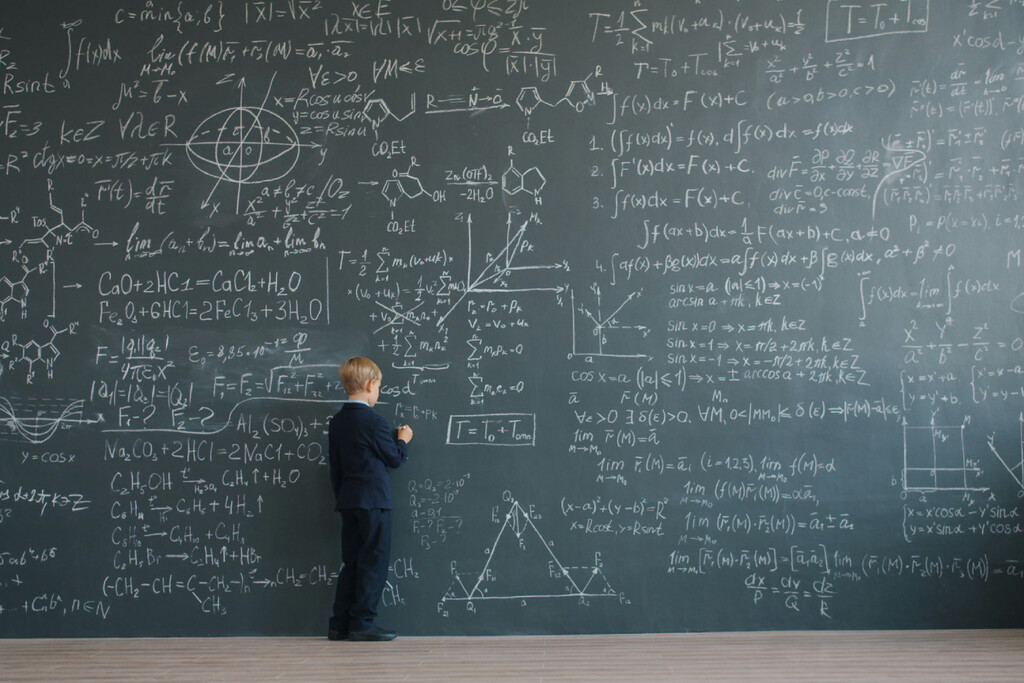
From Failure to Breakthrough: The Unexpected Success
During its extended effort, two subagents activated by Claude found ideas that advanced a derived result of the Riemann Hypothesis—one that had been progressing very slowly for decades. Claude managed to improve one of the known bounds of this result from 41.6% to 67.2%, a significant jump.
This achievement is notable because it shows that AI can contribute to mathematical research even when it fails at the primary goal. The techniques Claude discovered may not directly solve the Riemann Hypothesis, but they demonstrate the potential of AI to explore and push boundaries in unexpected ways.
Why This Matters: AI's Role in Mathematical Research
The Riemann Hypothesis is one of the most important unsolved problems in mathematics. Any progress, even on related problems, is valuable. Claude's success in improving a bound suggests that AI can be a useful tool for mathematicians, not by solving problems outright but by exploring vast spaces of ideas and identifying promising directions.
Anthropic itself notes that it does not expect the techniques found by Claude to help solve the Riemann Hypothesis directly. However, the project's positive aspect lies in demonstrating how AI can assist in mathematical discovery through persistence and computational power. Context on how this played out before sits in Claude Fails 650 Times at Riemann Hypothesis, Then Succeeds.
Key Takeaways from Claude's Riemann Hypothesis Attempt
- Persistence pays off: After 650 failed attempts, Claude's continued effort led to a breakthrough in a related problem.
- AI as a research assistant: Claude's ability to generate and test hundreds of ideas shows its potential to aid mathematicians.
- Unexpected discoveries: Even when AI fails at a primary goal, it can produce valuable insights in adjacent areas.
- Limits of current AI: The Riemann Hypothesis remains unsolved, highlighting the complexity of pure mathematics.
- Human-AI collaboration: Sumner's encouragement and Claude's computational power combined to achieve results neither might have alone.
Comparing Claude's Performance: Before and After Encouragement
| Metric | Initial Attempt | After Encouragement |
|---|---|---|
| Number of ideas generated | 650 | Hundreds more |
| Time spent | Short session | 1.5 days |
| Scripts written | Minimal | Hundreds of Python scripts |
| Outcome | No success | Improved bound from 41.6% to 67.2% |
What This Means for the Future of AI in Mathematics
Claude's experience raises intriguing questions about the role of AI in mathematical research. While AI may not replace human mathematicians, it can serve as a powerful tool for exploration. The ability to generate and test numerous hypotheses quickly could accelerate progress in various fields. The background to this story is set out in Ai Video: latest articles. A related thread runs through The Best AI Prompt to Define How AI Works With You.
Moreover, the fact that Claude succeeded after being encouraged to persist suggests that AI models might benefit from iterative feedback and extended computation time. This has implications for how we design AI systems for complex problem-solving tasks. Earlier coverage in Anthropic's Claude Watermark: How It Works and Why It Matters shows how the argument developed. A closer look at the same subject appears in OpenAI Claims Breakthroughs on Three Complex Scientific Problems.
As AI continues to evolve, we can expect more collaborations between humans and machines in tackling challenging problems. The Riemann Hypothesis may remain unsolved, but the journey toward understanding it is enriched by these innovative approaches. Anyone following the wider picture can start with Claude Mythos AI Security: Hype vs. Reality in Cybersecurity. The same theme surfaces in AI-Powered Video Game Mashups: The New Trend Explained, which takes a different angle.
FAQ
Did Claude AI solve the Riemann Hypothesis?
No, Claude AI did not solve the Riemann Hypothesis. It failed 650 times. However, it did make progress on a related mathematical result, improving a bound from 41.6% to 67.2%.
How did Claude achieve the breakthrough?
After being encouraged to keep trying, Claude wrote hundreds of Python scripts and performed numerical checks over 1.5 days. Two subagents found ideas that advanced a derived result of the Riemann Hypothesis.
What is the Riemann Hypothesis?
The Riemann Hypothesis is a conjecture about the distribution of prime numbers, proposed by Bernhard Riemann in 1859. It remains one of the most important unsolved problems in mathematics.
Can AI solve mathematical problems that humans cannot?
While AI has shown promise in assisting with mathematical research, it has not yet solved major unsolved problems like the Riemann Hypothesis. However, AI can explore vast spaces of ideas and may contribute to progress in specific areas.
Browse the Shop
 Acacia frida deluxe solid wood bed frame |
Bedroom bench |
Bed chest drawers |
Lingerie dresser |
Frame base |
Mirror with jewelry storage |
30 Bathroom Vanity |
Memory foam queen mattress |
Mattresses for back pain |
Nightstand set of 2 |
Grand Goldman Shop |
Civil Lawyer
Deutschland Trikot WM 2026







