

Remote work in Spain is declining sharply, with telework job offers dropping to just 11% in 2025, according to a new report. This marks a significant retreat from the pandemic-era peak when remote work seemed like the future of employment.
The 16th edition of the report 'Estado del mercado laboral en España 2025' by InfoJobs and Esade reveals that remote work has been losing ground for four consecutive years. In 2021, 21% of job vacancies on InfoJobs included some form of remote work; by 2025, that figure has nearly halved.
Find Original Home Decor sparking conversation at Grand Goldman Shop.

Remote Work in Spain: A Four-Year Decline
The decline in remote work offers is not a temporary fluctuation but a structural trend. The most dramatic drop occurred between 2023 and 2024, with a four-percentage-point decrease in a single year. In 2025, the downward trend continued, with a further three-point loss.
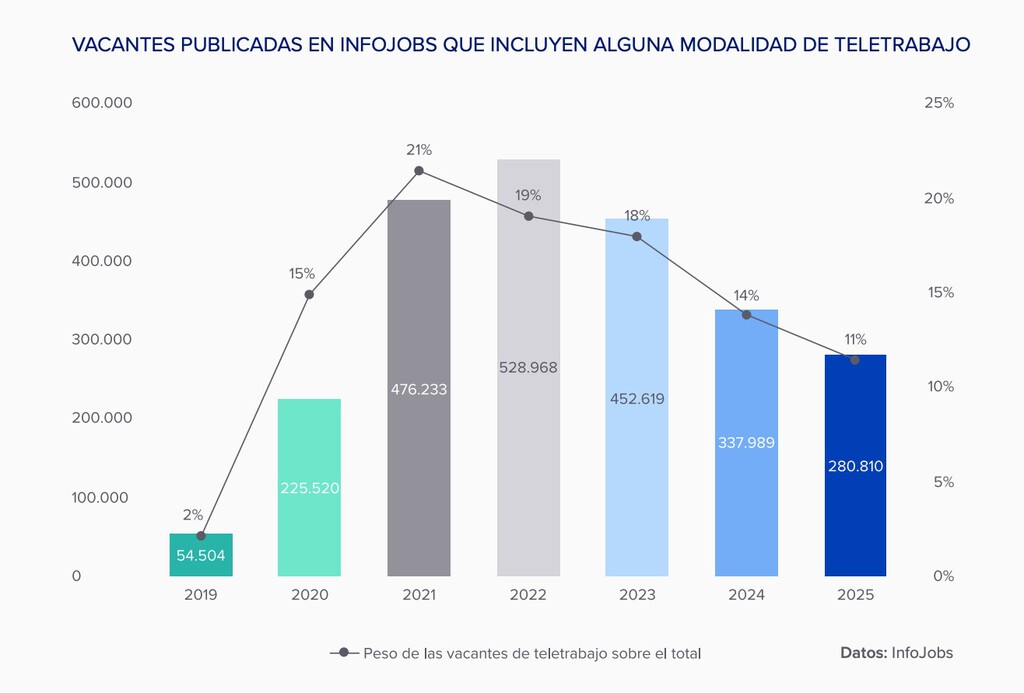
This means that in 2025, only 280,810 positions offered remote work options, a stark contrast to the 21% peak in 2021. The data suggests that companies are increasingly favoring in-person or hybrid models over fully remote arrangements.
Why Are Companies Pulling Back from Remote Work?
Several factors contribute to this reversal. Many employers believe that in-person collaboration fosters innovation and company culture. Additionally, some managers worry about productivity and team cohesion when employees work remotely.
The shift may also reflect a tightening labor market where companies have more leverage to dictate working conditions. As the post-pandemic economy evolves, businesses are reassessing their remote work policies and often opting for more traditional setups.
The Impact on Workers and Job Seekers
For workers who have grown accustomed to the flexibility of remote work, this trend presents challenges. Job seekers looking for remote positions will find fewer opportunities, especially in certain sectors.
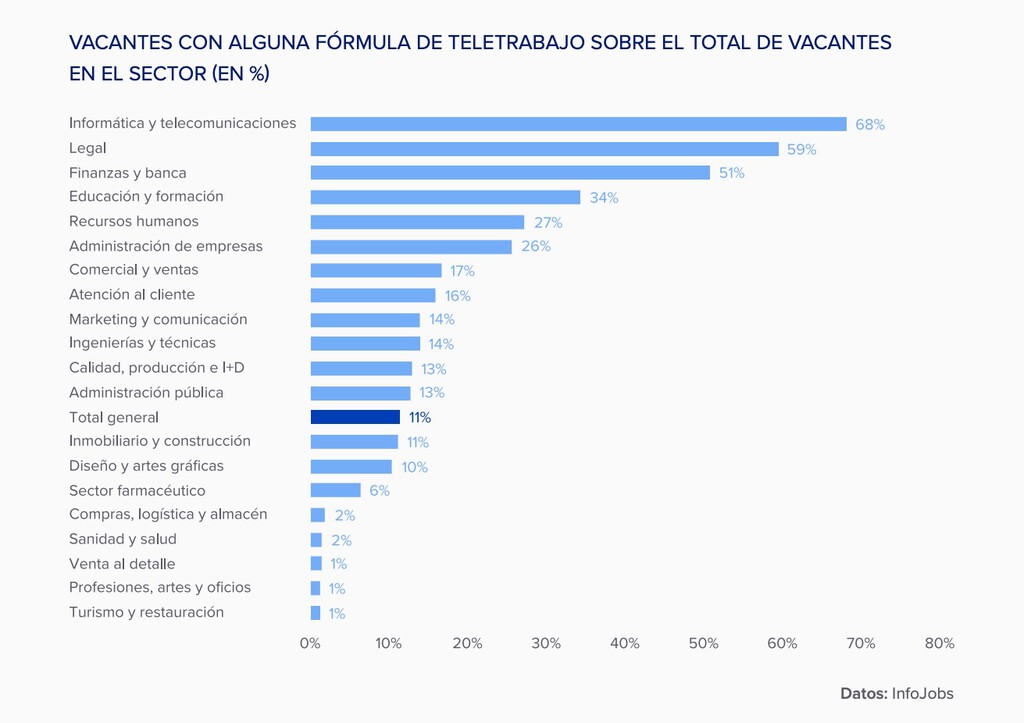
However, not all industries are retreating at the same pace. Tech and knowledge-based sectors may still offer remote options, while others revert to office-based work. Employees may need to adapt their expectations and negotiate for flexible arrangements.
- Remote work offers in Spain fell from 21% in 2021 to 11% in 2025.
- The decline has been consistent for four years, indicating a structural shift.
- 280,810 job postings offered remote work in 2025.
- Employers cite collaboration and productivity concerns as reasons for the pullback.
- Job seekers may need to adjust their expectations or negotiate hybrid arrangements.
Remote Work Trends by Year
| Year | Percentage of Job Offers with Remote Work |
|---|---|
| 2021 | 21% |
| 2022 | Data not specified |
| 2023 | Data not specified |
| 2024 | Data not specified |
| 2025 | 11% |
Note: The report highlights a four-point drop between 2023 and 2024, and a three-point drop in 2025, but exact percentages for intermediate years are not provided in the excerpt. The background to this story is set out in Catalonia Cannot Ban Telework, So It Pays Officials to Opt. A related thread runs through Apple has sharply raised the prices of external drives. Earlier coverage in US Lettuce Prices Drop Sharply as Other Food Costs Stay High shows how the argument developed.
What This Means for the Future of Work
The decline in remote work offers does not necessarily signal the end of flexibility. Many companies are adopting hybrid models that combine office and remote work. The key takeaway is that remote work is no longer a given; it must be negotiated. A closer look at the same subject appears in Germany's Industrial Decline: Stihl Heir Pushes for Longer Work Hours. Anyone following the wider picture can start with Productivity Doubled: Stanford Says Remote Work, Not AI. The same theme surfaces in Remote Work Becomes Civil Defense in Middle East Bombings, which takes a different angle.
As the labor market continues to evolve, workers should stay informed about trends and be prepared to adapt. While remote work may be less prevalent in job postings, it remains an important aspect of modern employment for many. Context on how this played out before sits in Property Investor Lending Falls Sharply in Australia Housing Market. A companion piece, Remote Work and Environment: Australia's Green Advantage, approaches the same subject from another angle.
FAQ
How much has remote work declined in Spain?
Remote work offers in Spain have fallen from 21% of job postings in 2021 to 11% in 2025, a decrease of 10 percentage points over four years.
Why are companies reducing remote work options?
Companies are reducing remote work options due to concerns about collaboration, company culture, and productivity, as well as a shift in bargaining power towards employers.
What was the steepest drop in remote work offers?
The steepest drop occurred between 2023 and 2024, with a four-percentage-point decrease in a single year, followed by a three-point drop in 2025.
How many remote job offers were there in Spain in 2025?
In 2025, there were 280,810 job postings that included some form of remote work, according to the InfoJobs and Esade report.
Browse the Shop
 Acacia frida deluxe solid wood bed frame |
Bedroom bench |
Bed chest drawers |
Lingerie dresser |
Frame base |
Mirror with jewelry storage |
30 Bathroom Vanity |
Memory foam queen mattress |
Mattresses for back pain |
Nightstand set of 2 |
Grand Goldman Shop |
Civil Lawyer
Deutschland Trikot WM 2026







