

The Airbus A350-1000ULR has completed a nonstop test flight lasting more than 24 hours, landing in Toulouse on Tuesday. The aircraft carried no commercial passengers; instead, it was loaded with pilots, engineers, five tons of instrumentation, and over a thousand sensors to monitor performance throughout a full day in the air.
This was not a simple endurance demonstration. Qantas and Airbus are evaluating the machine that could turn some of the world's longest proposed routes into regular services. The test also highlights a strategic win for Airbus over Boeing, which had originally pitched a competing project.
Find Original Home Decor sparking conversation at Grand Goldman Shop.

What Happened on the 24-Hour A350-1000ULR Test Flight?
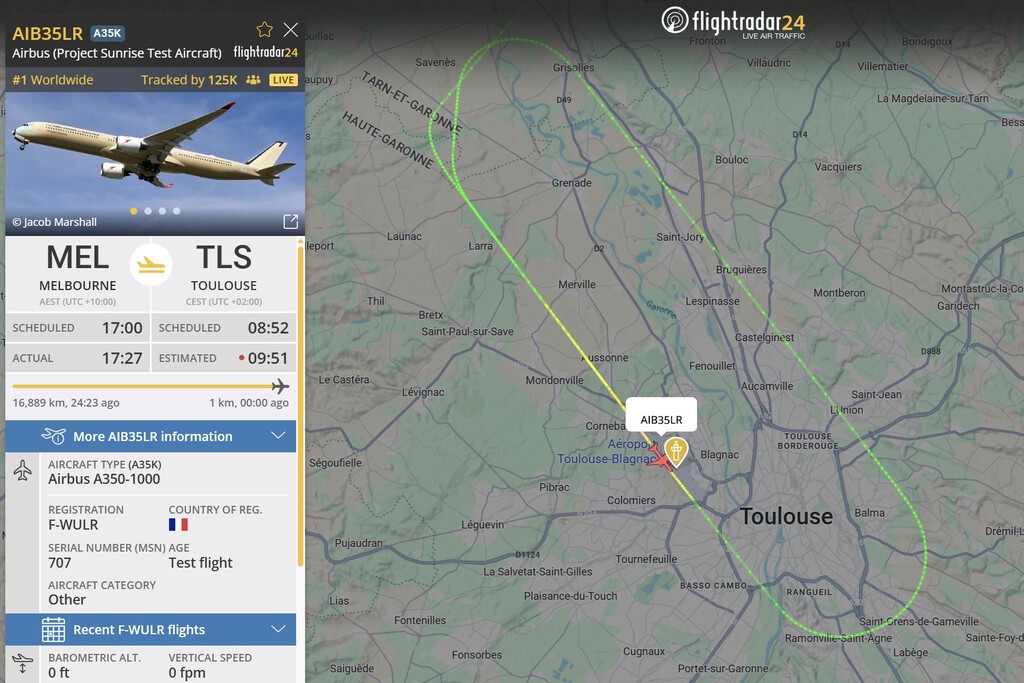
The A350-1000ULR took off from Melbourne and headed northeast across the Pacific. It then crossed the United States and Canada, continued over the Atlantic, and descended over the United Kingdom before arriving in southern France.
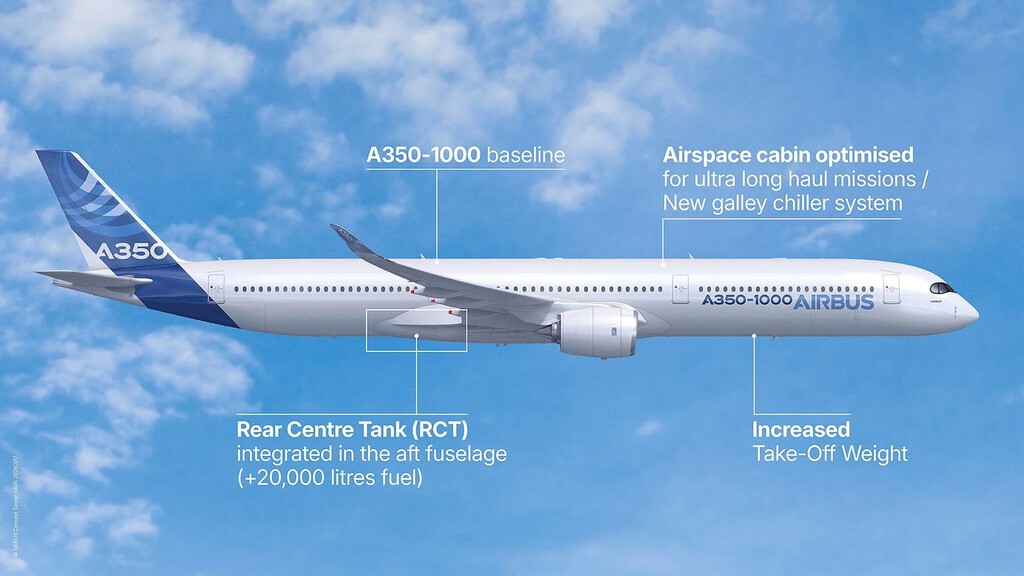
Toulouse was the logical destination: it is home to the A350 final assembly line, and the test aircraft needed to return there. The mission aimed to demonstrate a block time of 23 hours, enough to cover up to 21 hours and 40 minutes of flight while preserving margin for taxiing, holding, or a possible diversion.
The flight was not an isolated trial. The first A350-1000ULR had its maiden flight on June 2, and since then Airbus has spent weeks examining the changes introduced for the program. The company classifies this mission as a development flight, not a commercial route preview.
Why Qantas Chose Airbus Over Boeing for Ultra-Long-Haul
Qantas had been evaluating options for its ambitious Project Sunrise, which aims to connect Sydney and other Australian cities nonstop with London and New York. Boeing initially offered a version of the 777X, but the Australian carrier ultimately selected the A350-1000ULR.
The decision was a significant blow to Boeing, which had hoped to secure the high-profile order. Airbus's proposal promised the range and efficiency needed for these marathon flights, and the ongoing test campaign is designed to prove those claims.
For Qantas, the stakes are high: ultra-long-haul routes require aircraft that can reliably operate for over 20 hours while keeping fuel burn and operating costs in check. The A350-1000ULR is being tailored specifically for that mission.
Key Takeaways from the A350-1000ULR Test Campaign
- The A350-1000ULR flew for 24 hours and 24 minutes nonstop, carrying test equipment rather than passengers.
- The flight was a development test, not a commercial route simulation, and ended in Toulouse for post-flight analysis.
- Qantas selected the A350-1000ULR over Boeing's offer for its Project Sunrise ultra-long-haul plans.
- Airbus aims to demonstrate a 23-hour block time, covering up to 21 hours and 40 minutes of flight with reserves.
- The test campaign began on June 2 and continues to validate modifications for the ULR variant.
How the A350-1000ULR Compares to the Boeing 777X
Both aircraft are designed for long-haul missions, but the A350-1000ULR is specifically optimized for ultra-long-range operations. The table below summarizes the key differences based on available information.
| Feature | Airbus A350-1000ULR | Boeing 777X (offered to Qantas) |
|---|---|---|
| Range | Designed for ultra-long-haul (over 20 hours) | Long-haul, but not specifically optimized for 20+ hour flights |
| Status | In flight test (first flight June 2) | In development |
| Qantas Selection | Selected for Project Sunrise | Not selected |
| Test Milestone | 24-hour nonstop flight completed | No equivalent public test |
While the 777X remains a capable long-haul aircraft, the A350-1000ULR's dedicated focus on extreme range gave Airbus an edge in Qantas's evaluation.
What This Means for the Future of Ultra-Long-Haul Travel
The successful 24-hour test is a step toward making nonstop flights like Sydney-London a reality. However, it is important to note that this was a development flight, not a commercial service. Airbus still needs to complete certification and Qantas must finalize its operational plans. The background to this story is set out in Qantas A350-1000ULR Test Flight from France to Melbourne. A related thread runs through Qantas record-breaking 24-hour flight sets new longest commercial. Earlier coverage in Qantas Tests Ultra Long-Range Airbus A350 on 17,000km Flight shows how the argument developed.
If the A350-1000ULR meets its targets, passengers could see significantly shorter total journey times, avoiding layovers in the Middle East or Asia. Airlines would also gain flexibility to open new routes that were previously unviable. A closer look at the same subject appears in Qantas tests new ultra long-range Airbus in 17,000km flight. Anyone following the wider picture can start with Qantas Record Flight: 24 Hours Nonstop in New Airbus A350. The same theme surfaces in Qantas 18-Hour Direct Flights from Sydney to New York, which takes a different angle.
For now, the aviation industry is watching closely. The A350-1000ULR's performance in these tests will determine whether ultra-long-haul becomes a mainstream option or remains a niche offering. Context on how this played out before sits in Qantas Record-Breaking Flight: 24 Hours Nonstop in 2027. A companion piece, Qantas Tests Ultra Long-Range Airbus A350 Direct to Melbourne, approaches the same subject from another angle.
FAQ
What is the A350-1000ULR?
The A350-1000ULR is an ultra-long-range variant of the Airbus A350-1000, designed for flights exceeding 20 hours. It is the aircraft Qantas selected for its Project Sunrise initiative.
Why did Qantas choose Airbus over Boeing?
Qantas selected the A350-1000ULR because it offered the range and efficiency needed for nonstop flights from Australia to London and New York. Boeing's 777X proposal did not meet the carrier's requirements as effectively.
Was the 24-hour flight a commercial service?
No, the flight was a development test. It carried no passengers, only crew and testing equipment, and was designed to validate the aircraft's performance over a full day in the air.
When will these ultra-long-haul flights begin?
Qantas has not announced a definitive start date. The aircraft must complete certification and further testing before commercial flights can commence.
Browse the Shop
 Acacia frida deluxe solid wood bed frame |
Bedroom bench |
Bed chest drawers |
Lingerie dresser |
Frame base |
Mirror with jewelry storage |
30 Bathroom Vanity |
Memory foam queen mattress |
Mattresses for back pain |
Nightstand set of 2 |
Grand Goldman Shop |
Civil Lawyer
Deutschland Trikot WM 2026







