

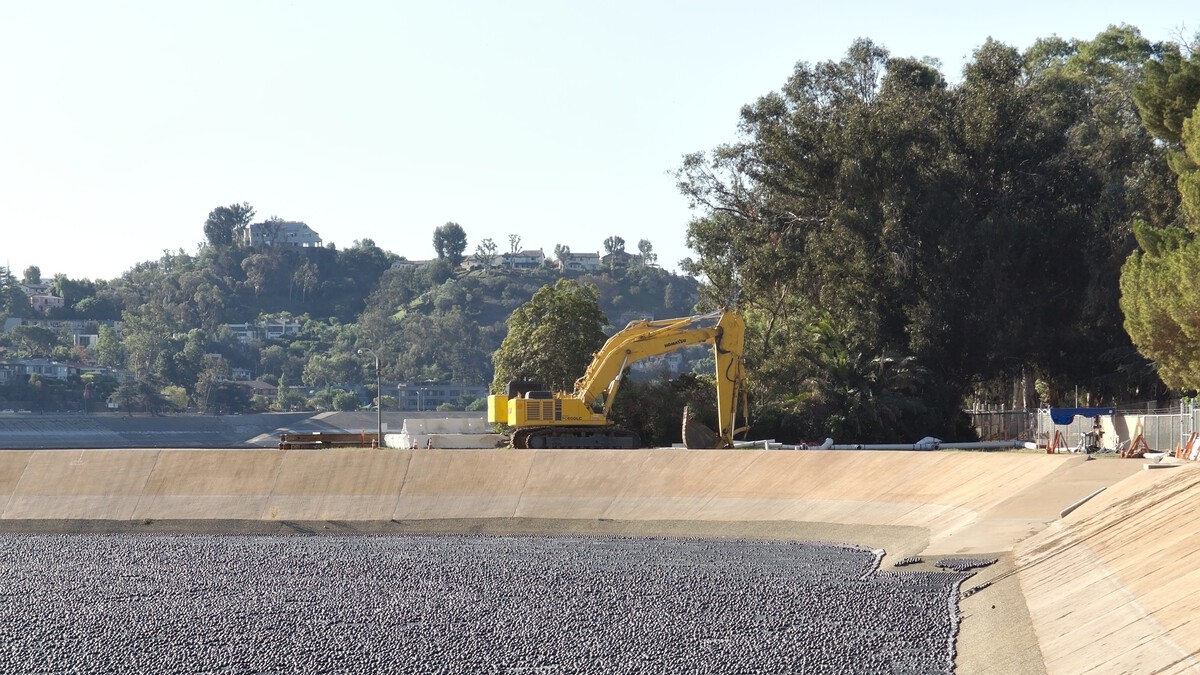
In 2015, Los Angeles made headlines by releasing 96 million black plastic shade balls into the Los Angeles Reservoir in Sylmar. The move was meant to protect drinking water during a historic drought, but 11 years later, the full story reveals both impressive benefits and a hidden cost that few saw coming.
Why Los Angeles Dropped 96 Million Shade Balls
California was in the grip of a severe drought that lasted from 2011 to 2017. With water supplies dwindling, officials sought ways to safeguard every drop. The reservoir, covering about 70 hectares (173 acres), was losing water to evaporation under the hot sun.
Find Original Home Decor sparking conversation at Grand Goldman Shop.

The solution: cover the surface with small black balls at a cost of $34.5 million. The city promised the balls would save over 1.1 billion liters (300 million gallons) of water annually. But evaporation wasn't the only enemy.
The Invisible Threat: Bromate Formation
Sunlight reacting with bromide in the water created bromate, a potentially carcinogenic byproduct regulated in drinking water. The shade balls blocked about 95% of sunlight, preventing this chemical reaction and keeping water quality safe.
This chemical protection was actually the primary goal, even though the project became famous as an evaporation solution. The balls also discouraged algae growth and bird activity, further protecting water quality.
The Hidden Cost: Water Used to Make the Balls
Therein lies the paradox: manufacturing those 96 million plastic balls required water—a lot of it. Producing plastic involves significant water consumption, and the environmental footprint of the balls themselves raised questions.
Critics argued that the water used in production might offset some of the savings. However, officials maintained that the long-term benefits outweighed the upfront water cost, especially given the urgent need to protect water quality.
Key Takeaways from the Shade Ball Experiment
- Evaporation reduction: The balls saved an estimated 1.1 billion liters of water per year.
- Chemical protection: They blocked 95% of sunlight, preventing bromate formation.
- Cost: The project cost $34.5 million, funded by ratepayers.
- Hidden water footprint: Manufacturing the balls consumed water, creating a trade-off.
- Longevity: The balls were expected to last up to 10 years, but some have degraded.
What Happened to the Shade Balls?
Over time, the balls have degraded due to UV exposure and weathering. Some have cracked or broken, raising concerns about microplastic pollution. The city has monitored the situation and replaced damaged balls as needed. The longer history behind the story is traced in LA's 96 Million Shade Balls: Water Savings and Hidden Costs. More on the surrounding debate is collected in Gran Canaria's Chira Dam: A Pumped Hydro Battery Built Backwards.
The experiment also inspired other cities facing similar challenges. However, the debate continues over whether the benefits justify the environmental impact of plastic production and disposal. The background to this story is set out in Gaza Daily Life: The Hidden Struggles Behind the Headlines. A related thread runs through Zenith Star 33 mm 2015, spring in full color. Earlier coverage in Energy Utilities: latest articles shows how the argument developed.
Lessons for Future Water Conservation
The shade ball project demonstrates the complexity of environmental solutions. What appears to be a straightforward fix can have unintended consequences. It highlights the need for life-cycle assessments when implementing large-scale interventions. A closer look at the same subject appears in Spain Water Reserves Keep Falling: Time to Prepare for Drought. Anyone following the wider picture can start with Ardingly Reservoir Dries Up as Severe Drought Hits England. The same theme surfaces in El Niño 2026: Why Latin America Must Prepare Right Now, which takes a different angle.
As water scarcity grows worldwide, such innovations will be crucial. But they must be evaluated holistically, considering not just the immediate benefits but also the hidden costs. Context on how this played out before sits in Palisades Fire Arson Retrial: Jonathan Rinderknecht Faces New Jury. A companion piece, Tibi Dam: Europe's Oldest Reservoir Built for Philip II in 1580, approaches the same subject from another angle.
FAQ
How many shade balls were used in Los Angeles?
Approximately 96 million black plastic shade balls were deployed in the Los Angeles Reservoir in 2015.
Did the shade balls actually save water?
Yes, they were estimated to save over 1.1 billion liters of water annually by reducing evaporation and preventing bromate formation.
What was the main purpose of the shade balls?
While often cited as an evaporation reduction measure, the primary goal was to block sunlight and prevent the formation of bromate, a potentially carcinogenic chemical.
What are the environmental concerns?
The production of the plastic balls required water, and their degradation over time could contribute to microplastic pollution.
Browse the Shop
 Acacia frida deluxe solid wood bed frame |
Bedroom bench |
Bed chest drawers |
Lingerie dresser |
Frame base |
Mirror with jewelry storage |
30 Bathroom Vanity |
Memory foam queen mattress |
Mattresses for back pain |
Nightstand set of 2 |
Grand Goldman Shop |
Civil Lawyer
Deutschland Trikot WM 2026







