

A recent Chinese study published in the peer-reviewed journal Chinese Space Science and Technology and highlighted by the South China Morning Post claims that NASA's Artemis lunar lander is dangerously reliant on a single engine for both descent and ascent. The critique, however, overlooks a fundamental fact: NASA's Artemis program does not use a traditional two-stage lander like Apollo. Instead, it relies on commercially developed Human Landing Systems (HLS) from SpaceX and Blue Origin, both of which use multiple engines. This oversight renders the study's central argument largely moot.
What the Chinese Study Actually Says
The study, published in March, argues that NASA's Artemis lander uses only one engine for the critical descent and ascent maneuvers. If that engine fails, the authors claim, there is no backup to ensure the safe return of the Orion spacecraft. The South China Morning Post amplified this point, suggesting that NASA is taking a significant risk with its next Moon landing.
Find Original Home Decor sparking conversation at Grand Goldman Shop.

On the surface, the concern seems valid. Using a single engine for such critical phases would indeed be risky, as was the case with the Apollo missions. However, the study fails to mention that Artemis does not use the Apollo-style lunar module. This omission is crucial and undermines the study's conclusions.
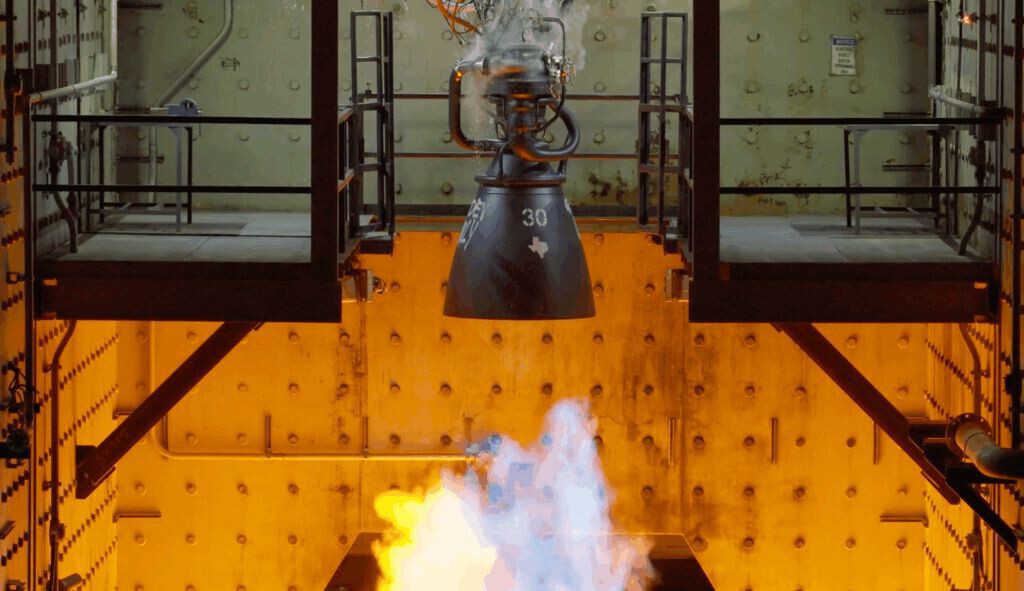
The HLS Factor: Why the Critique Misses the Mark
Under the Artemis program, NASA has contracted SpaceX and Blue Origin to develop Human Landing Systems. These are not traditional two-stage landers; they are integrated spacecraft that dock with the Orion capsule in lunar orbit. Both the SpaceX Starship HLS and Blue Origin's Blue Moon lander are designed with multiple engines, providing redundancy that the Chinese study ignores.
For instance, SpaceX's Starship HLS uses a cluster of Raptor engines for landing and ascent, while Blue Origin's Blue Moon uses multiple BE-7 engines. This means that even if one engine fails, others can compensate, greatly reducing the risk of a catastrophic failure. The study's focus on a single-engine architecture is therefore irrelevant to the actual Artemis hardware.
Why This Matters for the Future of Lunar Exploration
This is not just a technical nitpick; it matters because public perception of space safety can influence policy and funding. A misleading study could erode confidence in NASA's Artemis program, which is already facing delays and budget pressures. It also highlights the importance of accurate reporting in the media, especially when covering complex international space endeavors.
Moreover, the study reflects a broader trend of space competition between the U.S. and China. While scientific critique is valuable, it must be based on facts. In this case, the Chinese researchers seem to have critiqued a lander architecture that NASA is not using, which weakens their argument and raises questions about the study's rigor. The background to this story is set out in NASA's Artemis III Plan: Two Dockings, Four Astronauts, and a Lunar Lander. A related thread runs through NASA Creates Emeritus Astronaut Title as Retirements Rise. Earlier coverage in Artemis II Crew Earns Top US Space Medal for Lunar Mission shows how the argument developed.
Key Takeaways
- The Chinese study criticizes NASA's Artemis lander for using a single engine, but this is based on a misunderstanding of the HLS architecture.
- NASA's Artemis program uses commercially developed landers from SpaceX and Blue Origin, both of which have multiple engines for redundancy.
- The study's omission of the HLS factor undermines its central argument and could mislead public perception.
- Accurate reporting on space technology is crucial as international competition in lunar exploration intensifies.
Comparing Lander Architectures
| Feature | Apollo Lunar Module | Artemis HLS (SpaceX/Blue Origin) |
|---|---|---|
| Number of engines (descent/ascent) | One descent engine, one ascent engine | Multiple engines for both descent and ascent |
| Redundancy | Limited; single point of failure | High; multiple engines provide backup |
| Docking with crew capsule | No; separate spacecraft | Yes; docks with Orion in lunar orbit |
| Contractor | NASA (Grumman) | SpaceX and Blue Origin (commercial) |
What to Watch Next
As NASA moves closer to the Artemis III mission, the performance of the HLS vehicles will be under intense scrutiny. SpaceX is currently testing Starship prototypes, while Blue Origin is developing the Blue Moon lander. Both companies must demonstrate safe and reliable engine operation during test flights. Meanwhile, the Chinese space program continues to advance its own lunar ambitions, including plans for a crewed landing by the 2030s. A closer look at the same subject appears in Artemis II Crew Earns Top US Space Medal for Historic Lunar Journey. Anyone following the wider picture can start with NASA Sends Three Fully Autonomous Robots to the Moon. The same theme surfaces in BoM Temperature Data Audit: Fact-Checking The Australian's Claims, which takes a different angle.
For now, the Chinese study serves as a reminder of the importance of accurate technical analysis in space policy debates. While it is healthy to question and critique, such critiques must be grounded in the actual hardware and mission profiles. Otherwise, they risk becoming little more than noise in the already complex discourse surrounding humanity's return to the Moon. Context on how this played out before sits in NASA Launch Facilities Too Old for Artemis Moon Missions. A companion piece, Christina Koch Wins Princess of Asturias Award After Artemis III Snub, approaches the same subject from another angle.
FAQ
What is the main criticism of NASA's Artemis lander in the Chinese study?
The study claims that NASA's Artemis lander uses only one engine for both descent and ascent, which would be a single point of failure. However, this critique is based on a misunderstanding of the actual HLS architecture, which uses multiple engines.
Why does the study's argument not apply to Artemis?
Because Artemis does not use a traditional two-stage lander like Apollo. Instead, it uses HLS vehicles from SpaceX and Blue Origin, both of which have multiple engines for redundancy. The study ignores this fact, making its central point irrelevant.
How many engines do the HLS landers have?
SpaceX's Starship HLS uses a cluster of Raptor engines, and Blue Origin's Blue Moon uses multiple BE-7 engines. Both designs provide redundancy that the Chinese study fails to acknowledge.
What impact could this study have on the Artemis program?
If widely believed, the study could undermine public confidence in NASA's safety measures. However, experts are likely to recognize the study's oversight, and NASA continues to work with commercial partners to ensure the landers meet stringent safety requirements.
Browse the Shop
 Acacia frida deluxe solid wood bed frame |
Bedroom bench |
Bed chest drawers |
Lingerie dresser |
Frame base |
Mirror with jewelry storage |
30 Bathroom Vanity |
Memory foam queen mattress |
Mattresses for back pain |
Nightstand set of 2 |
Grand Goldman Shop |
Civil Lawyer
Deutschland Trikot WM 2026







