

A recent study from the University of Oxford suggests that dark energy may not exist, challenging a cornerstone of modern cosmology. The claim has ignited fierce debate among astronomers who have spent decades searching for this mysterious force.
Dark energy was introduced to explain the accelerating expansion of the universe. If the new study holds up, it could upend our understanding of cosmic evolution.
Find Original Home Decor sparking conversation at Grand Goldman Shop.

What Is Dark Energy and Why Do We Think It Exists?
Dark energy is a hypothetical form of energy that permeates all of space and drives the universe's expansion to accelerate. It was proposed in the late 1990s after observations of distant supernovae showed they were dimmer than expected, implying the expansion rate is increasing.
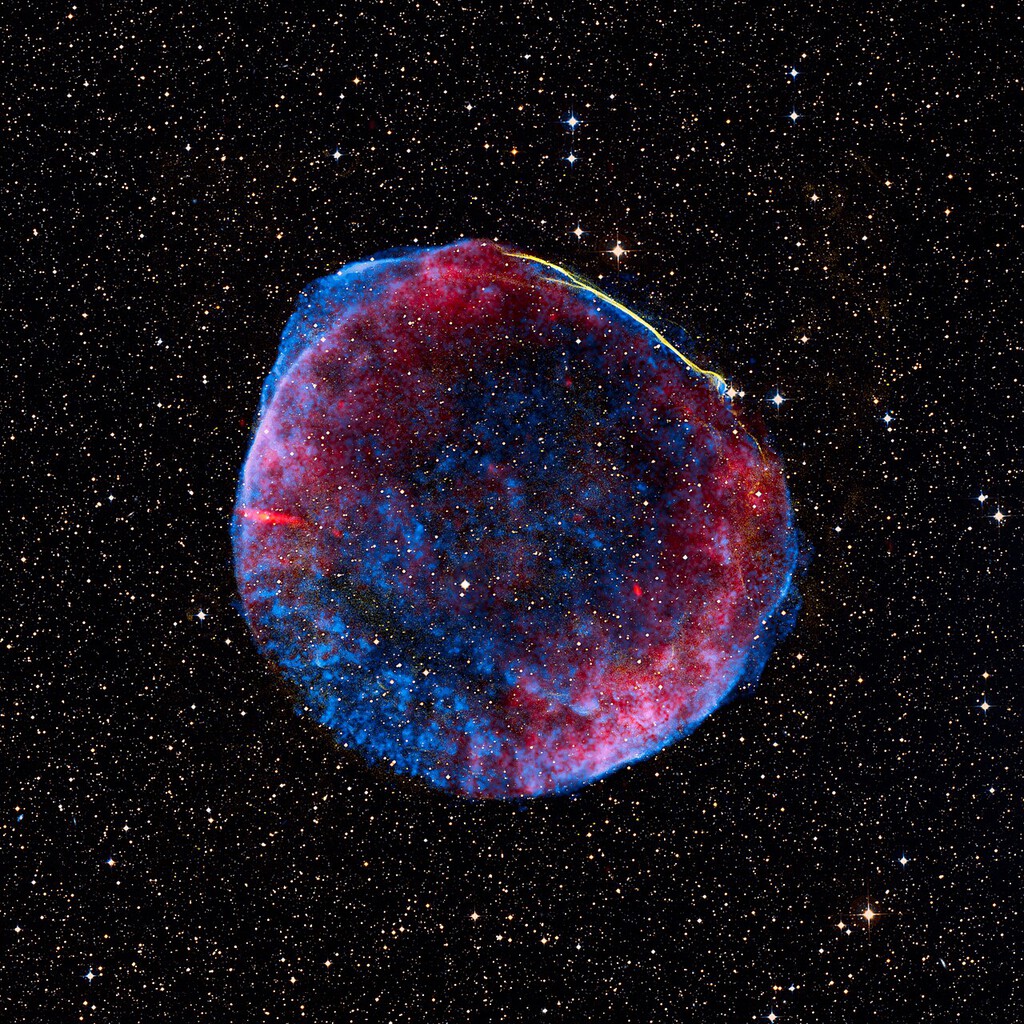
Since then, multiple independent lines of evidence—cosmic microwave background, galaxy clustering, and gravitational lensing—have supported the existence of dark energy, which is thought to make up about 68% of the universe.
The Oxford Study: A Controversial Alternative
The Oxford team proposes that the observed acceleration might be an illusion caused by the structure of the universe on large scales. They argue that we may not need dark energy if we account for the inhomogeneous distribution of matter.
According to the researchers, the dimming of distant supernovae could be explained by the fact that we live in a cosmic void—a region of space with lower density than average. This would affect the way we interpret distance measurements.
Key Arguments from the Study
- Supernovae anomalies: The study claims that the observed dimming of distant supernovae might not require an accelerating expansion.
- Cosmic voids: Our local environment could bias our measurements of cosmic expansion.
- Alternative models: The team presents a framework that fits the data without invoking dark energy.
- Simplicity: The proposal is more parsimonious, eliminating the need for an unknown energy form.
Reactions from the Scientific Community
The study has received mixed reactions. Some researchers find the idea intriguing and worth further investigation, while others are skeptical, pointing out that the evidence for dark energy is overwhelming.
Critics argue that the Oxford team has not provided sufficient evidence to overturn the standard cosmological model. They note that the study selectively addresses certain observations while ignoring others that strongly support dark energy.
Support and Skepticism
| Aspect | Supporters' View | Critics' View |
|---|---|---|
| Evidence for dark energy | Incomplete; alternative explanations possible | Overwhelming from multiple independent probes |
| Role of cosmic voids | Underestimated in current models | Effects are too small to explain acceleration |
| Impact on cosmology | Could lead to a paradigm shift | Unlikely to dethrone the standard model |
Why This Debate Matters
Dark energy is central to our understanding of the universe's fate. If it doesn't exist, we need a radically different explanation for cosmic acceleration. This would affect everything from galaxy formation to the ultimate destiny of the cosmos.
The controversy also highlights the self-correcting nature of science. Even well-established ideas are subject to scrutiny, and alternative hypotheses deserve consideration. The background to this story is set out in Cosmic Hydrogen Measurement Unlocks Dark Energy Secrets. A related thread runs through National Survey for Wales Sparks Soul-Searching on Life Choices. Earlier coverage in Salsa Classes Improve Mental Health, Oxford Study Finds shows how the argument developed.
What to Watch Next
Future observations, such as those from the Euclid space telescope and the Dark Energy Spectroscopic Instrument (DESI), will provide more precise measurements of cosmic expansion. These data will help determine whether dark energy is real or if a more complex model is needed. A closer look at the same subject appears in Salsa Classes Boost Mental Health, Oxford Study Finds. Anyone following the wider picture can start with Salsa Classes Cut Depression and Anxiety, Oxford Study Finds. The same theme surfaces in Trump Iran War Claim Ignites Midterm Rally Debate, which takes a different angle.
Meanwhile, theorists will continue to refine both the standard model and alternative explanations. The Oxford study, whether ultimately right or wrong, has sparked a valuable conversation about the foundations of cosmology. Context on how this played out before sits in Dark Side of the Moon Mission to Reveal Early Universe Secrets. A companion piece, Scientists Use Far Side of the Moon to Study Young Universe, approaches the same subject from another angle.
FAQ
What is dark energy?
Dark energy is a mysterious force thought to make up about 68% of the universe and drive its accelerating expansion. Its existence is inferred from observations of distant supernovae and other cosmological data.
Why do some scientists doubt dark energy?
Some scientists propose alternative explanations for cosmic acceleration, such as the effect of living in a cosmic void. They argue that dark energy may be an unnecessary complication if other models can explain the data.
What evidence supports dark energy?
Multiple independent observations, including the cosmic microwave background, galaxy clustering, and supernova surveys, consistently point to an accelerating universe. These lines of evidence form the basis for the standard cosmological model.
How will the debate be resolved?
Future experiments like Euclid and DESI will provide more precise measurements of cosmic expansion. These data will help scientists determine whether dark energy is real or if alternative models are needed.
Browse the Shop
 Acacia frida deluxe solid wood bed frame |
Bedroom bench |
Bed chest drawers |
Lingerie dresser |
Frame base |
Mirror with jewelry storage |
30 Bathroom Vanity |
Memory foam queen mattress |
Mattresses for back pain |
Nightstand set of 2 |
Grand Goldman Shop |
Civil Lawyer
Deutschland Trikot WM 2026







