

Ancient Greek soldiers were true powerhouses, and a new study confirms it: researchers have shown that a 3,500-year-old bronze armor was not just for show but actually used in battle. The armor, discovered in Dendra, Greece, in 1960, has long puzzled archaeologists. Now, a team has put it to the test, revealing that Mycenaean warriors could fight for hours while wearing this heavy suit.
The armor, made of copper alloy plates joined with leather, covered the soldier from neck to knees. It dates back to the Mycenaean civilization, which dominated Greece from 1600 to 1100 BC. The question was whether such a rigid and heavy suit was practical for combat or merely ceremonial. The new research suggests it was battle-ready.
Find Original, High-end Home Decor that spark conversation at Grand Goldman Shop.
Uncovering the Dendra Armor: A Mycenaean Marvel
The Dendra armor was found in a tomb near the village of Dendra in the Argolid, close to Argos and Mycenae, the heart of Mycenaean civilization. It is one of the oldest complete suits of armor in Europe. The find was incredibly well-preserved, with most of its bronze plates intact.
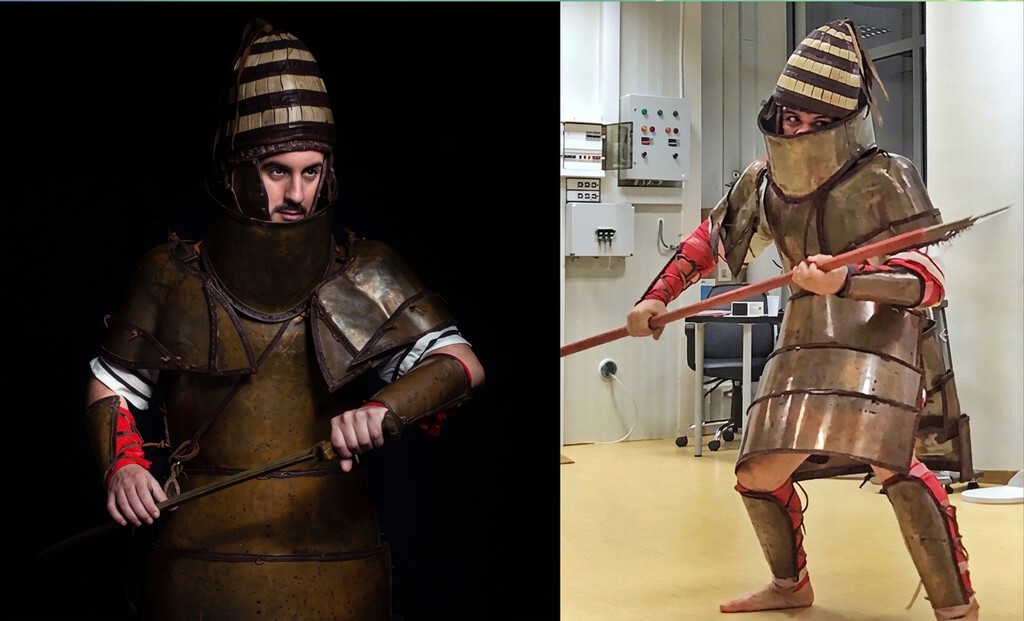
For decades, scholars debated its purpose. Some argued it was too cumbersome for battle, perhaps used only in ceremonies or funerary contexts. Others believed it was designed for combat. The debate remained unresolved until now.
Testing the Armor: 11 Hours of Simulated Combat
To answer the question, researchers conducted an experiment with modern volunteers. They replicated the armor and had volunteers wear it while performing a series of combat movements and exercises. The volunteers, likely trained in martial arts or historical reenactment, wore the armor for 11 hours.
The results were surprising. Despite the armor's weight and rigidity, the volunteers were able to move, fight, and even run. The study concluded that the armor was suitable for battle, though it would have been exhausting.
- Weight: The armor weighs about 18 kilograms (40 pounds), which is heavy but manageable for trained warriors.
- Mobility: Volunteers could move freely enough to engage in combat, though agility was limited.
- Endurance: The 11-hour test showed that soldiers could wear the armor for extended periods, but fatigue would set in.
- Protection: The bronze plates offered significant protection against slashing and thrusting attacks.
- Historical context: The armor was likely used by elite warriors, not ordinary soldiers, given its cost and maintenance.
Why This Matters: Rewriting Ancient Greek Warfare
This study challenges the long-held assumption that early Greek armor was purely ceremonial. It suggests that Mycenaean soldiers were well-equipped and capable of prolonged combat. This aligns with Homer's Iliad, which describes heroes fighting in heavy bronze armor.
The findings also shed light on the logistics of ancient warfare. Producing such armor required significant resources and skill, indicating a sophisticated society. It also implies that battles could be grueling, with soldiers enduring hours of fighting in heavy gear.
Comparison of Ancient Armor Types
To put the Dendra armor in perspective, here's how it compares to other ancient armor: Context on how this played out before sits in Ancient Greek Soldiers Were Powerhouses: 11 Hours in 3,500-Year-Old Bronze. A companion piece, Motorola Moto Tag 2 Review: A Must-Have Bluetooth Tracker for Forgetful People, approaches the same subject from another angle.
| Armor Type | Material | Weight (approx.) | Time Period | Mobility |
|---|---|---|---|---|
| Dendra Armor | Bronze | 18 kg | 1500 BC | Limited |
| Greek Hoplite Armor | Bronze | 22 kg | 700 BC | Moderate |
| Roman Lorica Segmentata | Iron | 9 kg | 100 AD | High |
| Medieval Plate Armor | Steel | 25 kg | 1400 AD | Moderate |
The Dendra armor was heavier than later Roman armor but comparable to medieval plate. Its rigidity made it less flexible than some later designs, but it offered excellent protection. The background to this story is set out in Women of Ancient Greece Finally Get Their Moment in the Sun. A related thread runs through Trending: latest articles.
What This Means for Our Understanding of Mycenaean Society
The armor's practicality suggests that Mycenaean warriors were professional or elite soldiers. It also implies that battles were not just skirmishes but could involve prolonged engagements. This fits with the palatial economy of Mycenaean Greece, which could support specialized craftsmen and warriors. Earlier coverage in Africa's 2,800-Year-Old Palace: The First Skyscraper shows how the argument developed. A closer look at the same subject appears in Who Brought Wine to Spain? 28 Ancient Seeds Finally Reveal the Answer.
Moreover, the study highlights the importance of experimental archaeology. By recreating and testing ancient artifacts, researchers can gain insights that written records alone cannot provide. Anyone following the wider picture can start with Roman Theater in Málaga Unearthed After 35 Years: Seating Found Intact. The same theme surfaces in Prehistoric Gender Roles: DNA Rewrites the Hunting and Gathering Story, which takes a different angle.
FAQ
Was the Dendra armor actually used in battle?
Yes, according to the new study, the armor was suitable for battle. Volunteers wearing a replica were able to move and fight for extended periods, indicating it was not merely ceremonial.
How heavy was the Dendra armor?
The armor weighs approximately 18 kilograms (40 pounds). While heavy, it was manageable for trained warriors, though it would have been tiring to wear for long periods.
Who wore the Dendra armor?
It was likely worn by elite warriors or aristocrats, as the armor was expensive to produce and maintain. Ordinary soldiers probably wore lighter protection.
How does this change our view of ancient Greek warfare?
It suggests that Mycenaean battles could be prolonged and brutal, with soldiers relying on heavy armor for protection. This aligns with descriptions in Homer's epics and indicates a sophisticated military culture.
The study also raises questions about the training and physical fitness of ancient soldiers. To wear such armor for hours, they must have been in peak condition. This reinforces the image of ancient Greek warriors as formidable fighters.
As experimental archaeology continues to advance, we can expect more revelations about ancient technologies and warfare. The Dendra armor is a testament to the ingenuity and resilience of ancient Greek soldiers.
Browse the Shop
 Acacia frida deluxe solid wood bed frame |
Bedroom bench |
Bed chest drawers |
Lingerie dresser |
Frame base |
Mirror with jewelry storage |
30 Bathroom Vanity |
Memory foam queen mattress |
Mattresses for back pain |
Nightstand set of 2 |
Grand Goldman Shop |
Civil Lawyer
Deutschland Trikot WM 2026










