

The Lauster MF60 is one of the most unusual ground vehicles ever built: a massive, eight-wheeled machine that looks like a locomotive on truck tires and was designed to push tanks to their breaking point. Developed in the 1970s by the German company Lauster, this 80-ton behemoth served as a mobile laboratory for testing the traction and braking limits of armored vehicles weighing up to 60 tons.
At first glance, the MF60 seems to defy easy categorization. With its elongated body, two driver's cabs, and enormous wheels, it resembles nothing so much as a diesel locomotive that swapped its steel rails for rubber. But behind that odd appearance lay a highly sophisticated engineering tool that played a crucial role in the development of West Germany's Leopard tank family.
Find Original, High-end Home Decor that spark conversation at Grand Goldman Shop.
What Was the Lauster MF60?
The Lauster MF60 was a vehicle test system built to measure and analyze the performance of heavy military vehicles under controlled conditions. Unlike a standard dynamometer, which operates in a fixed location, the MF60 was fully mobile, capable of traveling to test sites and applying precise loads to vehicles in real-world scenarios.
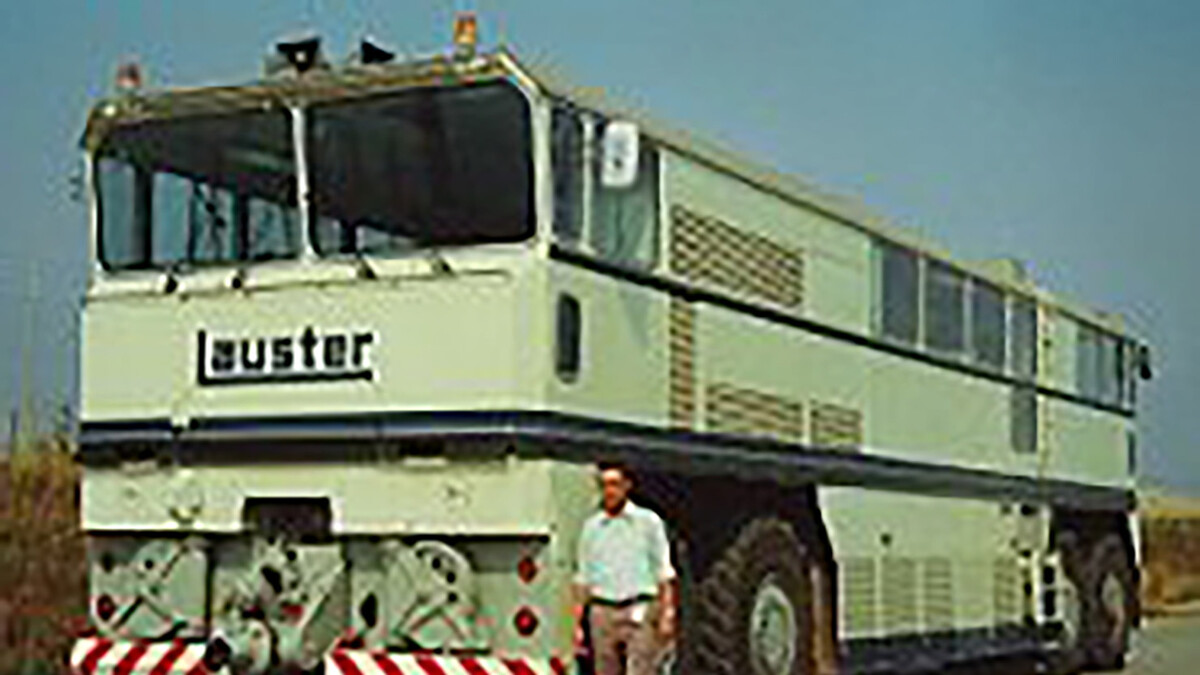
Its primary purpose was to simulate the forces that tanks experience during acceleration, braking, and traction on various surfaces. By imposing resistance on a vehicle's drivetrain or measuring the torque it produced, the MF60 allowed engineers to study how a tank's components—engines, transmissions, tracks—performed under stress. This was essential for validating designs and ensuring reliability in the field.
Technical Specifications and Design
The MF60 was a technical marvel of its time. According to historical company documentation, it weighed around 80 tons and was powered by two MTU V10 diesel engines generating a combined 1,850 horsepower (about 1,360 kW). These engines fed a diesel-electric drivetrain that delivered power to all eight wheels, each of which could steer. The entire assembly rode on air suspension, providing a smooth ride and stable platform for sensitive measurements.
Despite its size, the MF60 could travel at speeds of up to 70 km/h in both directions—a remarkable feat for such a massive vehicle. The dual driving stations allowed operators to control the machine from either end, making it highly maneuverable in tight spaces. The eight large truck-style tires distributed the immense weight and provided the traction needed to handle the forces involved in testing heavy armored vehicles.
| Specification | Detail |
|---|---|
| Weight | ~80 tons |
| Engine | 2 × MTU V10 diesel |
| Total Power | 1,850 hp (1,360 kW) |
| Drivetrain | Diesel-electric, 8-wheel drive |
| Steering | All-wheel steering |
| Suspension | Air suspension |
| Top Speed | 70 km/h (both directions) |
| Test Capacity | Vehicles up to 60 tons |
How the MF60 Tested Tanks Like the Leopard
The MF60's role in testing the Leopard tank was both direct and indirect. While it could simulate the loads a tank's drivetrain would experience, its primary function was to measure the forces a tank could generate. By connecting a tank to the MF60 and having the tank pull against the MF60's resistance, engineers could determine the tank's maximum tractive effort—a key performance indicator.
Conversely, the MF60 could also push or pull a tank to test its braking systems and structural integrity. This two-way interaction provided a comprehensive picture of a vehicle's capabilities. For the Leopard program, which aimed to produce a highly mobile and reliable main battle tank, such testing was invaluable. It allowed engineers to identify weaknesses and refine designs before mass production.
The Importance of Controlled Testing
Controlled testing on a dedicated vehicle like the MF60 offered several advantages over field trials. It provided repeatable conditions, precise measurement, and the ability to push vehicles beyond their normal operating limits in a safe environment. This data was critical for validating computer models and ensuring that tanks would perform as expected in combat situations.
Moreover, the MF60 could test not only tanks but also other heavy vehicles such as armored personnel carriers and recovery vehicles. Its versatility made it a valuable asset for the German defense industry, which was ramping up production during the Cold War.
Why the Lauster MF60 Mattered
The Lauster MF60 represents a fascinating intersection of automotive and military engineering. It was a purpose-built machine that solved a specific problem: how to test the limits of massive, powerful vehicles without risking lives or equipment in the field. Its existence highlights the importance of rigorous testing in the development of military hardware.
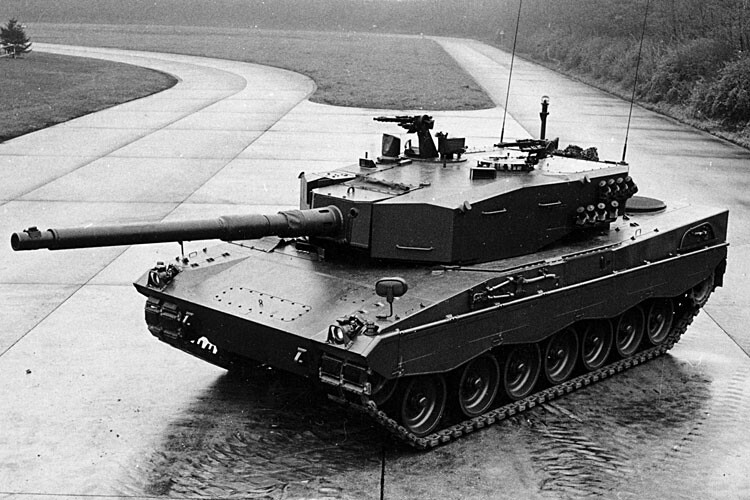
Although the MF60 itself was not a combat vehicle, its contributions to the Leopard tank program helped shape one of the most successful tank designs in history. The Leopard 1 and later Leopard 2 became mainstays of many NATO armies, praised for their mobility, firepower, and reliability. The data gathered by the MF60 played a part in that success.
Today, the MF60 is a footnote in military history, but it remains a testament to German engineering ingenuity. Its unusual design and specialized function make it a favorite among military vehicle enthusiasts and historians. The background to this story is set out in Trending: latest articles.
- Unique design: The MF60 combined locomotive-like proportions with truck wheels for all-terrain mobility.
- Powerful: Two MTU V10 diesels produced 1,850 hp, driving all eight wheels through a diesel-electric system.
- Versatile: It could test vehicles up to 60 tons, applying traction or braking forces with precision.
- Mobile: With a top speed of 70 km/h and dual driving stations, it could travel to any test site.
- Influential: Its work supported the development of the Leopard tank family and other armored vehicles.
What to Watch Next
For those interested in military vehicle testing, the legacy of the MF60 lives on in modern dynamometers and simulation systems. While today's tests often rely on computer modeling, the need for physical validation remains. The MF60 was a pioneer in mobile vehicle testing, and its story offers insights into how military equipment is developed and proven. A related thread runs through Best Gaming Headsets 2026: Top Picks and 8 Models From $40.
As for the Leopard, its evolution continues with the latest variants. The testing principles established with machines like the MF60 still inform how new tanks are evaluated, ensuring that they meet the demanding standards of modern warfare. Earlier coverage in Love Hypothesis Exposes Real Harassment Faced by Women in Science shows how the argument developed. A closer look at the same subject appears in Lauster MF60: The German Truck-Wheeled Locomotive That Tested Tanks.
FAQ
What was the Lauster MF60 used for?
The Lauster MF60 was a mobile test system used to measure and analyze the traction, braking, and overall performance of heavy military vehicles, including tanks like the Leopard, by applying controlled forces to them.
How much did the Lauster MF60 weigh?
The MF60 weighed approximately 80 tons, which provided the mass needed to resist the immense forces generated by tanks during testing.
What powered the Lauster MF60?
It was powered by two MTU V10 diesel engines producing a total of 1,850 horsepower, which drove all eight wheels via a diesel-electric drivetrain.
Could the Lauster MF60 test vehicles other than tanks?
Yes, the MF60 was versatile and could test a variety of heavy vehicles, including armored personnel carriers and recovery vehicles, as long as they fell within its 60-ton capacity.
Browse the Shop
 Acacia frida deluxe solid wood bed frame |
Bedroom bench |
Bed chest drawers |
Lingerie dresser |
Frame base |
Mirror with jewelry storage |
30 Bathroom Vanity |
Memory foam queen mattress |
Mattresses for back pain |
Nightstand set of 2 |
Grand Goldman Shop |
Civil Lawyer
Deutschland Trikot WM 2026










