

The Rolls-Royce Trent XWB-97 engine, with a fan nearly three meters in diameter, recently completed a 24-hour test flight, demonstrating remarkable engineering endurance. This milestone is part of Qantas' Project Sunrise, aiming to prove the viability of ultra-long-haul flights. The engine, which powers the Airbus A350-1000, is the most powerful variant in the Trent XWB family.
What Happened During the 24-Hour Flight?
When the A350-1000ULR landed in Toulouse, its two Trent XWB-97 engines had been running for over 24 hours straight. The flight, lasting 24 hours and 24 minutes, was designed to simulate the 23-hour block time required for Project Sunrise. This margin accounts for taxiing, potential delays, and diversions, ensuring the aircraft can handle the planned 21-hour and 40-minute flight from Melbourne to Toulouse.
Find Original Home Decor sparking conversation at Grand Goldman Shop.

The mission also collected data on fuel management, cabin temperature, and crew rest area climate control. These insights are crucial for passenger comfort and operational efficiency on ultra-long-haul routes.
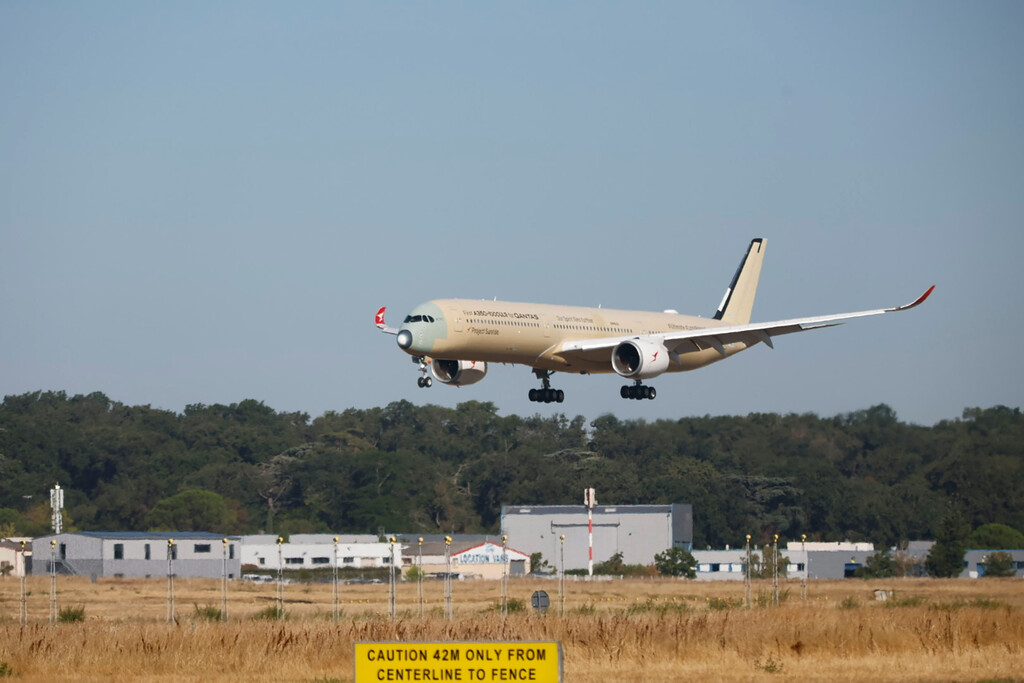
Why the Trent XWB-97 Matters
The Trent XWB-97 is the most powerful engine in the Trent XWB family, specifically designed for the A350-1000 and the future A350F freighter. Its fan diameter of almost three meters allows it to generate immense thrust while maintaining fuel efficiency. This engine is already in service with airlines operating the A350-1000, but this test pushed it to new limits.

The successful 24-hour flight underscores Rolls-Royce's engineering prowess and the engine's reliability. It also highlights the feasibility of ultra-long-haul flights, which could revolutionize air travel by connecting distant cities non-stop.

Key Takeaways from the Test Flight
- Endurance proven: The Trent XWB-97 ran for over 24 hours continuously, validating its durability.
- Project Sunrise progress: The flight demonstrated the aircraft's capability for 23-hour block times.
- Data collection: Insights on fuel, cabin climate, and crew rest were gathered for future flights.
- Engine family: The XWB-97 is the most powerful variant, powering the A350-1000 and A350F.
- Operational margin: The test included a buffer for taxiing, delays, and diversions.
Comparing the Trent XWB Variants
The Trent XWB family includes two main variants: the XWB-84 and the XWB-97. The XWB-84 powers the A350-900, while the XWB-97 is designed for the larger A350-1000. The number in each name corresponds to the engine's thrust in thousands of pounds. The XWB-97 delivers 97,000 pounds of thrust, making it one of the most powerful engines in commercial aviation.
| Variant | Thrust (lbs) | Aircraft | Fan Diameter |
|---|---|---|---|
| Trent XWB-84 | 84,000 | A350-900 | 3.0 m |
| Trent XWB-97 | 97,000 | A350-1000, A350F | 3.0 m |
Both engines share a fan diameter of approximately three meters, but the XWB-97 is tuned for higher thrust. This allows the A350-1000 to carry more passengers and cargo over longer distances.
Who Is Affected by This Development?
Airlines planning ultra-long-haul routes, such as Qantas, stand to benefit the most. The successful test brings Project Sunrise closer to reality, potentially enabling non-stop flights from Sydney to London or New York. Passengers can look forward to shorter travel times and fewer layovers.
Rolls-Royce and Airbus also gain a competitive edge, showcasing their ability to push the boundaries of aviation technology. The data collected will inform future engine and aircraft designs, leading to more efficient and comfortable long-haul travel. The background to this story is set out in Qantas A350-1000ULR Test Flight from France to Melbourne. A related thread runs through Qantas Tests Ultra Long-Range Airbus A350 on 17,000km Flight. Earlier coverage in Qantas Tests Ultra Long-Range Airbus A350 Direct to Melbourne shows how the argument developed.
What to Watch Next
Following this test, Qantas and Airbus will analyze the data to finalize plans for Project Sunrise. The first commercial flights are expected to launch in the coming years, pending regulatory approvals. Rolls-Royce will continue to refine the Trent XWB-97 for optimal performance. A closer look at the same subject appears in Rolls-Royce Engine Fixes Lead to Next Big Challenge in Aviation. Anyone following the wider picture can start with Rolls-Royce Engine Fixes Pave Way for Next Big Challenge. The same theme surfaces in Qantas Record Flight: 24 Hours Nonstop in New Airbus A350, which takes a different angle.
As the aviation industry recovers from the pandemic, ultra-long-haul flights could become a new norm, connecting more cities non-stop. The Trent XWB-97's success is a significant step toward that future. Context on how this played out before sits in Rolls-Royce Outlook Improves: CEO Targets Top FTSE Spot. A companion piece, Rolls-Royce Outlook Improves: CEO's Vision Gains Credibility, approaches the same subject from another angle.
FAQ
What is the Rolls-Royce Trent XWB-97?
The Trent XWB-97 is the most powerful engine in the Trent XWB family, designed for the Airbus A350-1000 and A350F. It produces 97,000 pounds of thrust and features a fan nearly three meters in diameter.
Why did the engine run for 24 hours?
The 24-hour flight was part of Qantas' Project Sunrise, testing the aircraft's endurance for ultra-long-haul routes. It simulated the 23-hour block time required for flights like Melbourne to Toulouse.
Which aircraft use the Trent XWB-97?
The Trent XWB-97 powers the Airbus A350-1000 and will equip the future A350F freighter. The A350-900 uses the lower-thrust XWB-84 variant.
What does Project Sunrise aim to achieve?
Project Sunrise aims to enable non-stop flights from Australia's east coast to cities like London and New York. The 24-hour test flight is a key milestone in proving the feasibility of such routes.
Browse the Shop
 Acacia frida deluxe solid wood bed frame |
Bedroom bench |
Bed chest drawers |
Lingerie dresser |
Frame base |
Mirror with jewelry storage |
30 Bathroom Vanity |
Memory foam queen mattress |
Mattresses for back pain |
Nightstand set of 2 |
Grand Goldman Shop |
Civil Lawyer
Deutschland Trikot WM 2026







