

AI-powered tools like Claude Code and Codex are enabling individuals to create custom applications, such as a personalized eclipse map for finding the best viewing spot near Madrid. This approach leverages large language models to turn a simple idea into a functional tool without extensive programming knowledge.
The upcoming solar eclipse on August 12, 2026, will be visible across parts of Spain, but Madrid is not in the path of totality. Many residents, like the author, want to witness the total eclipse without traveling too far. Traditional tools from the National Geographic Institute show how the eclipse will appear in each locality, but they don't account for travel distance and time. This gap inspired the creation of a custom map using AI.
Find Original Home Decor sparking conversation at Grand Goldman Shop.

Why Madrid Isn't Ideal for the 2026 Eclipse
Madrid lies outside the path of totality for the August 12, 2026, solar eclipse. Observers in the city will see a partial eclipse, with the moon covering a significant portion of the sun but not entirely. To experience the full effect—darkness during the day and the sun's corona—one must travel to the path of totality, which crosses northern Spain.
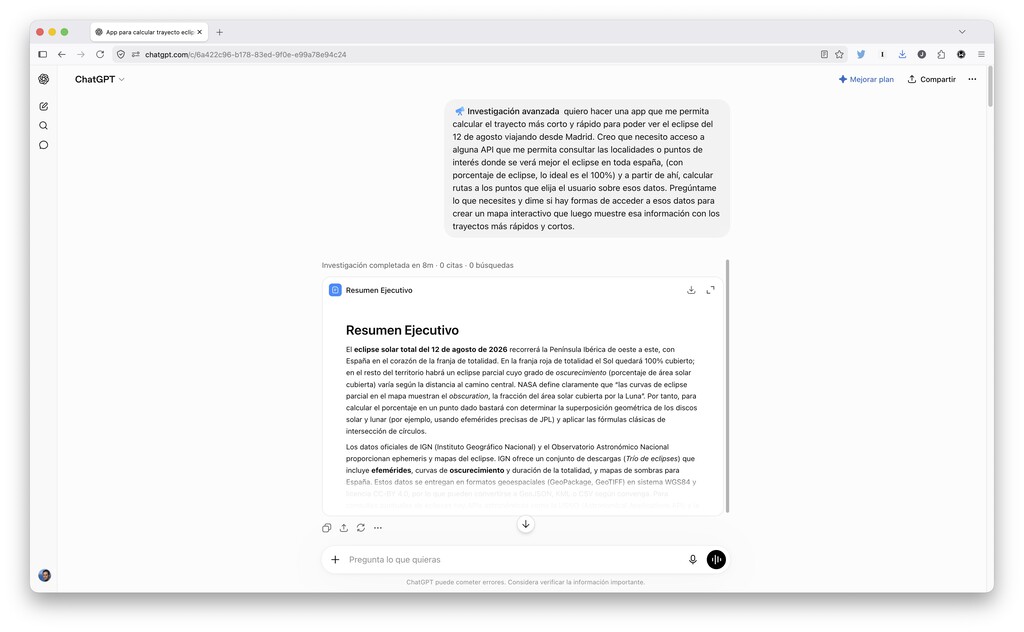
The author, who will be in Madrid on that date, wanted to find a location within reasonable driving distance that offers the longest possible totality. This requires balancing distance, travel time, and eclipse duration. Standard eclipse maps show the path but don't provide personalized recommendations based on these factors.
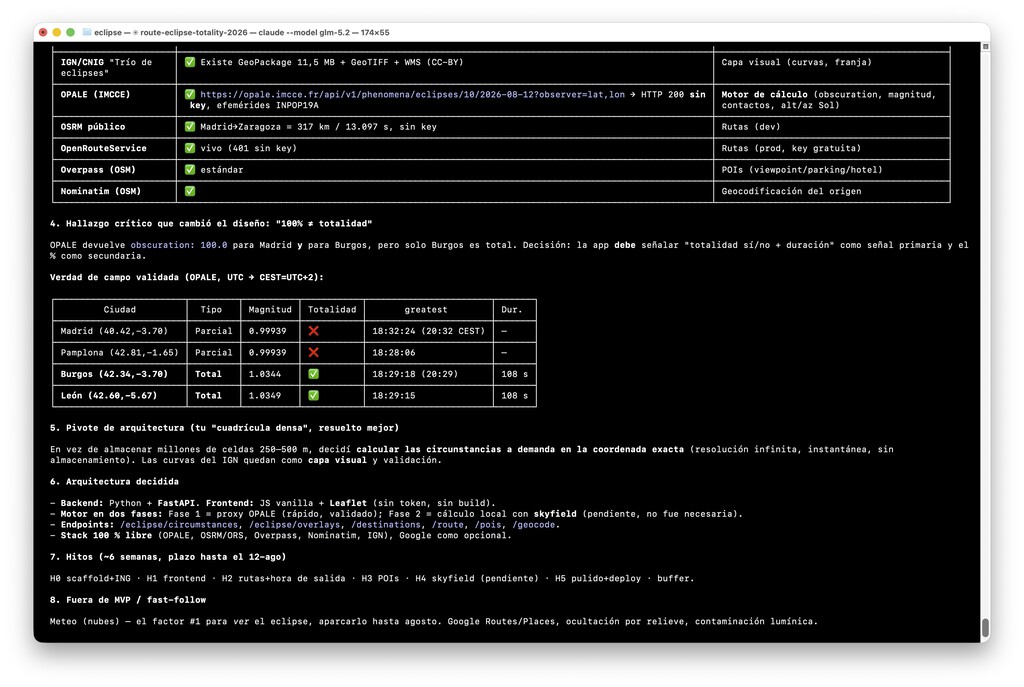
How AI Tools Made a Custom Map Possible
Using AI models like Claude Code, Codex, Antigravity, and OpenCode, the author set out to build a tool that would answer a specific question: where is the closest place to Madrid to see the total eclipse for the longest time? These AI platforms have demonstrated that almost anyone can turn an idea into an app, even without deep coding expertise.
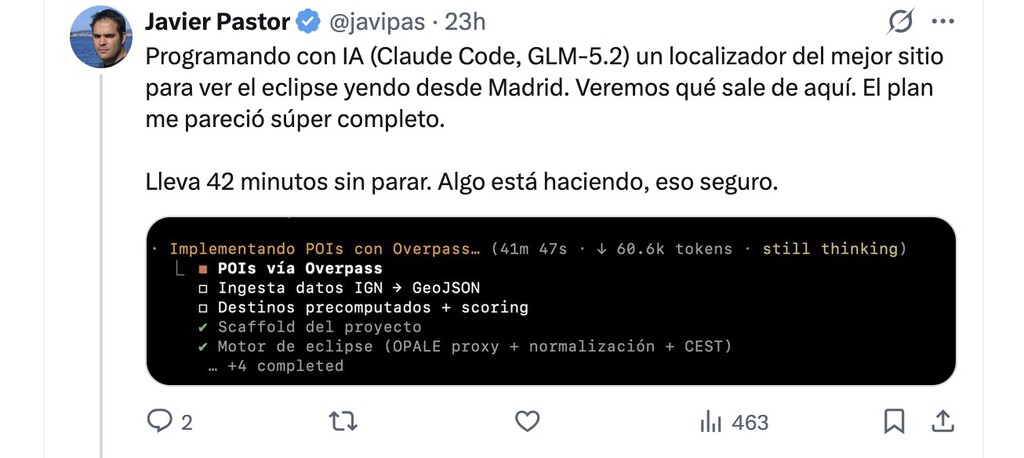
The first step was to assess feasibility. The author used "deep research" modes available in current AI models to explore how to approach the problem. This involved understanding the eclipse path, calculating travel distances, and estimating viewing durations. The AI helped outline the necessary data sources and algorithms.
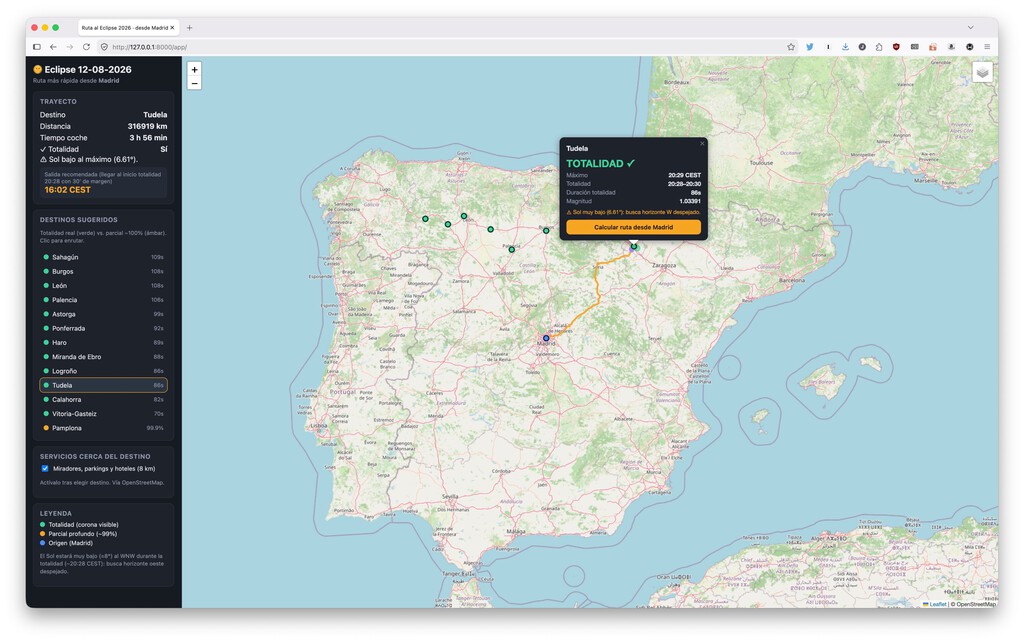
Key Steps in Building the Eclipse Map
- Define the goal: Find the nearest location to Madrid with maximum totality duration, minimizing travel time.
- Gather data: Use eclipse path data from sources like NASA or the National Geographic Institute, and map services for routing.
- Choose AI tools: Leverage Claude Code or Codex to generate code for data processing and visualization.
- Iterate and test: Refine the tool based on outputs, ensuring accuracy and usability.
- Deploy: Share the tool for others to use, potentially as a web app.
Comparing AI Platforms for App Development
Several AI platforms can assist in building custom applications. The table below compares key features of popular options mentioned in the source.
| Platform | Key Feature | Ease of Use | Best For |
|---|---|---|---|
| Claude Code | Natural language to code | High | Rapid prototyping |
| Codex | Code generation from prompts | Medium | Developers |
| Antigravity | AI-assisted development | Medium | Custom apps |
| OpenCode | Open-source coding AI | Variable | Community projects |
Each platform has strengths, but the author's experience highlights how accessible app creation has become. With minimal coding, one can build a tool tailored to a specific need, like an eclipse-viewing map. The background to this story is set out in How to Check the Official Eclipse Map for Your Viewing Spot. A related thread runs through Claude Code: AI Programming Tool for Your Terminal Explained. Earlier coverage in AI Coding Tools Like Claude Code Turn Developers Into Enter-Key Pushers shows how the argument developed.
What This Means for Eclipse Chasers
For eclipse enthusiasts, AI-generated tools can provide personalized recommendations that generic maps cannot. By inputting a starting location and preferences (e.g., maximum drive time), users can get a ranked list of viewing spots with estimated totality durations. This saves time and enhances the experience. A closer look at the same subject appears in Total Solar Eclipse August 2027 in Spain: Municipality Map Guide. Anyone following the wider picture can start with AEMET Eclipse Forecast: Cloud Cover Map for August 12. The same theme surfaces in Ultimate Map for the August 12 Solar Eclipse: Duration and Forecast, which takes a different angle.
Moreover, the project demonstrates the growing role of AI in everyday problem-solving. As these tools become more sophisticated, we can expect more individuals to create custom solutions for niche interests, from astronomy to travel planning. Context on how this played out before sits in Anthropic Builds Custom AI Chips to Power Claude and Cut Costs. A companion piece, Son Calls Out Mom For Neglect And Enabling Stepsister’s Creepy Behavior Because She Gets Too Close, approaches the same subject from another angle.
FAQ
What is the path of totality for the August 12, 2026, eclipse?
The path of totality crosses northern Spain, including cities like A Coruña, Oviedo, and Zaragoza. Madrid is south of the path, so viewers there will see a partial eclipse.
Can I use AI to find the best eclipse viewing spot?
Yes, with AI tools like Claude Code or Codex, you can build a custom map that calculates travel distance and totality duration from your location. This requires some data and basic coding, but AI simplifies the process.
How long will totality last in northern Spain?
Totality duration varies by location, typically ranging from about 1 to 2 minutes in Spain. The exact time depends on how close you are to the center of the path.
What are the best AI platforms for building a custom app?
Popular options include Claude Code, Codex, Antigravity, and OpenCode. Each offers different features; Claude Code is known for its ease of use, while Codex is favored by developers for code generation.
Browse the Shop
 Acacia frida deluxe solid wood bed frame |
Bedroom bench |
Bed chest drawers |
Lingerie dresser |
Frame base |
Mirror with jewelry storage |
30 Bathroom Vanity |
Memory foam queen mattress |
Mattresses for back pain |
Nightstand set of 2 |
Grand Goldman Shop |
Civil Lawyer
Deutschland Trikot WM 2026







