

BMW is testing humanoid robots for complex factory tasks, marking a significant step in the evolution of automotive manufacturing. In October 2025, Figure unveiled its new humanoid robot, the Figure 03, boasting a new design and much more precise dexterity, allowing it to move around the house and perform delicate tasks such as picking up dishes or folding clothes. Although not yet for sale, the Figure 03 has already started its first job at BMW's factory in New Jersey.
This is not the first time BMW has integrated humanoid robots into its factories. In fact, this new pilot program is a continuation of a first phase in which the previous model, the Figure 02, supported the production of the BMW X3, and before that, they had the Figure 01 in "internship." The Figure 02 spent ten months at BMW's Spartanburg plant, specifically in the body shop department. Its job was to load the sheet metal panels that dress the BMW X3. It helped produce more than 30,000 vehicles. Now, the Figure 03 has a completely different role that leverages its new capabilities.
Find Original Home Decor sparking conversation at Grand Goldman Shop.

BMW's Humanoid Robot Pilot: From Figure 01 to Figure 03
BMW's exploration of humanoid robots began with the Figure 01, which underwent initial testing. This was followed by the Figure 02, which took on a more substantial role in vehicle production. The Figure 02's ten-month stint at the Spartanburg plant demonstrated the potential of humanoid robots in a real manufacturing environment.
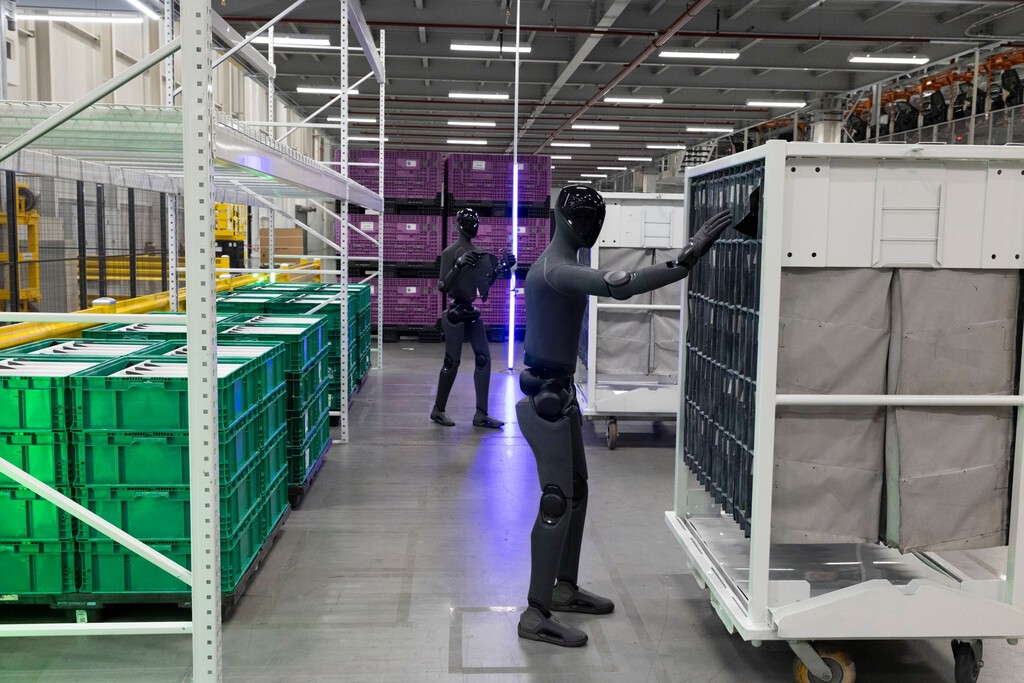
The Figure 02 was tasked with loading sheet metal panels into the body shop, a repetitive and physically demanding job. Its success in helping produce over 30,000 vehicles paved the way for the next phase: the Figure 03. This new model is not just an incremental improvement; it represents a leap in dexterity and capability, allowing it to handle more complex tasks.
What the Figure 03 Brings to the Factory Floor
The Figure 03 features a new design and improved dexterity, enabling it to perform delicate tasks that were previously difficult for robots. In the home environment, it can pick up dishes and fold clothes, but in the factory, these skills translate to handling components with precision. At BMW's New Jersey factory, the Figure 03 is operating in the assembly logistics department.
Here, components arrive in large, disordered containers. The robot's job is to pick them up and sort them into carts that are sent to the assembly line in a specific order. This task requires not only physical strength but also the ability to identify and manipulate objects in a cluttered environment—a challenge that the Figure 03 is well-equipped to handle.
Why BMW Is Betting on Humanoid Robots
BMW's interest in humanoid robots goes beyond novelty. The automotive industry is highly competitive, and manufacturers are constantly looking for ways to improve efficiency, reduce costs, and address labor shortages. Humanoid robots offer a unique advantage: they can be deployed in environments designed for humans, without the need for extensive modifications to the factory floor.
Unlike traditional industrial robots, which are fixed in place and perform a single task, humanoid robots are mobile and versatile. They can move between stations, handle a variety of parts, and adapt to different tasks. This flexibility is particularly valuable in logistics and assembly, where components vary in size and shape.
- Versatility: Humanoid robots can perform multiple tasks, reducing the need for specialized equipment.
- Adaptability: They can work in existing spaces without major infrastructure changes.
- Efficiency: They can handle repetitive or physically demanding jobs, freeing human workers for more complex tasks.
- Scalability: As technology improves, robots can be upgraded with new skills and capabilities.
- Data collection: Each deployment provides valuable data to refine robot performance and integration.
How the Figure 03 Compares to Previous Models
The evolution from Figure 01 to Figure 03 shows rapid progress in humanoid robotics. The Figure 01 was primarily a prototype for testing basic mobility and manipulation. The Figure 02 added strength and reliability for industrial tasks. The Figure 03 focuses on dexterity and precision, enabling it to handle delicate objects and complex sorting tasks.
| Model | Key Features | BMW Deployment | Tasks Performed |
|---|---|---|---|
| Figure 01 | Basic mobility, manipulation | Initial testing | General tasks |
| Figure 02 | Improved strength, reliability | Spartanburg plant, body shop | Loading sheet metal panels |
| Figure 03 | Advanced dexterity, precision | New Jersey factory, assembly logistics | Sorting components from containers |
The Figure 03's ability to pick items from disordered containers and sort them according to a specific sequence is a significant advancement. This task requires sophisticated vision systems and fine motor control, which are hallmarks of the latest generation of humanoid robots.
What This Means for the Future of Manufacturing
BMW's pilot program with the Figure 03 is a clear signal that humanoid robots are moving from research labs to real-world production floors. While the Figure 03 is not yet commercially available, its deployment at BMW provides valuable insights into how such robots can be integrated into existing workflows.
The success of this pilot could accelerate the adoption of humanoid robots across the automotive industry and beyond. As robots become more capable and affordable, they may take on a wider range of tasks, from assembly to quality inspection. This could lead to safer, more efficient factories and allow human workers to focus on higher-value activities. The background to this story is set out in Xiaomi's Humanoid Robots Now Assemble Cars Beyond Just Screws. A related thread runs through China's Humanoid Robots Ride Robot Horses at World Robot Conference. Earlier coverage in Humanoid Robots Decapitate Each Other in Viral Kick Fight shows how the argument developed.
Challenges and Considerations
Despite the progress, there are challenges. Humanoid robots are still expensive and complex to maintain. They require robust safety protocols to operate alongside human workers. And while they can handle many tasks, they are not yet as fast or as reliable as specialized industrial robots for certain applications. A closer look at the same subject appears in China's Military Humanoid Robots: From Showcase to Battlefield. Anyone following the wider picture can start with Chinese Firm UBTech Unveils Companion Humanoid Robots From €15,000. The same theme surfaces in China AI and Humanoid Robots: Beijing Warns Against Blind Investment, which takes a different angle.
However, the trajectory is clear. Each iteration brings improvements in dexterity, speed, and reliability. BMW's continued investment in this technology suggests that humanoid robots will play a growing role in manufacturing in the coming years. Context on how this played out before sits in Marking Gauge and Compass for Precise Layouts: DIY Guide. A companion piece, Folding iPhone Unveiled: Apple's New CEO Takes Center Stage, approaches the same subject from another angle.
FAQ
What is the Figure 03 robot?
The Figure 03 is a humanoid robot developed by Figure, featuring a new design and advanced dexterity. It can perform delicate tasks such as picking up dishes and folding clothes, and is currently being tested at BMW's factory in New Jersey for logistics tasks.
What tasks does the Figure 03 perform at BMW?
At BMW's New Jersey factory, the Figure 03 works in assembly logistics. It picks up components from large, disordered containers and sorts them into carts for the assembly line in a specific order.
How many vehicles did the Figure 02 help produce?
The Figure 02 spent ten months at BMW's Spartanburg plant and helped produce more than 30,000 vehicles by loading sheet metal panels in the body shop.
Is the Figure 03 available for purchase?
No, the Figure 03 is not yet for sale. It is currently in a pilot phase at BMW, and its performance will inform future development and commercialization.
BMW's experiment with humanoid robots is more than a tech demo; it's a glimpse into the future of manufacturing. As robots become more capable, they will reshape how products are made, and BMW is positioning itself at the forefront of this transformation.
Browse the Shop
 Acacia frida deluxe solid wood bed frame |
Bedroom bench |
Bed chest drawers |
Lingerie dresser |
Frame base |
Mirror with jewelry storage |
30 Bathroom Vanity |
Memory foam queen mattress |
Mattresses for back pain |
Nightstand set of 2 |
Grand Goldman Shop |
Civil Lawyer
Deutschland Trikot WM 2026







