

In China, a new kind of school has emerged—not for children, but for robots. These facilities are designed to teach robots how to work by collecting data on real-world tasks, marking a significant shift in how we approach robot training.
For years, the conversation around artificial intelligence has focused on models that can summarize, code, or generate images. But when we bring that ambition into the physical world, everything changes. A robot doesn't learn to work just by reading instructions: it needs to observe, repeat, fail, and accumulate data on real movements. That's why the next frontier in robotics isn't just about building more agile bodies or precise hands, but about constructing the entire system needed to teach them to act outside the lab.
Find Original Home Decor sparking conversation at Grand Goldman Shop.

The First Large-Scale Data Collection Factory in Fujian
This system is starting to take shape in Fujian, where the province's first large-scale data collection factory has been launched in a trial phase. According to CCTV, the facility is located in Area D of the Fuzhou Software Park and was created by Fujian Jufu Technology.
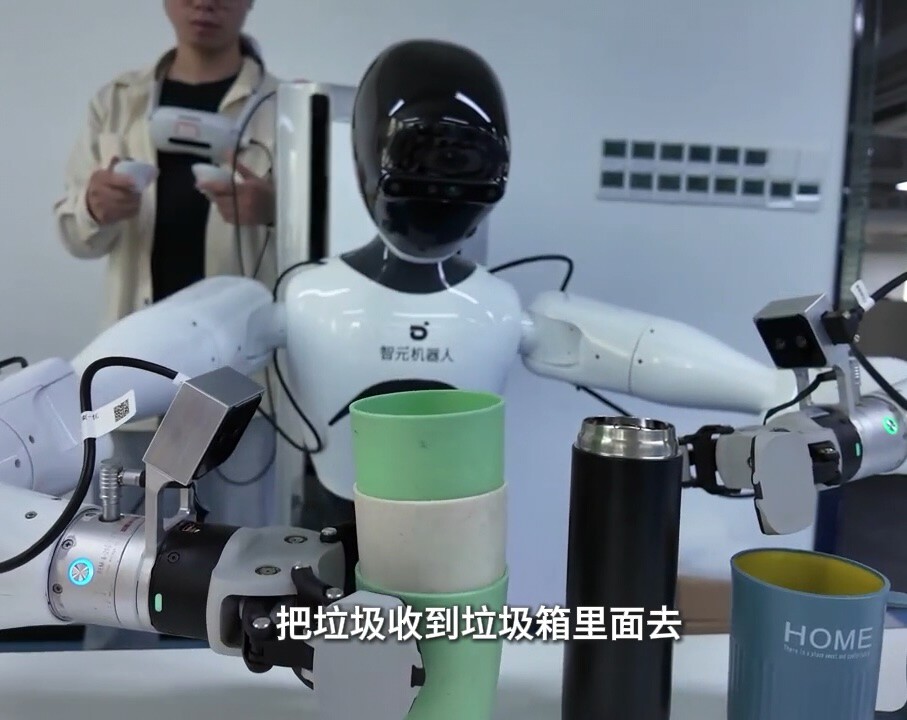
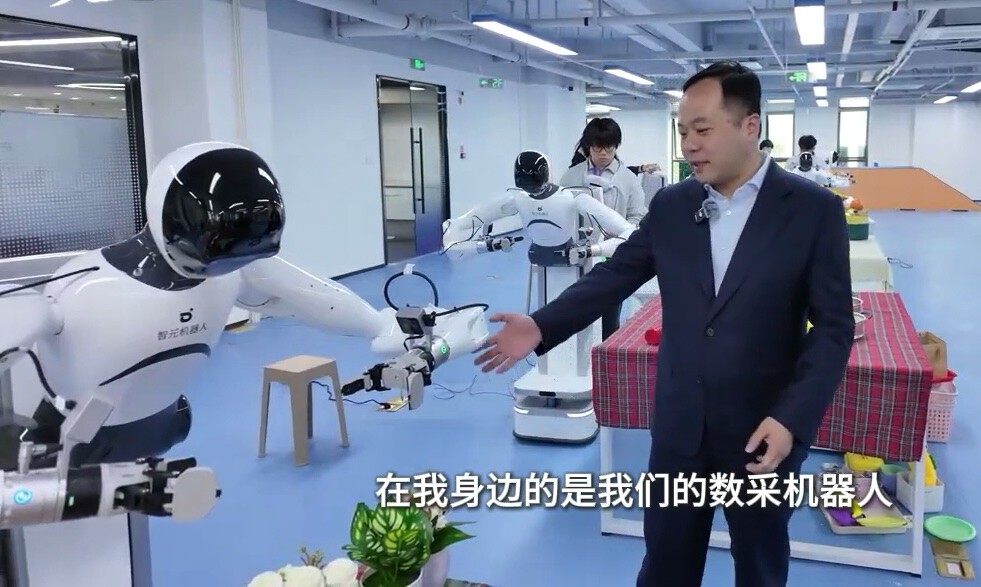
Inside, nearly 30 robots follow the instructions of various operators—described by Chinese sources as "teachers"—to practice tasks such as cleaning tables, sorting fruits and vegetables, or disposing of parcel boxes. The mechanics of this "school" are relatively easy to imagine but very demanding underneath.
Operators wear virtual reality devices and use controllers to guide the robot during each exercise. When the operator raises an arm, the machine reproduces the gesture and, for example, grabs a paper cup to place it in a specific spot. Each movement is recorded, creating a rich dataset that can later be used to train autonomous robots.
Why Robot Schools Matter for the Future of Work
The concept of robot schools addresses a fundamental challenge in robotics: the gap between simulation and reality. While simulated environments can teach robots basic movements, the real world is messy and unpredictable. Data collected from physical demonstrations helps robots learn to handle variations in lighting, object placement, and human interaction.
This approach is part of a broader trend toward embodied AI, where intelligence is not just in the software but in the interaction between the robot's body and its environment. By creating dedicated facilities for data collection, companies can accelerate the development of robots that can perform useful work in factories, warehouses, and homes.
- Real-world data is crucial: Robots learn best from physical demonstrations, not just simulations.
- Human teachers are still essential: Operators guide robots through tasks, providing the nuanced movements that algorithms can't yet generate.
- Scalability is the goal: Once enough data is collected, robots can be trained to perform tasks autonomously.
- China is investing heavily: This facility is just one example of the country's push to lead in robotics and AI.
How Robot Training Works: A Comparison
To understand the difference between traditional robot programming and the new data-driven approach, consider the following comparison:
| Aspect | Traditional Programming | Data-Driven Training |
|---|---|---|
| Method | Explicit code for each movement | Learning from demonstrations |
| Flexibility | Low; requires reprogramming for new tasks | High; can adapt to variations |
| Data Requirements | Minimal; relies on predefined rules | Large; needs many examples |
| Time to Deploy | Fast for simple tasks, slow for complex ones | Slow initially, but scales better |
| Use Cases | Manufacturing, repetitive tasks | Dynamic environments, household chores |
The table highlights why data-driven training is gaining traction. As robots move from structured factories to unstructured environments like homes and hospitals, the ability to learn from demonstration becomes essential.
What This Means for the Global Robotics Race
China's investment in robot training facilities signals its ambition to lead in the next wave of robotics. While the United States and other countries are also developing similar capabilities, China's scale and speed of deployment are notable. The background to this story is set out in Free Home Cleaning in Exchange for Robot Training Data. A related thread runs through China's Robot Hotel: Full Automation with Pudu Robotics. Earlier coverage in China Dominates Humanoid Robot Sales as Global Shipments Surge shows how the argument developed.
The Fuzhou facility is just one of many such centers planned or under construction. As these schools proliferate, they will generate vast amounts of data that can be used to train more capable robots. This data advantage could translate into a competitive edge in manufacturing, logistics, and service industries. A closer look at the same subject appears in Wooden Shelves Designed with Artificial Intelligence. Anyone following the wider picture can start with New York School District Halts Humanoid Robot Plan After Backlash. The same theme surfaces in Tesla Optimus: Workers Train Robots That May Replace Them, which takes a different angle.
For workers, the rise of robot schools may mean new jobs as robot trainers and data annotators. It also raises questions about the future of work: as robots learn to perform more tasks, which jobs will remain human? The answer likely lies in tasks that require creativity, empathy, and complex decision-making—areas where robots still struggle. Context on how this played out before sits in Humanoid Robot in Schools: NY District Halts Plan Amid Backlash. A companion piece, Boston Dynamics' Atlas Robots Train for Hyundai Factory Work, approaches the same subject from another angle.
FAQ
What is a robot school?
A robot school is a facility where human operators guide robots through various tasks to collect data on real-world movements. This data is used to train robots to perform those tasks autonomously.
Why are robot schools important?
They help bridge the gap between simulation and reality by providing robots with examples of how to handle real-world variability. This is essential for deploying robots in unstructured environments like homes and offices.
How do operators teach robots?
Operators use virtual reality devices and controllers to manipulate the robot's movements. Each gesture is recorded, creating a dataset that machine learning algorithms can use to improve the robot's performance.
What tasks are robots learning in these schools?
In the Fuzhou facility, robots are learning tasks such as cleaning tables, sorting fruits and vegetables, and disposing of parcel boxes. These are common tasks in logistics and household settings.
Browse the Shop
 Acacia frida deluxe solid wood bed frame |
Bedroom bench |
Bed chest drawers |
Lingerie dresser |
Frame base |
Mirror with jewelry storage |
30 Bathroom Vanity |
Memory foam queen mattress |
Mattresses for back pain |
Nightstand set of 2 |
Grand Goldman Shop |
Civil Lawyer
Deutschland Trikot WM 2026







