

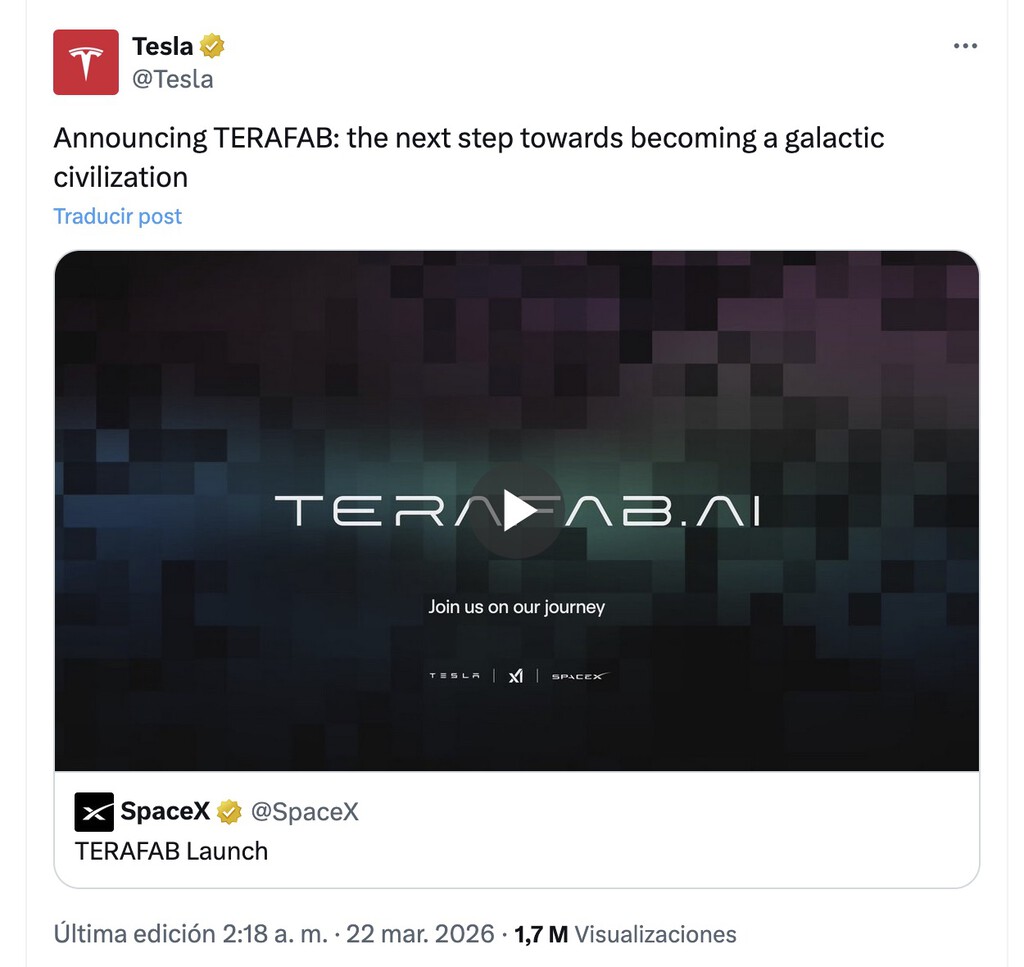
Elon Musk has unveiled Terafab, an ambitious plan to build a chip manufacturing facility that could revolutionize the global semiconductor industry. Announced during a Saturday night event at a disused power plant, Terafab aims to produce between 100 and 200 GW of computing capacity annually on Earth, with a staggering 1 TW in space. The project will involve collaboration between Tesla, SpaceX, and xAI, marking another bold leap for Musk into a sector dominated by established players like TSMC.
What Is Terafab and Why Does It Matter?
Terafab is Musk's response to what he perceives as a critical bottleneck: semiconductor manufacturers are not producing enough chips to meet the demands of artificial intelligence and robotics. According to Musk, even TSMC, the world's leading chipmaker, cannot satisfy his companies' needs. Terafab is envisioned as a high-volume fab that will churn out chips at an unprecedented scale, leveraging synergies across Musk's business empire.
Find Original Home Decor sparking conversation at Grand Goldman Shop.

The announcement comes at a time when the global chip shortage has exposed vulnerabilities in supply chains, prompting governments and companies to invest heavily in domestic production. Musk's entry could disrupt the status quo, but it also raises questions about feasibility and execution.
Musk's Track Record: Promises vs. Deliverables
Musk has a history of making audacious promises that sometimes materialize and sometimes don't. Tesla revolutionized the electric vehicle market, and SpaceX transformed space travel with reusable rockets. Both seemed impossible before Musk proved the naysayers wrong. However, he has also missed deadlines—most notably with full self-driving technology.
When Musk talks about Terafab, it's tempting to dismiss it as another grandiose vision. But given his past successes, it might be wise to give him the benefit of the doubt. The key will be distinguishing between engineering reality and theatrical hype.
The Technical and Economic Hurdles
Building a semiconductor fab is one of the most complex and capital-intensive endeavors in modern manufacturing. A leading-edge fab can cost upwards of $20 billion and take years to construct and ramp up. TSMC, Samsung, and Intel have decades of experience and deep technical expertise. Musk's companies, while innovative, have no track record in chip fabrication.
Moreover, the chip industry is characterized by rapid technological change and fierce competition. To succeed, Terafab would need to attract top talent, secure intellectual property, and navigate intricate supply chains for materials and equipment. The 100-200 GW target is also vague—converting computing capacity to actual chip output depends on the types of chips produced and their efficiency.
Key Takeaways
- Terafab is a proposed chip fab by Tesla, SpaceX, and xAI to address semiconductor shortages for AI and robotics.
- Musk claims it will produce 100-200 GW of computing capacity annually on Earth, scaling to 1 TW in space.
- The project faces significant technical, financial, and competitive challenges in a market dominated by TSMC and others.
- Musk's track record of disruptive innovation lends credibility, but execution risks remain high.
- Success could reduce reliance on traditional chipmakers and accelerate AI development.
How Terafab Could Reshape the Semiconductor Landscape
If Terafab becomes a reality, it could alter the balance of power in the chip industry. Musk's companies are major consumers of semiconductors, and having an in-house fab would give them greater control over supply and costs. It could also spur innovation in chip design tailored for AI and robotics, areas where Musk is heavily invested.
However, the global chip market is already seeing massive investments from governments and incumbents. The U.S. CHIPS Act, the EU Chips Act, and similar initiatives are pouring billions into new fabs. Terafab would enter a crowded field, albeit with the backing of one of the world's most prominent entrepreneurs. The background to this story is set out in Intel Joins Elon Musk Terafab Project With SpaceX Tesla and xAI. A related thread runs through Terafab: Elon Musk's Gigafactory Larger Than Pentagon and Apple Park. Earlier coverage in Elon Musk Documentary Reveals Six Shocking Truths shows how the argument developed.
What to Watch Next
The coming months will reveal whether Terafab moves beyond the announcement stage. Key indicators include hiring plans, land acquisition, partnerships with equipment suppliers, and regulatory approvals. Musk's ability to attract investment and talent will be crucial. Meanwhile, industry observers will scrutinize whether the projected capacity figures are realistic or merely aspirational. A closer look at the same subject appears in Elon Musk Joins Pete Hegseth's Project Meridian Warfare Taskforce. Anyone following the wider picture can start with Defund Elon Musk: Why Billionaire Power Threatens Democracy. The same theme surfaces in Royal Commission into Construction Sector Announced by New, which takes a different angle.
Given Musk's penchant for vertical integration—from electric cars to rockets—Terafab could be the next piece in his puzzle to control the entire stack of technologies underpinning his vision for the future. Whether it succeeds or fails, it will undoubtedly be a story to follow. Context on how this played out before sits in Prison Overcrowding Solutions: Creative Cell Conversions Unveiled. A companion piece, Elon Musk Attacks Filmmaker Alex Gibney Over Documentary, approaches the same subject from another angle.
FAQ
What is Terafab?
What is Terafab?
Terafab is a proposed semiconductor manufacturing facility announced by Elon Musk, to be built through a collaboration between Tesla, SpaceX, and xAI. It aims to produce 100-200 GW of computing capacity annually on Earth, with plans to scale to 1 TW in space.
Why is Musk building Terafab?
Musk claims that existing semiconductor manufacturers like TSMC cannot meet the demand for chips needed for AI and robotics. Terafab is intended to secure a dedicated supply of chips for his companies' ambitious projects.
Can Musk realistically build a chip fab?
Building a leading-edge chip fab is extremely challenging and capital-intensive. While Musk has disrupted other industries, he has no experience in semiconductor manufacturing. Success would require overcoming significant technical, financial, and competitive hurdles.
What impact could Terafab have on the chip industry?
If successful, Terafab could reduce reliance on traditional chipmakers, increase competition, and accelerate innovation in AI-specific chips. However, it may also face challenges in a market already experiencing massive investments from incumbents and governments.
Browse the Shop
 Acacia frida deluxe solid wood bed frame |
Bedroom bench |
Bed chest drawers |
Lingerie dresser |
Frame base |
Mirror with jewelry storage |
30 Bathroom Vanity |
Memory foam queen mattress |
Mattresses for back pain |
Nightstand set of 2 |
Grand Goldman Shop |
Civil Lawyer
Deutschland Trikot WM 2026







