

Genesis AI's new Genesis Eno robot is making waves by rejecting the humanoid form factor that dominates the robotics industry. While most companies race to build robots that look and move like us, this Franco-American startup is betting that function beats form.
Founded in 2025 and headquartered in Palo Alto, California, Genesis AI recently raised $105 million from investors including Khosla Ventures and Eric Schmidt. The company's flagship robot, Eno, is designed to prioritize mobility, dexterity, and real-world functionality over human-like appearance.
Find Original Home Decor sparking conversation at Grand Goldman Shop.

Why Genesis AI Chose Function Over Form
In a statement, Genesis AI explained its design philosophy: "Instead of imitating a fully human appearance, we designed Eno based on human capabilities, prioritizing mobility, dexterity, and functionality in the real world." This approach contrasts sharply with the humanoid robots that have captured headlines, such as those from Tesla and Figure.
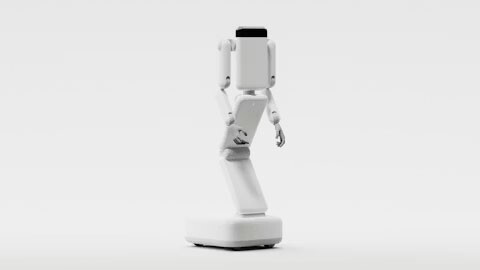
Eno looks like a cross between a minimalist appliance and a humanoid robot. Most notably, it lacks legs entirely. Instead, it moves on a wheeled base, which provides greater stability and reduces the number of joints needed. This design choice makes Eno more practical for flat indoor environments, though it limits its ability to navigate stairs.
How the Genesis Eno Robot Works
The wheeled base is just one example of Genesis AI's pragmatic engineering. By eliminating legs, the company avoids the complex balance and control systems required for bipedal locomotion. This likely reduces cost, simplifies maintenance, and improves reliability—all critical factors for consumer adoption.
Eno still retains human-like capabilities where it matters: arms and hands for manipulation. The robot is designed to perform tasks that require dexterity, such as picking up objects, opening doors, or assisting with household chores. In this sense, Eno borrows from human anatomy without mimicking it wholesale.
The Humanoid Robot Race: A Quick Comparison
The robotics industry is split between humanoid designs and more specialized form factors. Here's how the Genesis Eno stacks up against typical humanoid robots:
| Feature | Genesis Eno | Typical Humanoid Robot |
|---|---|---|
| Mobility | Wheeled base | Bipedal legs |
| Stability | High (wheels) | Moderate (balance required) |
| Stair navigation | Limited | Possible |
| Complexity | Lower | Higher |
| Human-like appearance | Minimal | High |
While humanoid robots can navigate stairs and uneven terrain, they require sophisticated balance systems that drive up cost and failure rates. Eno's wheeled design sacrifices stair-climbing for reliability and affordability—a trade-off that may appeal to homeowners with single-level living spaces.
Key Takeaways from Genesis AI's Approach
- Form follows function: Eno prioritizes real-world tasks over human-like appearance.
- Wheeled base: Provides stability and simplicity, though it limits stair navigation.
- Human-like capabilities: Arms and hands enable manipulation without a full humanoid form.
- Strong backing: $105 million in funding from top investors signals confidence in the approach.
- Consumer focus: Design choices aim to make home robots more practical and affordable.
What This Means for the Home Robot Market
Genesis AI's bet on a non-humanoid design could pay off if consumers prioritize utility over novelty. Most households have flat floors and limited stairs, making a wheeled robot viable for many tasks. Moreover, a simpler design may accelerate production and lower prices, bringing home robots closer to mass adoption. The background to this story is set out in China's Humanoid Robots Ride Robot Horses at World Robot Conference. A related thread runs through Humanoid Robots Decapitate Each Other in Viral Kick Fight. Earlier coverage in China's Military Humanoid Robots: From Showcase to Battlefield shows how the argument developed.
However, the humanoid form factor has its advocates. Robots that look like us may be more intuitive to interact with and can operate in environments built for humans without modification. The success of Eno will depend on whether it can deliver on its promise of functionality at a competitive price. A closer look at the same subject appears in BMW Tests Humanoid Robots for Complex Factory Tasks. Anyone following the wider picture can start with Chinese Firm UBTech Unveils Companion Humanoid Robots From €15,000. The same theme surfaces in Xiaomi's Humanoid Robots Now Assemble Cars Beyond Just Screws, which takes a different angle.
As the robotics industry matures, we may see a split between general-purpose humanoids and specialized robots like Eno. For now, Genesis AI is carving out a niche by challenging the assumption that robots must look human to be useful. Context on how this played out before sits in Look at these practical solutions for small kitchens. A companion piece, US Bans Chinese Humanoid Robots and Power Inverters, approaches the same subject from another angle.
FAQ
What is the Genesis Eno robot?
The Genesis Eno is a general-purpose robot developed by Genesis AI. It features a wheeled base and human-like arms, designed to prioritize functionality over humanoid appearance.
Why doesn't the Genesis Eno have legs?
Genesis AI chose a wheeled base for greater stability and simplicity. This design reduces the number of joints and avoids the complexity of bipedal balance, though it limits stair navigation.
Who founded Genesis AI?
Genesis AI is a Franco-American startup founded in 2025 and based in Palo Alto, California. It has raised $105 million from investors including Khosla Ventures and Eric Schmidt.
Can the Genesis Eno climb stairs?
No, the wheeled base makes stair climbing difficult. Eno is best suited for flat indoor environments, which are common in many homes.
Browse the Shop
 Acacia frida deluxe solid wood bed frame |
Bedroom bench |
Bed chest drawers |
Lingerie dresser |
Frame base |
Mirror with jewelry storage |
30 Bathroom Vanity |
Memory foam queen mattress |
Mattresses for back pain |
Nightstand set of 2 |
Grand Goldman Shop |
Civil Lawyer
Deutschland Trikot WM 2026







