

NVIDIA has directed TSMC to begin mass production of its next-generation Vera Rubin AI GPUs, according to a Financial Times report, signaling a decisive shift away from the aging H200 architecture that has powered much of the AI boom. The move comes as the company faces mounting pressure to deliver more powerful hardware for increasingly demanding AI models.
The order marks a turning point for NVIDIA, which has spent years investing heavily in maintaining TSMC's production of the H200 while the industry's computational needs have outpaced the chip's capabilities. With Vera Rubin now on the launch pad, the company is no longer willing to wait in what sources described as a "limbo."
Find Original Home Decor sparking conversation at Grand Goldman Shop.

Why NVIDIA Is Moving Beyond the H200
The H200 has been the workhorse of the AI industry, prized for its unbeatable price-to-performance ratio. It became the foundation on which much of the current AI empire was built, from large language models to recommendation systems. But time has caught up with the veteran chip.
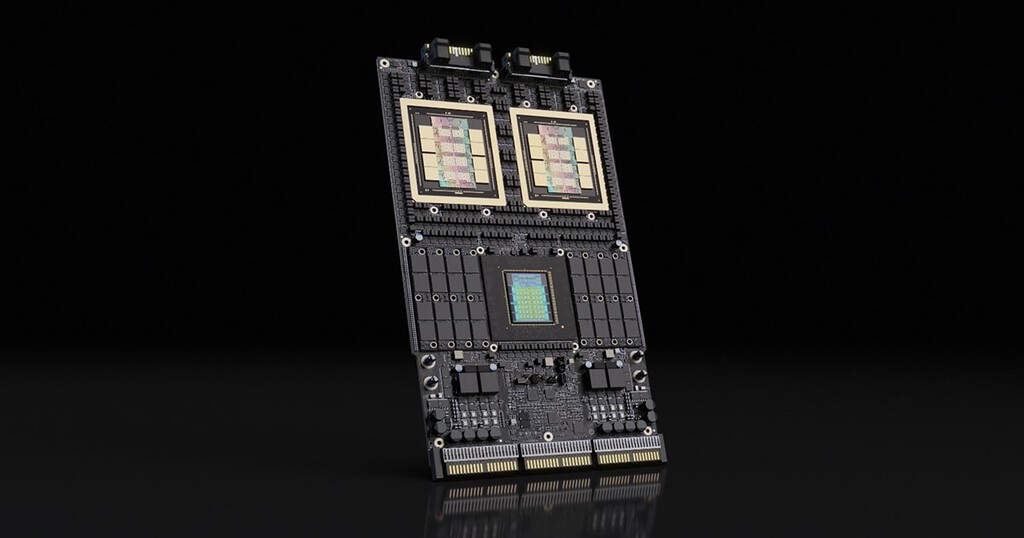
New data centers require significantly more power, and the latest AI models are far more demanding than their predecessors. Industry leaders like OpenAI and Google have been vocal about needing new solutions to sustain their ambitious roadmaps. The H200, while still capable, is no longer the cutting edge.
NVIDIA's decision to accelerate Vera Rubin's production reflects a broader realization: the company cannot afford to keep investing in a chip that, while reliable, no longer represents the future. The AI industry is moving too fast for incremental improvements.
What Vera Rubin Means for the AI Industry
Vera Rubin represents NVIDIA's bet on the next wave of AI infrastructure. While specific technical details remain under wraps, the chip is expected to deliver substantial performance gains over the H200, addressing the power and efficiency bottlenecks that have begun to constrain AI development.
The timing is critical. As AI models grow larger and more complex, the computational demands are escalating exponentially. Data centers are struggling to keep up, and energy costs are becoming a major concern. Vera Rubin is designed to address these challenges head-on.
For companies building on NVIDIA's platform, the transition to Vera Rubin will require significant investment in new infrastructure. But the alternative—sticking with H200—risks falling behind competitors who adopt the new hardware early.
TSMC's Role in the Vera Rubin Rollout
TSMC remains NVIDIA's most important manufacturing partner, and the decision to task the Taiwanese foundry with mass-producing Vera Rubin underscores the deepening relationship between the two companies. TSMC's advanced process nodes are essential for producing the high-performance chips that NVIDIA designs.
The production ramp-up will be closely watched by investors and industry analysts alike. Any delays or yield issues could have significant implications for NVIDIA's ability to meet demand and maintain its market dominance.
NVIDIA's order to TSMC also signals confidence in the foundry's ability to scale production quickly. The two companies have worked together for years, and that partnership is now being tested at a critical juncture. The longer history behind the story is traced in Meta Buys Moltbook: The First Social Network for AI Agents.
Key Takeaways for Investors and Industry Watchers
- NVIDIA has ordered TSMC to begin mass production of Vera Rubin AI GPUs, marking the end of the H200's dominance.
- The H200, while still widely used, is no longer sufficient for the most demanding AI workloads.
- Vera Rubin is expected to deliver significant performance improvements, addressing power and efficiency challenges.
- TSMC's production ramp-up will be a key indicator of NVIDIA's ability to meet future demand.
- The transition will require data centers and AI companies to invest in new infrastructure.
Comparing H200 and Vera Rubin
| Feature | H200 | Vera Rubin |
|---|---|---|
| Status | Current workhorse | Next-generation, entering mass production |
| Primary Use | Broad AI workloads | Demanding AI models and data centers |
| Price/Performance | Unbeatable at launch | Expected to set new benchmark |
| Manufacturing | TSMC (mature node) | TSMC (advanced node) |
| Industry Demand | Still high but plateauing | Anticipated surge from AI leaders |
What to Watch Next
The coming months will reveal whether NVIDIA's bet on Vera Rubin pays off. Key milestones include the first production shipments, customer adoption rates, and any announcements from major AI companies about their infrastructure plans. The background to this story is set out in FIFA President Gianni Infantino Faces Mounting Pressure. A related thread runs through TSMC Redefines Chip Future: Efficiency Over Raw Power. Earlier coverage in Samsung's AI Chip Gambit to Overtake TSMC and SK Hynix shows how the argument developed.
Competitors are also watching closely. AMD and other chipmakers are developing their own AI accelerators, and any stumble from NVIDIA could open the door to alternative solutions. The pressure is on to deliver. A closer look at the same subject appears in TSMC President: "We Are Not Afraid" of Chinese Chipmakers. Anyone following the wider picture can start with TSMC Commits 250 Billion to US Semiconductor and AI Production. The same theme surfaces in DeepSeek's Permanent Discount: China's Path to Nvidia Independence, which takes a different angle.
For now, NVIDIA's message is clear: the H200 era is ending, and Vera Rubin is the future. The company is betting that its early move will cement its leadership in the AI hardware market for years to come. Context on how this played out before sits in Config Startup Wants to Be the TSMC of Robot Data. A companion piece, Intel and TSMC: A Strange Rivalry With Mutual Benefits, approaches the same subject from another angle.
FAQ
What is Vera Rubin?
Vera Rubin is NVIDIA's next-generation AI GPU, designed to replace the H200 and deliver higher performance for demanding AI workloads. It is now entering mass production at TSMC.
Why is NVIDIA moving away from the H200?
The H200, while still capable, is no longer sufficient for the most advanced AI models. New data centers require more power and efficiency, prompting NVIDIA to accelerate Vera Rubin's rollout.
When will Vera Rubin be available?
NVIDIA has ordered TSMC to begin mass production, but specific availability dates have not been announced. Industry watchers expect shipments to ramp up in the coming months.
How will this affect AI companies?
AI companies will need to upgrade their infrastructure to take advantage of Vera Rubin's performance gains. Those who delay may find themselves at a competitive disadvantage as rivals adopt the new hardware.
Browse the Shop
 Acacia frida deluxe solid wood bed frame |
Bedroom bench |
Bed chest drawers |
Lingerie dresser |
Frame base |
Mirror with jewelry storage |
30 Bathroom Vanity |
Memory foam queen mattress |
Mattresses for back pain |
Nightstand set of 2 |
Grand Goldman Shop |
Civil Lawyer
Deutschland Trikot WM 2026







