

Mexico has officially approved a 40-hour workweek, becoming the third country in Latin America to adopt such a standard. The reform, published in the Diario Oficial de la Federación (DOF), sets a progressive adaptation period ending in 2030. This move positions Mexico alongside Ecuador and Chile in the region's shortest-workweek club.
The change comes after years of debate over labor conditions in Mexico, where the standard workweek had long been 48 hours. Now, employers must prepare for a gradual reduction that will reshape schedules, payroll, and productivity expectations across industries.
Find Original Home Decor sparking conversation at Grand Goldman Shop.

What the 40-Hour Workweek Reform Entails
The reform mandates a gradual reduction from 48 to 40 hours per week by 2030. The implementation will be phased to allow businesses to adjust operations and costs. Specific sectoral timelines are expected to be detailed in secondary regulations.
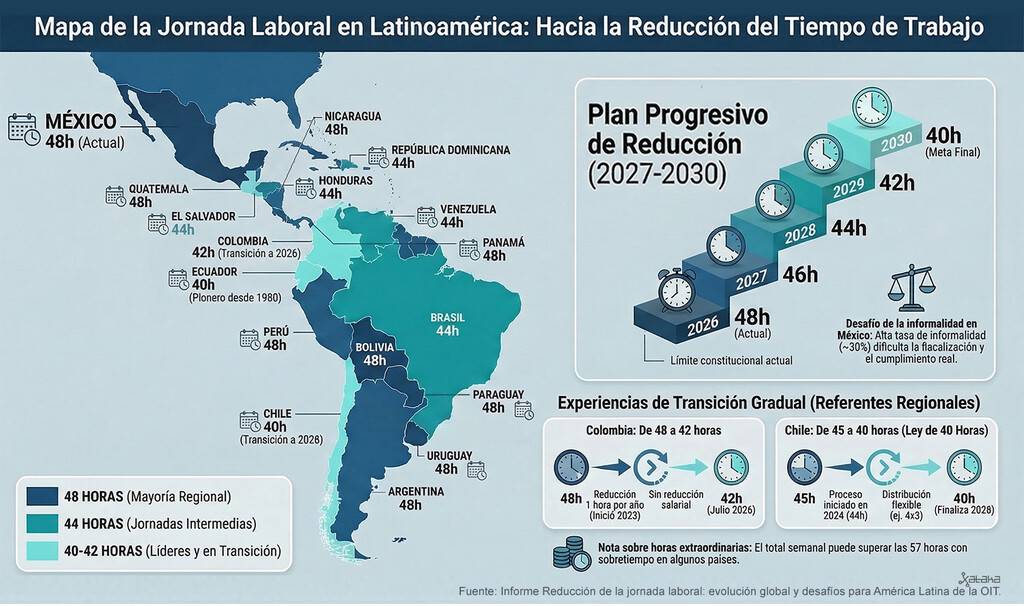
This makes Mexico one of the few countries in the region with a legally binding 40-hour limit. Most Latin American nations still operate on 48-hour weeks, according to the International Labour Organization (ILO).
Mexico Joins Ecuador and Chile in the 40-Hour Club
Ecuador pioneered the 40-hour workweek in the region back in 1997. Chile is currently transitioning from 45 to 40 hours, with full implementation expected by 2028. Mexico's reform, while later, is notable for its long adaptation period.
These three countries now lead Latin America in reducing work hours. The ILO's report 'Reducción de la jornada laboral: evolución global y desafíos para América Latina' highlights that shorter workweeks can improve health, well-being, and productivity, though outcomes depend on context.
Why This Matters for Workers and Employers
For workers, fewer hours could mean more rest and better work-life balance. For employers, the transition requires careful planning to avoid productivity losses. The ILO notes that reduced hours can boost productivity if managed well, but may increase costs in labor-intensive sectors.
Small and medium enterprises may face the biggest challenges, as they often have less flexibility to absorb higher hourly labor costs. The government has not yet announced support measures for these businesses. The background to this story is set out in Mexico's 40-Hour Workweek: Companies Race to Adapt. A related thread runs through Mexico's 40-Hour Workweek Faces a 30-Minute Lunch Break Obstacle. Earlier coverage in El Niño 2026: Why Latin America Must Prepare Right Now shows how the argument developed.
Key Takeaways for Stakeholders
- Gradual implementation: The 40-hour week will be phased in until 2030, giving businesses time to adapt.
- Regional leadership: Mexico joins Ecuador and Chile as the only Latin American countries with a 40-hour standard.
- Productivity potential: The ILO suggests shorter weeks can enhance well-being and productivity, but results vary.
- Employer challenges: Companies must adjust schedules and budgets, especially in labor-intensive industries.
- Worker benefits: Employees can expect more personal time and potentially better health outcomes.
Comparison of Workweek Regulations in Latin America
| Country | Standard Workweek (hours) | Status | Implementation Year |
|---|---|---|---|
| Ecuador | 40 | In effect | 1997 |
| Chile | 40 | Transitioning | 2028 (target) |
| Mexico | 40 | Approved, phasing in | 2030 (target) |
| Most other Latin American countries | 48 | Current standard | — |
What to Watch Next
The focus now shifts to how Mexico implements the reform. Secondary legislation will define sector-specific timelines and enforcement mechanisms. Labor unions and business groups are expected to lobby for favorable terms. A closer look at the same subject appears in Germany's Bold Labor Reform: Scrapping the 8-Hour Workday Limit. Anyone following the wider picture can start with Brazil Cuts Work Week to 40 Hours in Major Labor Reform. The same theme surfaces in Young Nature Writers: Get Published in The Guardian Today, which takes a different angle.
Additionally, the success of this reform could pressure other Latin American countries to follow suit. The ILO report suggests that shorter workweeks are gaining traction globally, and Mexico's move may accelerate regional momentum. Context on how this played out before sits in Brazil Election 2026: Pro-Trump Latin America Bloc Tested. A companion piece, Milei Latin America Tour: Why He’s Meeting Far-Right Leaders, approaches the same subject from another angle.
FAQ
When will the 40-hour workweek take full effect in Mexico?
The reform sets a progressive adaptation period ending in 2030, when the 40-hour week will be fully implemented. Specific milestones will be defined in secondary regulations.
Which countries in Latin America already have a 40-hour workweek?
Ecuador has had a 40-hour week since 1997, and Chile is transitioning from 45 to 40 hours with completion expected by 2028. Mexico will join them by 2030.
How will the 40-hour workweek affect businesses in Mexico?
Businesses will need to adjust schedules and potentially increase hourly labor costs. The gradual timeline aims to ease the transition, but small enterprises may face challenges.
What does the ILO say about reducing work hours?
The ILO report indicates that shorter workweeks can improve health, well-being, and productivity, but the impact depends on the economic context and implementation quality.
Browse the Shop
 Acacia frida deluxe solid wood bed frame |
Bedroom bench |
Bed chest drawers |
Lingerie dresser |
Frame base |
Mirror with jewelry storage |
30 Bathroom Vanity |
Memory foam queen mattress |
Mattresses for back pain |
Nightstand set of 2 |
Grand Goldman Shop |
Civil Lawyer
Deutschland Trikot WM 2026







