

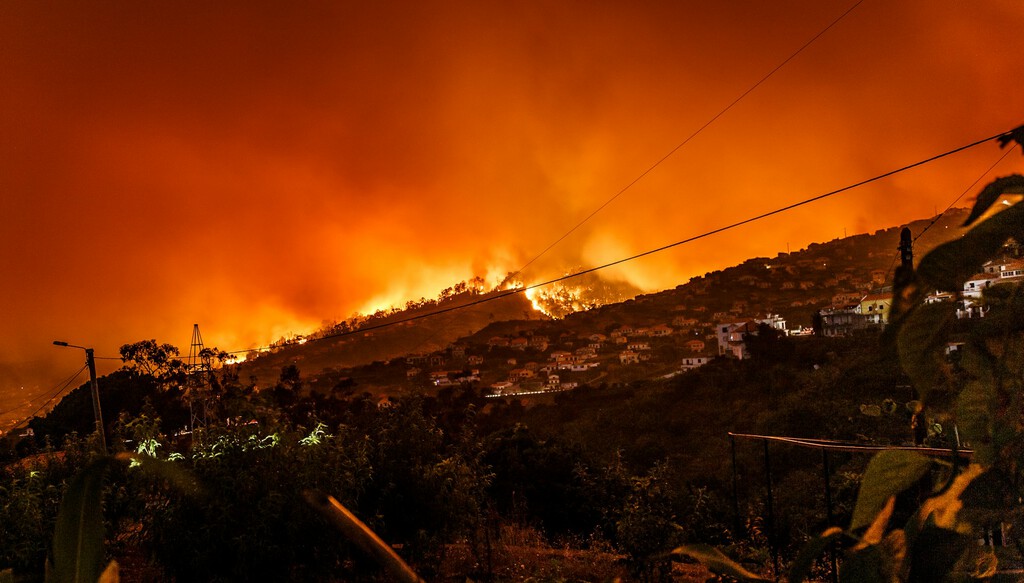
Spain's climate leave law now guarantees up to four days of paid leave for workers affected by wildfires and other climate-related emergencies. This right, known as the 'permiso climático,' was activated after devastating fires forced tens of thousands to evacuate or shelter in place across Ávila, Madrid, and Toledo. The law ensures employees never have to choose between their safety and their job.
The recent wildfire outbreak has cut off roads and confined entire communities. In response, Spain's Labor Minister reminded companies of the social shield measures available, including temporary layoffs (ERTEs) and the four-day paid leave. This legal framework, born from the 2024 Valencia DANA disaster, is now a critical tool for workers facing climate emergencies.
Find Original Home Decor sparking conversation at Grand Goldman Shop.

What Is Spain's Climate Leave Law?
The climate leave law originated from Royal Decree-Law 8/2024, passed after the catastrophic DANA that hit Valencia in 2024. During that event, several workers died while commuting, prompting the government to create a new protected leave category in the Workers' Statute.
Specifically, the law added a new section to Article 37.3, granting up to four days of absence with full pay for reasons of force majeure related to climate events. These days count as working time, meaning employees do not have to make them up later. The measure is designed to give workers breathing room during emergencies without financial penalty.
Key Provisions of the Climate Leave
- Four paid days off for climate-related force majeure, including wildfires, floods, and other extreme events.
- Full salary maintained—no deduction from wages.
- Counts as working time, so no obligation to recover the hours.
- Applies when commuting is impossible due to road closures, evacuations, or confinement orders.
- Employers can also request ERTEs for broader business disruption.
Why the Wildfire Crisis Triggered This Law
The recent wildfires in Ávila, Madrid, and Toledo have forced tens of thousands to evacuate or stay confined. With roads cut and entire towns evacuated, many workers cannot physically reach their jobs. The Labor Minister emphasized that employees should not have to risk their lives or their livelihoods.
This situation mirrors the Valencia DANA, where workers died commuting during severe flooding. The government responded with the climate leave law to prevent similar tragedies. Now, as wildfires become more frequent due to climate change, this legal protection is more relevant than ever.
How Does the Four-Day Paid Leave Work?
Under the new law, if a worker cannot attend work due to a climate emergency—such as a wildfire evacuation or road closure—they are entitled to up to four days of paid leave. The leave is immediate and does not require prior approval from the employer, although notification is expected.
The days are paid at the normal salary rate and are considered working time. This means they do not reduce vacation days or require makeup hours. The law applies to all workers covered by the Workers' Statute, regardless of sector or contract type.
Comparison with Other Leave Types
| Leave Type | Duration | Pay | Recovery Required? |
|---|---|---|---|
| Climate Leave (permiso climático) | Up to 4 days | 100% | No |
| Force Majeure Leave (general) | Up to 4 days | 100% | No |
| ERTE (temporary layoff) | Variable | Unemployment benefits | No |
| Unpaid Leave | As agreed | 0% | Yes |
What Should Workers and Employers Do?
Workers in affected areas should inform their employers as soon as possible if they cannot attend work due to the wildfire. Documentation such as evacuation orders or road closure notices may be requested. Employers are encouraged to apply the climate leave and consider ERTEs for longer disruptions.
The Labor Minister has urged companies to use the social shield measures to give workers time to recover normalcy. This includes flexible arrangements and temporary layoffs if the business itself is affected. The goal is to protect both lives and livelihoods. The background to this story is set out in Spanish Wildfire Evacuees: Narrow Escapes and Survival Stories. A related thread runs through Spain Wildfires 2026: Record 265,000 Hectares Burned. Earlier coverage in Europe Wildfires: Thousands Evacuated in France and Spain shows how the argument developed.
What to Watch Next as Wildfires Intensify
As climate change increases the frequency of extreme weather events, Spain's climate leave law may become a model for other countries. The law's effectiveness will depend on how well employers implement it and whether workers are aware of their rights. A closer look at the same subject appears in Wildfires in France and Spain Force 250,000 Evacuations. Anyone following the wider picture can start with Europe Nears Record Wildfire Year With Spain Leading Blaze Crisis. The same theme surfaces in Spanish Wildfire Evacuees Describe Their Harrowing Escape, which takes a different angle.
For now, workers in wildfire-affected regions can rely on this legal protection. The government continues to monitor the situation and may extend measures if the crisis worsens. Staying informed about evacuation orders and employer obligations is crucial. Context on how this played out before sits in Spain Solar Eclipse Wildfire Risk: Tourists Warned as Heat Sparks. A companion piece, France and Spain Wildfires: Thousands Flee as Temperatures, approaches the same subject from another angle.
FAQ
What is Spain's climate leave law?
What is Spain's climate leave law?
Spain's climate leave law grants up to four days of paid leave for workers affected by climate-related emergencies, such as wildfires or floods. It was introduced via Royal Decree-Law 8/2024 and added to Article 37.3 of the Workers' Statute.
Who qualifies for the four-day paid leave?
Any worker covered by the Workers' Statute who cannot attend work due to a climate-related force majeure, such as road closures, evacuations, or confinement orders. The leave applies regardless of sector or contract type.
Do workers need to make up the lost hours?
No. The four days count as working time, so employees do not have to recover the hours. They receive full pay and the leave does not reduce vacation or other entitlements.
Can employers request ERTEs instead of climate leave?
Yes. Employers can request temporary layoffs (ERTEs) for broader business disruption due to the wildfire. The climate leave is an individual right, while ERTEs are collective measures. Both are part of the social shield to protect workers.
Browse the Shop
 Acacia frida deluxe solid wood bed frame |
Bedroom bench |
Bed chest drawers |
Lingerie dresser |
Frame base |
Mirror with jewelry storage |
30 Bathroom Vanity |
Memory foam queen mattress |
Mattresses for back pain |
Nightstand set of 2 |
Grand Goldman Shop |
Civil Lawyer
Deutschland Trikot WM 2026







