

Electric car battery health is a top concern for used EV buyers, and a new study from Austrian battery diagnostics company Aviloo sheds light on how batteries actually age. The company analyzed data from over half a million vehicles across four years, covering North and South America, Europe, Australia, and Asia. The findings offer reassurance: most EV batteries retain a significant portion of their original capacity even after years of use.
Why Battery Health Matters for Used EVs
The used electric car market faces a trust deficit. Buyers worry that a pre-owned EV might need a costly battery replacement soon after purchase. This uncertainty depresses resale values and slows adoption. Aviloo's business is to certify battery health for used EVs, so its data is independent of any automaker. The company profits from accurate assessments, not from favoring one brand over another.
Find Original Home Decor sparking conversation at Grand Goldman Shop.

This large-scale analysis is one of the broadest to date. By pooling data from diverse climates and driving conditions, it provides a global picture of battery degradation. The results help demystify how EV batteries perform over time.
Key Findings from the Aviloo Study
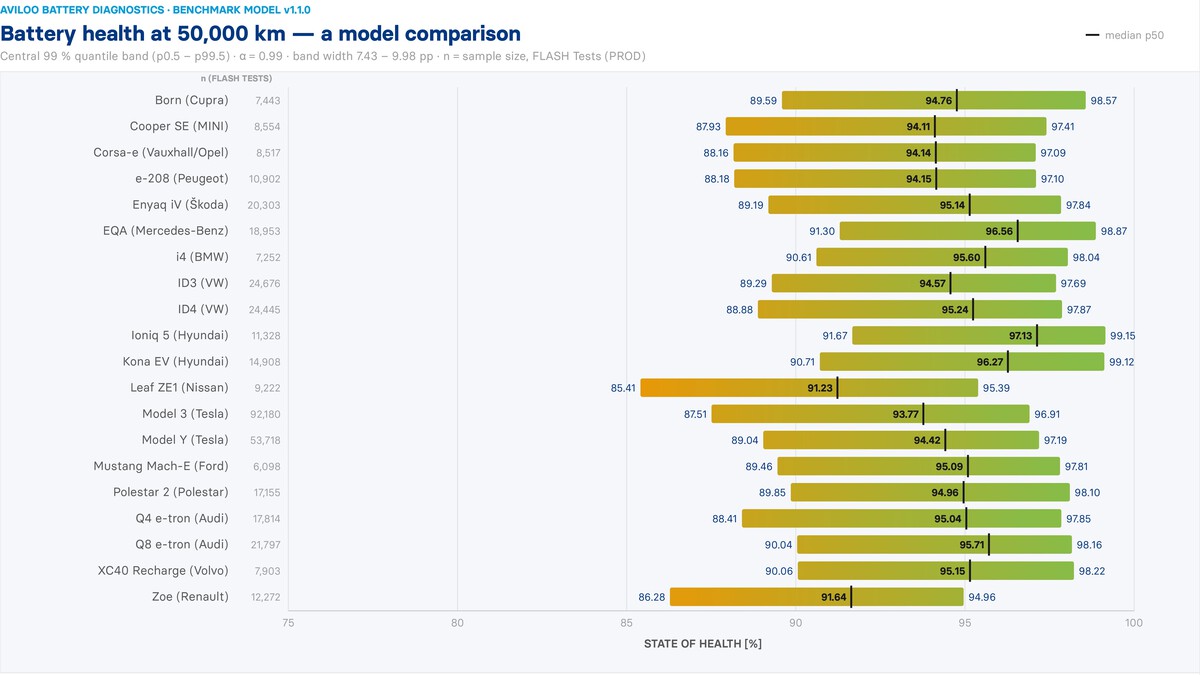
Aviloo segmented its analysis into three main groups based on battery health. While the full details are not disclosed, the overall takeaway is positive: the vast majority of batteries retain healthy capacity. The study reinforces that EV batteries degrade gradually and predictably, not suddenly.
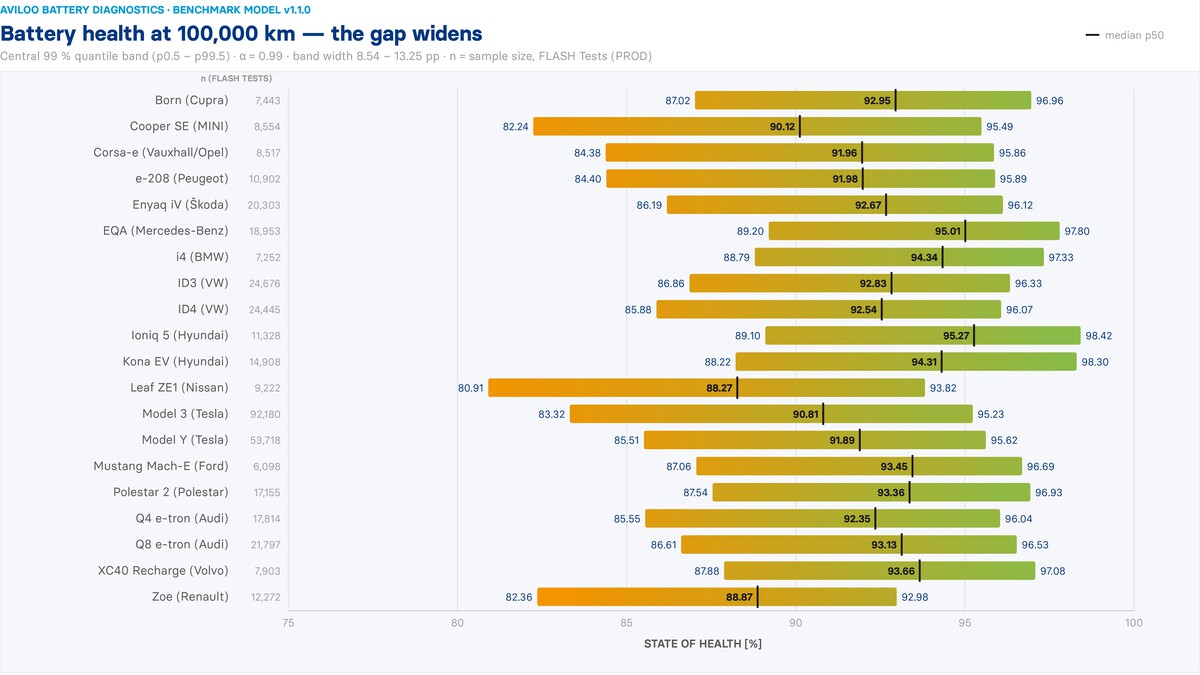
- Most EV batteries retain over 90% capacity after several years of use, according to the study's broad sample.
- Degradation is gradual and influenced by factors like climate, charging habits, and mileage.
- Independent testing builds trust in the used EV market by providing verifiable battery health reports.
- Global data shows consistency across different regions, suggesting modern battery management systems are robust.
- Buyers can negotiate with confidence when armed with a battery health certificate.
How Battery Health Is Measured
Aviloo uses a proprietary test that measures the battery's state of health (SoH). This involves analyzing charging behavior and capacity retention. The company's certification is used by dealers and private sellers to reassure buyers. The study's scale—over 500,000 vehicles—lends credibility to its conclusions.
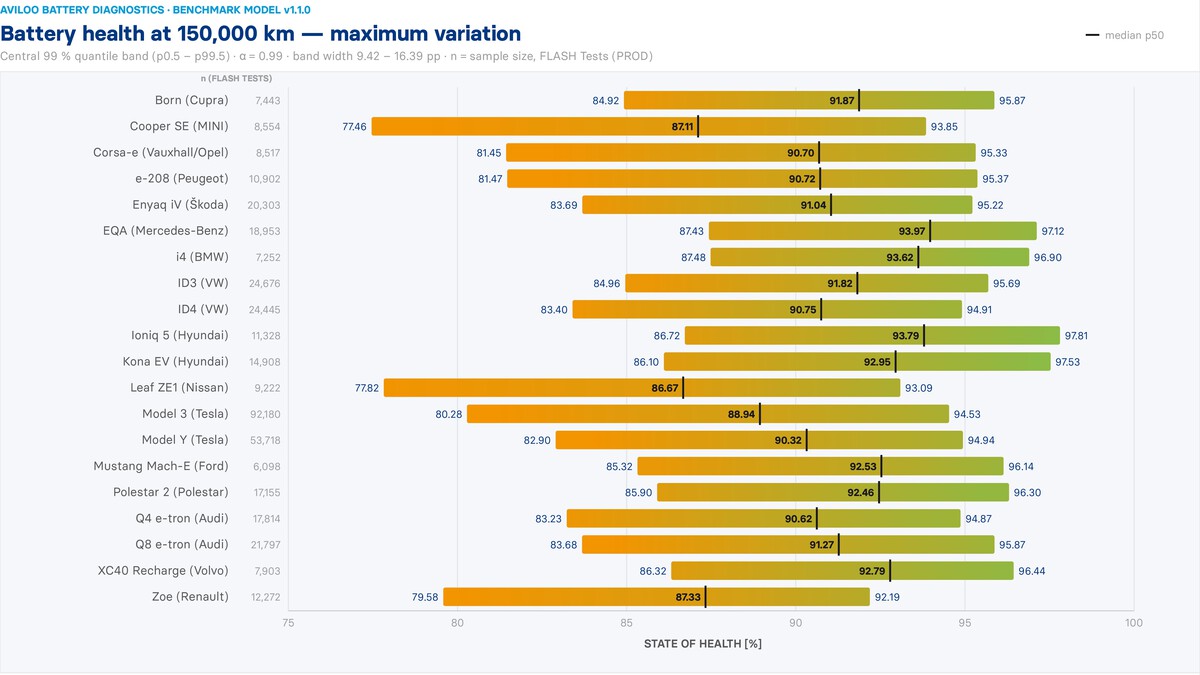
For consumers, the key metric is SoH, expressed as a percentage of original capacity. A battery with 90% SoH has lost only 10% of its range. Most manufacturers warrant batteries for 8 years or 100,000 miles to retain at least 70% capacity. The Aviloo data suggests that real-world performance often exceeds these minimums.
What This Means for EV Owners and Buyers
If you own an EV, the study confirms that your battery is likely to outlast your ownership. For used buyers, it highlights the value of a battery health check. Sellers can use certification to command higher prices, while buyers gain peace of mind.
The used EV market is still maturing. As more independent testers like Aviloo enter the space, transparency will improve. This should accelerate the adoption of electric cars by reducing one of the biggest barriers: uncertainty about long-term battery life.
Factors That Affect Battery Longevity
While the study's overall message is positive, battery health varies. Extreme heat, frequent fast charging, and deep discharges can accelerate degradation. Conversely, moderate climates and gentle charging habits preserve capacity. Aviloo's global dataset includes these variations, making its conclusions robust. The longer history behind the story is traced in Finlandia multa con 120.000 euros a un millonario por exceso de velocidad.
Automakers continue to improve battery chemistry and thermal management. Newer EVs are expected to degrade even more slowly than older models. The study's four-year window may not capture the latest advancements, but it sets a baseline for expectations. The background to this story is set out in China's Electric Car Battery Problem: What to Do With Dead Batteries. A related thread runs through EV Battery Longevity Study: Electric Cars Hold 95% Range After 5 Years. Earlier coverage in Electric Car Viability: How Battery Prices Fell 99% shows how the argument developed.
What to Watch Next
As the EV fleet ages, more data will emerge. Independent testing will become standard practice in used car transactions. Governments may also introduce battery health disclosure requirements. For now, consumers should request a battery health report when shopping for a used EV. A closer look at the same subject appears in BYD Flood Rescue: Owners Use EVs as Boats Despite VP Warning. Anyone following the wider picture can start with China's Floods Turn Electric Cars Into Mobile Batteries. The same theme surfaces in Ford CEO Jim Farley: US Must Avoid Europe's Fate with Chinese EVs, which takes a different angle.
Aviloo's study is a step toward normalizing battery health checks. It shows that the industry can self-regulate by providing transparent data. This benefits everyone: sellers get fair prices, buyers get confidence, and the transition to electric mobility accelerates. Context on how this played out before sits in CATL's 6-Minute EV Battery Charge: What It Means for Electric Cars. A companion piece, US Leads in Ultra-Fast EV Chargers, Europe Has the Cars to Use Them, approaches the same subject from another angle.
FAQ
How long do electric car batteries last?
Most EV batteries are expected to last 10 to 20 years, depending on usage and climate. The Aviloo study confirms that degradation is gradual, with many batteries retaining over 90% capacity after several years.
What is a good battery health percentage for a used EV?
A battery health above 90% is excellent, while 80-90% is acceptable for an older EV. Below 80% may indicate significant degradation and should be reflected in the price.
Can I check my EV's battery health myself?
Some EVs display state of health in the onboard diagnostics, but independent tests like Aviloo's provide certified results. Many dealerships now offer battery health checks as part of pre-purchase inspections.
Does fast charging degrade EV batteries faster?
Frequent fast charging can accelerate degradation slightly, but modern battery management systems mitigate this. The Aviloo study suggests that overall, battery health remains strong across diverse charging habits.
Browse the Shop
 Acacia frida deluxe solid wood bed frame |
Bedroom bench |
Bed chest drawers |
Lingerie dresser |
Frame base |
Mirror with jewelry storage |
30 Bathroom Vanity |
Memory foam queen mattress |
Mattresses for back pain |
Nightstand set of 2 |
Grand Goldman Shop |
Civil Lawyer
Deutschland Trikot WM 2026







