

China's energy strategy has long been criticized as too slow to abandon fossil fuels, but the recent oil crisis triggered by the Iran war has revealed the foresight of its aggressive push into solar power. As the conflict disrupted global oil supplies, China's early investments in renewable energy are now paying off, positioning the country as a major winner in the transition to clean energy.
How the Iran War Exposed Global Oil Vulnerabilities
When the Iran war broke out, the closure of the Strait of Hormuz—a chokepoint for over 20% of the world's oil—sent shockwaves through global markets. The loss of 20 million barrels per day of crude and refined products created a net deficit of about 8 million barrels per day, pushing WTI prices above $100 per barrel.
Find Original Home Decor sparking conversation at Grand Goldman Shop.

The immediate response from governments was to release strategic reserves, but the crisis also sparked a surge in demand for solar panels as countries scrambled to secure alternative energy sources. According to Bloomberg, over 800 vessels were stuck in the region, and an Al Jazeera investigation reported that 206 million barrels vanished from the market in the first 40 days of the conflict—enough to fill 103 supertankers.
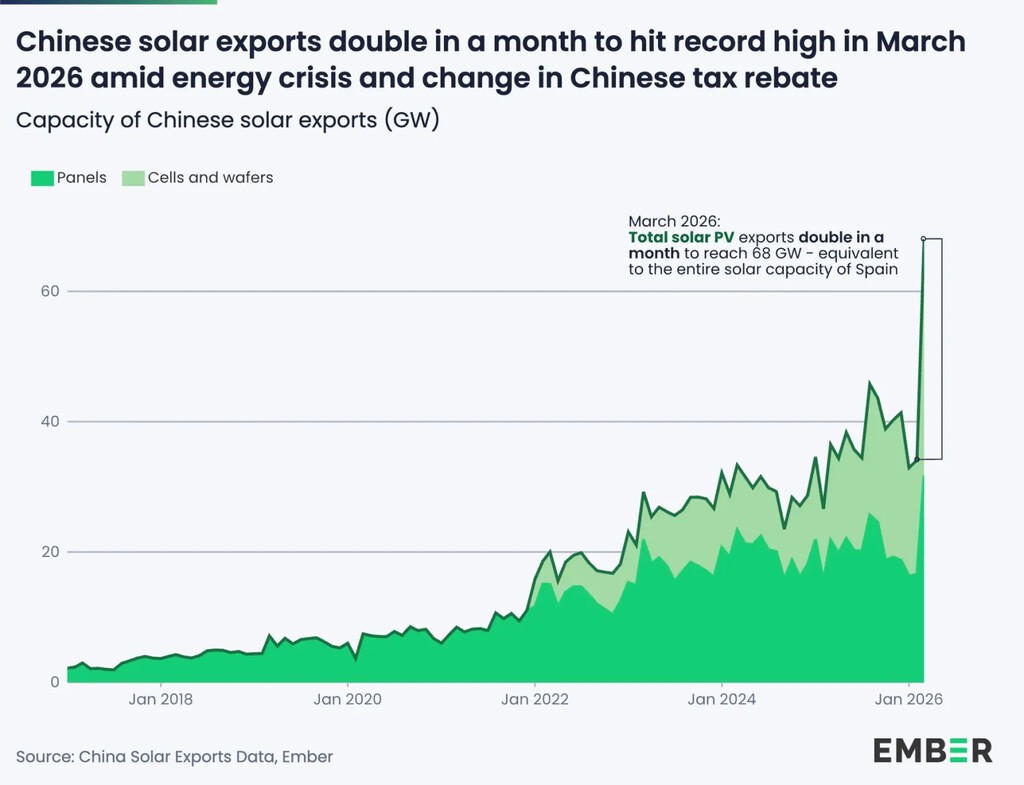
China's Solar Bet: From 'Cicada' to Strategic Winner
For years, China was seen as the 'cicada' of global energy—loud in its commitments to renewables but still heavily reliant on coal and oil. However, behind the scenes, the country was building a massive solar manufacturing base and deploying panels at an industrial scale.
When the oil crisis hit, China was ready. Its solar industry ramped up production to meet global demand, and its own economy was less exposed to oil price shocks thanks to years of investing in renewables. This strategic positioning has allowed China to reap both economic and geopolitical benefits.
Key Factors Behind China's Success
- Early investment in solar manufacturing: China now produces over 80% of the world's solar panels, giving it a dominant position in the supply chain.
- Domestic deployment at scale: China installed more solar capacity in 2023 than the entire US has in its history, reducing its reliance on imported oil.
- Government support: Subsidies and policy incentives have created a robust domestic market for solar, insulating the economy from oil price volatility.
- Strategic reserves: While other countries tapped their oil reserves, China's diversified energy mix provided a buffer against supply disruptions.
- Global market influence: As the world rushed to buy solar panels, China's exporters gained significant leverage and revenue.
The Global Race for Energy Independence
The oil crisis has accelerated the global shift toward renewable energy, with countries now viewing solar as a matter of national security. China's experience demonstrates that long-term planning and industrial policy can turn a vulnerability into an advantage.
However, other nations are now racing to catch up. The US and Europe have announced massive investments in domestic solar manufacturing, aiming to reduce their dependence on Chinese supply chains. This competition could reshape the global energy landscape in the coming decade.
Comparison of Energy Strategies
| Country/Region | Solar Manufacturing Capacity | Oil Dependence | Strategic Reserve Release (2024) |
|---|---|---|---|
| China | Dominant (80%+ global share) | Moderate (declining) | Minimal |
| United States | Growing (10% global share) | High | Significant |
| European Union | Moderate (5% global share) | High | Significant |
| India | Emerging (3% global share) | High | Moderate |
China's strategic advantage is clear: while other countries were forced to tap their reserves, China's diversified energy mix and solar dominance provided a buffer against the crisis. The background to this story is set out in Oil Giants Post $93B Profits Amid War and Climate Crisis. A related thread runs through Iran Hormuz Threat: Oil Crisis Escalates US Strikes. Earlier coverage in China's Strategic Reserves: How Beijing Aims to Save Asia from an Energy shows how the argument developed.
What This Means for the Future of Energy
The Iran war oil crisis has served as a wake-up call for the world, highlighting the risks of over-reliance on fossil fuels. China's foresight in developing its solar industry has not only protected its economy but also positioned it as a leader in the clean energy transition. A closer look at the same subject appears in Strait of Hormuz Oil Crisis: Are We Already in the Apocalypse. Anyone following the wider picture can start with Spain Solar Power Paradox: 70% Energy Still Imported. The same theme surfaces in Swiss Alpine Dam Solar Farm Boosts Winter Power Output, which takes a different angle.
As the world moves toward a more sustainable energy future, the lessons from China's strategy are clear: investing in renewables is not just an environmental imperative but a strategic one. Countries that fail to adapt may find themselves at the mercy of volatile oil markets, while those that embrace clean energy can turn crises into opportunities. Context on how this played out before sits in Asia Energy Crisis Deepens as Red Sea Oil Blockade Worsens. A companion piece, Solar Power: The Climate Fight's Overlooked Ally in 2026, approaches the same subject from another angle.
FAQ
Why did the Iran war cause oil prices to spike?
The closure of the Strait of Hormuz disrupted the flow of over 20% of the world's oil, creating a supply deficit of about 8 million barrels per day. This led to a sharp increase in oil prices, with WTI surpassing $100 per barrel.
How did China benefit from the oil crisis?
China's early investments in solar manufacturing and domestic deployment reduced its reliance on oil and allowed it to meet global demand for solar panels. This strategic positioning turned the crisis into an economic and geopolitical win for China.
What can other countries learn from China's energy strategy?
Other countries can learn the importance of long-term planning and investing in renewable energy to reduce vulnerability to fossil fuel price shocks. Diversifying the energy mix and supporting domestic manufacturing are key takeaways.
Is China still dependent on oil despite its solar push?
Yes, China remains a major oil importer, but its dependence is declining as it expands renewable capacity. The oil crisis highlighted the benefits of its diversified energy strategy, which includes solar, wind, and other renewables.
Browse the Shop
 Acacia frida deluxe solid wood bed frame |
Bedroom bench |
Bed chest drawers |
Lingerie dresser |
Frame base |
Mirror with jewelry storage |
30 Bathroom Vanity |
Memory foam queen mattress |
Mattresses for back pain |
Nightstand set of 2 |
Grand Goldman Shop |
Civil Lawyer
Deutschland Trikot WM 2026







