

In 2011, the UK launched an unprecedented operation to eradicate invasive rats from South Georgia Island, dropping over 300 tons of poison from helicopters. This ambitious project aimed to undo centuries of ecological damage and protect the island's vital seabird populations. The result was a remarkable ecological recovery that showcases the power of targeted conservation efforts.
The Accidental Invaders: How Rats Colonized South Georgia
In the late 18th century, sealers and whalers visiting South Georgia, a British overseas territory near Antarctica, inadvertently brought rats and mice aboard their ships. These rodents quickly adapted to the harsh climate and infested nearly two-thirds of the island's coastline. For 250 years, they preyed on seabird eggs and chicks, which had evolved without terrestrial predators.
Find Original Home Decor sparking conversation at Grand Goldman Shop.

South Georgia spans about 350,000 hectares and hosts around 30 million birds. The absence of trees and shrubs forces many species to nest on the ground or in burrows, making them easy targets for rats. Among the hardest-hit species were the South Georgia pipit and the pintail duck, both endemic and highly vulnerable.

A Radical Solution: Helicopter Baiting
To save the island's avian inhabitants, conservationists devised a plan to eliminate the rats using poisoned bait dispersed by helicopters. Over 300 tons of rodenticide-laced pellets were spread across rat-infested areas. The operation was carefully timed to minimize impact on non-target species and was conducted in phases over several years.

The use of helicopters allowed access to remote and rugged terrain, ensuring comprehensive coverage. This method had been successfully used on smaller islands, but South Georgia's scale presented a unique challenge. The project required international collaboration and rigorous monitoring to avoid unintended consequences. The background to this story is set out in South Georgia Rat Eradication: 300 Tons of Poison, One Miracle. A related thread runs through Galápagos Invasive Goats: How 700 'Judas Goats' Helped Eradicate 140,000. Earlier coverage in FGM End Fund: $15.5m Launched for Global Eradication shows how the argument developed.
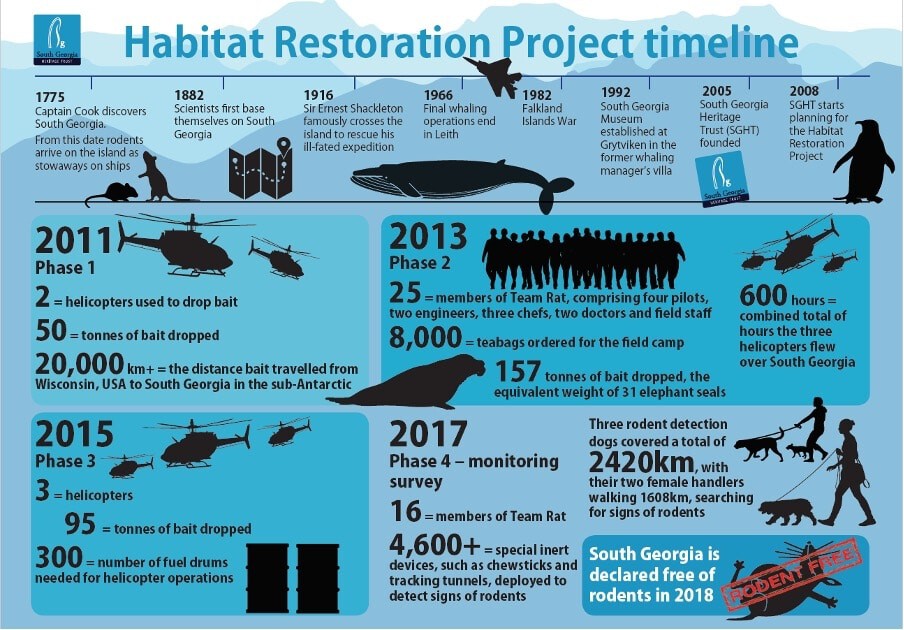
Ecological Recovery: A Miraculous Turnaround
Following the baiting, monitoring teams reported a dramatic decline in rat populations. Native bird species began to recover, with pipits and pintails returning to areas where they had been absent for decades. The island's ecosystem started to rebound, demonstrating the resilience of nature when given a chance. A closer look at the same subject appears in Invasive Turtles in Spain: Why They Threaten Native Species. Anyone following the wider picture can start with Invasivorism: When Invasive Species Become a Culinary Treasure. The same theme surfaces in Invasive Species in Spain: How Three Species Help Each Other Thrive, which takes a different angle.
The success of the South Georgia rat eradication is considered a landmark achievement in conservation. It highlights the importance of removing invasive species to restore balance to fragile ecosystems. The project also serves as a model for similar initiatives on other islands worldwide. Context on how this played out before sits in Japan's Stray Cat Invasive Species Plan Sparks Backlash. A companion piece, Invasive Species in Spain: Why the Guadalquivir Is a Hotspot, approaches the same subject from another angle.
Key Takeaways from the South Georgia Eradication
- Invasive rats devastated seabird populations for over two centuries.
- Helicopter baiting with 300 tons of poison proved effective at scale.
- Native species like the South Georgia pipit showed significant recovery.
- The project underscores the value of international conservation collaboration.
- Lessons learned can inform future island restoration efforts.
Comparing Rat Eradication Methods
| Method | Scale | Effectiveness | Cost |
|---|---|---|---|
| Helicopter baiting | Large islands | High | High |
| Ground-based baiting | Small islands | Moderate | Lower |
| Trapping | Limited areas | Low to moderate | Variable |
| Biological control | Experimental | Uncertain | Research-intensive |
FAQ
What was the purpose of the South Georgia rat eradication?
The goal was to eliminate invasive rats that had been preying on seabird eggs and chicks for centuries, thereby protecting and restoring native bird populations.
How were the rats eradicated?
Conservationists used helicopters to spread over 300 tons of poisoned bait across rat-infested areas of the island.
What were the results of the project?
The rat population plummeted, and native species such as the South Georgia pipit and pintail duck began to recover, leading to a significant ecological rebound.
Why is South Georgia important for biodiversity?
South Georgia hosts around 30 million birds, including several endemic species, making it a critical site for global seabird conservation.
Browse the Shop
 Acacia frida deluxe solid wood bed frame |
Bedroom bench |
Bed chest drawers |
Lingerie dresser |
Frame base |
Mirror with jewelry storage |
30 Bathroom Vanity |
Memory foam queen mattress |
Mattresses for back pain |
Nightstand set of 2 |
Grand Goldman Shop |
Civil Lawyer
Deutschland Trikot WM 2026







