

Medicines can't survive Mars, and that's a major challenge for NASA's plans to send astronauts to the Red Planet. In space, many medications degrade much faster than on Earth, with experiments on the International Space Station (ISS) showing that half of them expire within three years. For a Mars mission lasting several years, that's a critical problem because resupply missions are impractical. The solution? Manufacturing drugs directly in space, potentially using plants as miniature factories. A team from the University of California San Diego has published a method that uses viruses to turn plant cells into protein-producing pharmacies.
Why Medicines Degrade Faster in Space
Space is a hostile environment for pharmaceuticals. Radiation, microgravity, and temperature fluctuations accelerate chemical breakdown, making drugs less effective or even harmful. On Earth, most medications have a shelf life of one to three years; in space, that window shrinks dramatically. Astronauts on the ISS have reported that some medicines lose potency well before their expiration dates.
Find Original Home Decor sparking conversation at Grand Goldman Shop.

For a Mars mission, the timeline is even tighter. A round trip to Mars takes about two to three years, and astronauts would need a steady supply of medications for emergencies, chronic conditions, and radiation sickness. Carrying enough drugs for the entire journey is impractical due to weight and volume constraints. Each extra kilogram costs thousands of dollars in fuel, and storage space is limited.
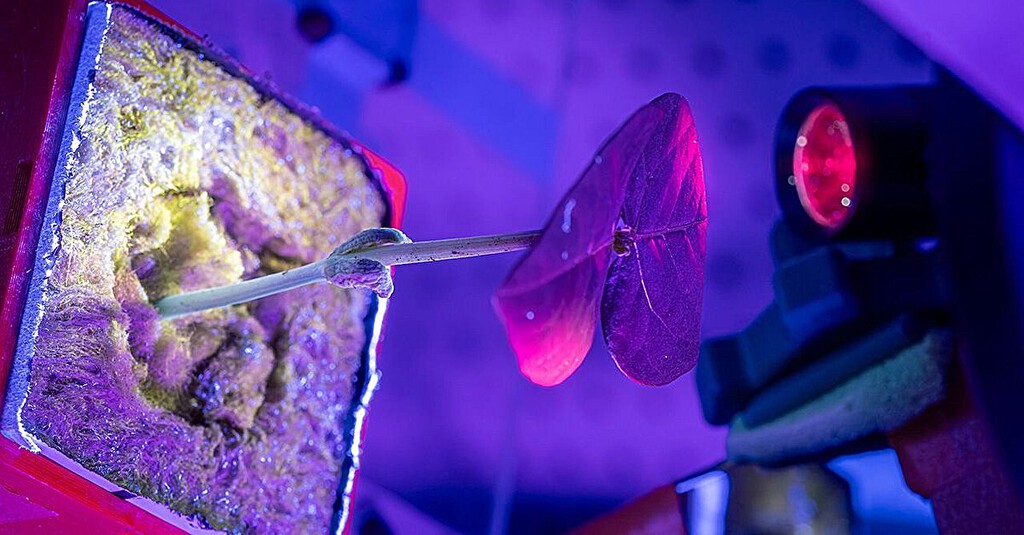
The Plant-Based Solution: Viruses as Drug Factories
The UC San Diego team's approach leverages plant viruses as vectors to deliver genetic instructions into plant cells. These instructions prompt the plants to produce therapeutic proteins—essentially, the active ingredients in many modern drugs. The method, published in a scientific journal, could be adapted for spaceflight.
Plants are ideal for space manufacturing because they are self-replicating, require minimal resources, and can be grown in hydroponic systems. Astronauts could cultivate plants that have been engineered to produce specific medications on demand. The viruses act as delivery vehicles, temporarily turning the plants into living bioreactors.
How the Method Works
First, scientists engineer a plant virus to carry the gene for a desired protein—say, insulin or an antibody. They then infect plant cells with this modified virus. The plant's cellular machinery reads the viral gene and produces the protein, which can be harvested and purified. In space, this process could be automated and scaled up.
The team has already demonstrated the production of several proteins with pharmaceutical potential, including enzymes and growth factors. While the research is still in early stages, it offers a proof of concept for space-based drug manufacturing.
Challenges and Limitations
Despite the promise, significant hurdles remain. Purification and formulation are complex steps that require specialized equipment, which adds weight and complexity to a Mars mission. The yield of therapeutic proteins from plants is often low, and ensuring consistent quality in microgravity is untested.
Also, not all drugs can be produced this way. Small-molecule drugs, like aspirin, are chemically synthesized and not easily made by plants. The method is best suited for protein-based drugs, such as hormones and monoclonal antibodies, which are increasingly important in medicine. The background to this story is set out in Mars Missions May Break Astronauts' Hearts, Study Finds. A related thread runs through NASA Seeks Four Volunteers for a Year-Long Mars Simulation. Earlier coverage in Did NASA Overlook Evidence of Life on Mars? 50 Years Later shows how the argument developed.
What This Means for Future Mars Missions
If successful, on-demand drug manufacturing would revolutionize space travel. Astronauts could produce medications as needed, reducing payload and extending mission duration. It would also enable personalized medicine, where treatments are tailored to individual astronauts' needs. A closer look at the same subject appears in Low Drug Prices Trigger Medicine Shortages and Supply Risks. Anyone following the wider picture can start with NASA Dropped Five Pieces of Space Junk on Mars: A Breakthrough Impact. The same theme surfaces in NASA's Curiosity Rover Celebrates 5,000 Sols on Mars with Stunning Panorama, which takes a different angle.
NASA and other space agencies are investing in in-situ resource utilization—using local materials to produce what's needed. This plant-based method aligns with that strategy, turning plants into renewable drug factories. The technology could also have applications on Earth, particularly in remote or resource-limited settings. Context on how this played out before sits in NASA Perseverance Completes First Fully Autonomous Mars Drives. A companion piece, Japan's MMX Mission to Mars Moons Set for Historic Launch, approaches the same subject from another angle.
Key Takeaways
- Medicines degrade faster in space, with half expiring within three years on the ISS.
- A Mars mission requires a reliable drug supply, but resupply is impractical.
- Scientists are using plant viruses to engineer plants that produce therapeutic proteins.
- This method could enable on-demand drug manufacturing in space, reducing payload.
- Challenges include purification, yield, and scalability in microgravity.
Comparison of Drug Manufacturing Approaches for Space
| Approach | Pros | Cons |
|---|---|---|
| Carry all drugs from Earth | Simple, proven | Heavy, limited shelf life |
| Resupply missions | Fresh supplies | Impractical for Mars (distance, cost) |
| Plant-based manufacturing | On-demand, renewable, low weight | Early stage, purification challenges |
| Chemical synthesis in space | Versatile for small molecules | Requires complex equipment, hazardous |
FAQ
Why do medicines expire faster in space?
Space radiation and microgravity accelerate chemical degradation, reducing drug potency. Studies on the ISS show that many medications expire within three years, much faster than on Earth.
How can plants produce drugs in space?
Scientists use plant viruses to insert genes into plant cells, turning them into factories for therapeutic proteins. These proteins can be harvested and purified for use as medications.
What types of drugs can be made this way?
The method is best suited for protein-based drugs like insulin, antibodies, and hormones. Small-molecule drugs such as aspirin are not easily produced by plants.
When will this technology be ready for Mars missions?
It's still in early research stages. Significant development is needed to automate and scale up the process for spaceflight, but it offers a promising solution for long-duration missions.
Browse the Shop
 Acacia frida deluxe solid wood bed frame |
Bedroom bench |
Bed chest drawers |
Lingerie dresser |
Frame base |
Mirror with jewelry storage |
30 Bathroom Vanity |
Memory foam queen mattress |
Mattresses for back pain |
Nightstand set of 2 |
Grand Goldman Shop |
Civil Lawyer
Deutschland Trikot WM 2026







