

Quaternions, a mathematical concept discovered by Sir William Rowan Hamilton in 1843, are more alive than ever, proving critical for NASA space missions and the video game industry. Despite being over a century old, these four-dimensional numbers are essential for modern 3D rotations.
Hamilton's eureka moment on Broom Bridge in Dublin led to an extension of real numbers that now underpins everything from spacecraft orientation to immersive gaming experiences.
Find Original Home Decor sparking conversation at Grand Goldman Shop.

Who Was Sir William Rowan Hamilton?
Born in Dublin in 1805, Hamilton was a child prodigy. By age 13, he had mastered several European languages as well as Persian, Arabic, Sanskrit, and Malay.
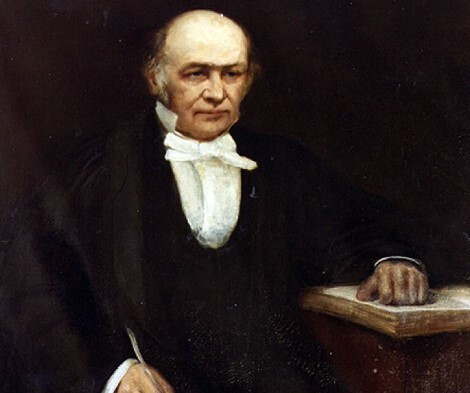
His fame grew early, and an encounter with American mental calculation prodigy Zerah Colburn at age 9 inspired him to pursue mathematics. Hamilton later became a renowned mathematician and physicist.
The Discovery of Quaternions
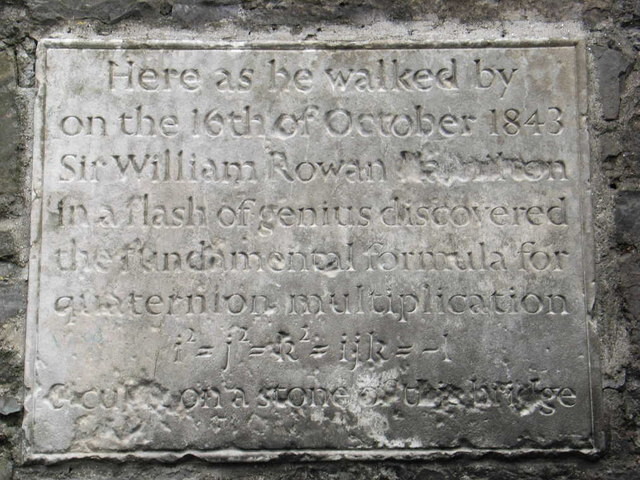
On October 16, 1943, after years of struggling with complex numbers, Hamilton went for a walk with his wife along the Royal Canal in Dublin. As they crossed Broom Bridge, he suddenly realized he could use quadruples instead of triples, thus inventing quaternions.
He was so excited that he carved the defining equation into the bridge's stone: i² = j² = k² = ijk = -1. This moment marked the birth of a new mathematical tool.
Why Quaternions Matter for NASA
Quaternions are crucial for representing rotations in three-dimensional space without the problem of gimbal lock, which affects other systems like Euler angles. NASA uses quaternions to track the orientation of spacecraft, satellites, and rovers.
For example, the Mars rovers rely on quaternion math to navigate the Martian terrain accurately. Without quaternions, space missions would face significant challenges in maintaining precise control.
Quaternions in Video Games
The video game industry also depends heavily on quaternions. They are used to calculate smooth rotations for characters, cameras, and objects in 3D environments.
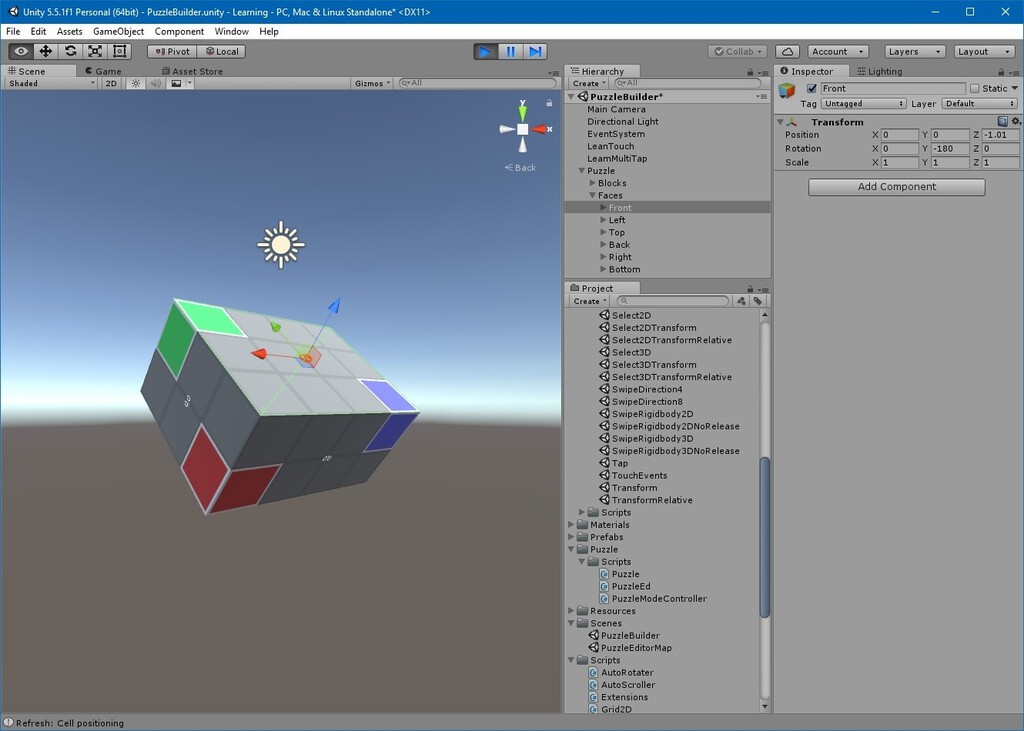
Game engines like Unity and Unreal Engine utilize quaternions to avoid gimbal lock and ensure realistic movement. This technology enhances the gaming experience by providing fluid and responsive controls.
Key Advantages of Quaternions
- No gimbal lock: Quaternions avoid the singularity issues of Euler angles.
- Efficient interpolation: They allow smooth transitions between orientations.
- Compact representation: Four numbers suffice to describe any 3D rotation.
- Numerical stability: Quaternions are less prone to rounding errors in computations.
- Wide applicability: From robotics to computer graphics, quaternions are versatile.
Quaternions vs. Euler Angles: A Comparison
| Feature | Quaternions | Euler Angles |
|---|---|---|
| Gimbal lock | No | Yes |
| Interpolation | Smooth (SLERP) | Can be problematic |
| Representation size | 4 numbers | 3 numbers |
| Numerical stability | High | Lower |
| Common use | Spacecraft, games | Simple rotations |
While Euler angles are more intuitive, quaternions offer superior performance in complex 3D applications. The background to this story is set out in NASA Launch Facilities Too Old for Artemis Moon Missions. A related thread runs through Charity Shop Video Games: Hidden Gems & Strange Joys. Earlier coverage in Charity Shop Video Games: Hidden Gems and Retro Finds shows how the argument developed.
The Legacy of Hamilton's Quaternions
Hamilton's discovery was initially met with skepticism, but it eventually found profound applications in physics and engineering. Today, quaternions are integral to quantum mechanics and computer science. A closer look at the same subject appears in Charity Shop Video Games: Hidden Gems and Retro Treasures. Anyone following the wider picture can start with Anthropic Blocks Claude from Cloning Existing Video Games. The same theme surfaces in Video Games as Effective Depression Treatment for Teens, Study Finds, which takes a different angle.
His work laid the foundation for vector analysis and other mathematical fields. The quaternion remains a testament to the power of abstract mathematical thinking. Context on how this played out before sits in 2032 Brisbane Olympics Precinct Concept Images Revealed. A companion piece, NASA Starliner: Astronauts Stranded 9 Months, NASA Still Trusts Boeing, approaches the same subject from another angle.
FAQ
What are quaternions?
Quaternions are a number system that extends complex numbers, consisting of four components: one real and three imaginary. They are used to represent rotations in 3D space efficiently.
Why does NASA use quaternions?
NASA uses quaternions to avoid gimbal lock and to achieve precise, stable orientation calculations for spacecraft and rovers. They provide a robust mathematical framework for 3D rotations.
How are quaternions used in video games?
In video games, quaternions are used to calculate smooth rotations for characters, cameras, and objects. Game engines like Unity and Unreal Engine rely on them to prevent gimbal lock and ensure fluid motion.
Who invented quaternions?
Sir William Rowan Hamilton invented quaternions in 1843 while walking along the Royal Canal in Dublin. He was inspired by a sudden insight and carved the fundamental equation into Broom Bridge.
Browse the Shop
 Acacia frida deluxe solid wood bed frame |
Bedroom bench |
Bed chest drawers |
Lingerie dresser |
Frame base |
Mirror with jewelry storage |
30 Bathroom Vanity |
Memory foam queen mattress |
Mattresses for back pain |
Nightstand set of 2 |
Grand Goldman Shop |
Civil Lawyer
Deutschland Trikot WM 2026







