

A mattress that felt reassuringly firm in the shop can turn into a nightly enemy once you are sleeping on it for eight hours. Hip and shoulder pressure, a numb arm, the sense that you are lying on a board rather than a bed — these are the classic signs that your mattress is simply too firm for your body weight and sleeping position. You do not need a new mattress to fix this. A topper of the right thickness and material can change how a firm bed feels within a single night, for a fraction of the cost of replacing the whole thing.
The catch is that "softening" is not one job. A topper that rescues a 90 kg side sleeper will feel like quicksand to a 55 kg back sleeper, and a thin down layer that takes the edge off a firm mattress will do almost nothing for someone with a genuinely hard, unyielding surface. Below we set out how we narrowed the field, a comparison table, detailed picks across foam, latex, fibre and hybrid designs, and a buying guide covering thickness, density and the practical questions people ask most.
Find Original Home Decor sparking conversation at Grand Goldman Shop.


How we chose
We built this shortlist around one specific problem — a mattress that is too firm — rather than toppers in general. That changes the criteria. A topper that is merely "comfortable" on a medium mattress is often too thin to matter on a hard one, so we weighted the following:
- Pressure relief per centimetre. We favoured designs with enough depth (roughly 5 cm and up for foam, more for fibre) to genuinely cushion hips and shoulders rather than just adding a soft surface.
- Material behaviour under body weight. Memory foam conforms but can sleep warm and let you sink; latex pushes back; fibre compresses over time. We matched each material to the sleeper it suits.
- Support, not just softness. The best toppers soften the surface without letting your spine sag into a hammock shape. Medium-firm toppers usually beat very soft ones for this reason.
- Real-world durability and care. Washable covers, breathable construction and materials that hold their shape over a year or two of nightly use.
- Availability in Spain. Every pick is a real, currently sold product family you can find through mainstream retailers, with no reliance on discontinued or grey-market stock.
We have not lab-tested these toppers, and we do not quote firmness scores or test data. What follows is based on published specifications, material behaviour and the patterns that show up consistently in owner feedback across each product family.
Comparison table
| Product | Best for | Key feature | Verdict |
|---|---|---|---|
| Visco Therapy topper | Side sleepers wanting cushioning | Conforming memory foam | Reliable pressure relief, sleeps warm |
| TEMPUR PEDIC topper | Heavier bodies, deep pressure points | Dense pressure-relieving foam | Premium feel, premium price |
| Emma Flip topper | People unsure how soft to go | Two-sided firmness options | Flexible, good all-rounder |
| Dunlopillo latex topper | Hot sleepers, back sleepers | Resilient natural latex | Bouncy, breathable, supportive |
| Down feather bed topper | Light touch of softness | Lofty natural fill | Cosy but compresses over time |
| Zinus green tea memory foam topper | Budget softening | Infused foam, low cost | Great value entry point |
| Lucidity gel memory foam topper | Warm sleepers on foam | Gel-infused cooling foam | Cooler than plain foam |

Visco Therapy topper
- Conforming memory foam that moulds around hips and shoulders
- Widely available in several thicknesses, so you can scale the softening
- Removable, washable cover on most versions
- Budget-friendly compared with premium foam brands
Visco Therapy is the name most people in Spain associate with memory foam, and its topper range is a sensible first stop if your firm mattress is causing pressure points at the hip and shoulder. The foam softens as it warms to your body, so the first few minutes feel firm and then it gives — which is exactly the behaviour you want on a hard surface. Thicker versions (7 cm and up) do noticeably more work than thin 4 cm models, so choose depth according to how hard your mattress actually is.
The trade-off is heat: classic memory foam traps warmth, and if you already sleep hot this can offset the comfort gains. It is for side sleepers and anyone who wants straightforward, affordable pressure relief. Skip it if you overheat easily — go for a gel-infused or latex option instead.
TEMPUR PEDIC topper
- Dense, high-quality pressure-relieving foam
- Holds its shape well over years of use
- Excellent for heavier sleepers who compress cheaper foams flat
- Distinctive slow-recovery feel
TEMPUR is the brand that made memory foam a household name, and its toppers use a denser formulation than budget foams. That density matters on a firm bed: lighter foams bottom out under a heavier body, so you end up feeling the hard mattress through the topper. TEMPUR foam keeps working deeper into the night, which is why it is the pick we would point heavier sleepers toward despite the cost.
It is not for everyone. The slow-recovery feel — you sink, then the foam slowly pushes back — divides opinion, and some people find it claustrophobic or too warm. It is for heavier sleepers and anyone with stubborn hip or shoulder pain. Skip it if you dislike the sinking sensation or want a bouncier, more responsive surface.

Emma Flip topper
- Two sides with different firmness levels
- Good middle ground between soft cushioning and support
- Breathable cover and a more modern foam construction
- Easy to flip if you get the firmness wrong
The Flip topper is designed around a simple idea: give people a choice. One side is softer for pressure relief, the other firmer for support, and you simply turn it over. On a too-firm mattress, the softer side usually wins, but the reversible design is genuinely useful if you are unsure how much softening you need or if two people of different weights share the bed.
It is a strong all-rounder rather than a specialist. It is for couples and first-time topper buyers who want flexibility. Skip it if your mattress is extremely hard — you may need a thicker, denser foam to make a real difference.
Dunlopillo latex topper
- Resilient natural latex that pushes back rather than sinking
- Naturally breathable and cooler than memory foam
- Supportive enough to protect spinal alignment
- Durable and resistant to flattening
Latex behaves very differently from memory foam. Instead of moulding and slowly recovering, it is springy and instant in its response. That makes it a better match for back sleepers and hot sleepers on a firm mattress: you get cushioning without the sinking feeling or the heat build-up, and the surface stays supportive enough that your spine does not curve into a dip.
Dunlopillo's latex toppers are the most established option in this material, though latex is heavier and pricier than foam. It is for hot sleepers and back sleepers who want softness with support. Skip it if you love the contouring hug of memory foam or need the absolute cheapest fix.
Down feather bed topper
- Lofty, hotel-style softness
- Natural breathability and a light, airy feel
- Adds a plush surface layer without changing mattress support
- Available in a range of fill weights
A feather bed topper is the traditional answer to a hard mattress, and it works by adding a fluffy layer rather than changing the underlying support. If your mattress is firm but not brutal, and you simply want a softer surface to lie on, a good down or feather topper delivers that hotel-bed feel immediately. It is also breathable, which suits warm sleepers better than foam.
The limitation is durability: natural fill compresses over months and needs regular shaking and airing to stay lofty, and it will not rescue a genuinely rock-hard mattress. It is for people who want a touch of plushness on a moderately firm bed. Skip it if you need real pressure relief or have allergies to feather and down.
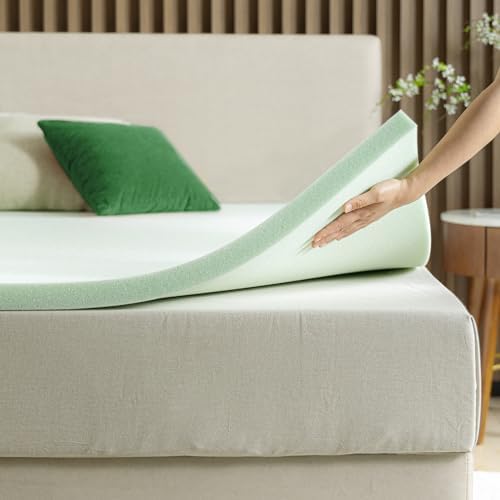
Zinus green tea memory foam topper
- Very affordable way to test whether a topper helps
- Green tea infusion aimed at freshness and odour control
- Soft, conforming feel that takes the edge off firmness
- Available in multiple thicknesses
If you are not sure a topper will solve your problem, spending a lot on the first attempt is a gamble. Zinus is the value option that lets you try memory foam softening for very little, and its green tea infusion is a small but welcome touch for freshness. It conforms well and is noticeably softer than a bare firm mattress.
Expect a shorter lifespan than premium foams — budget memory foam tends to flatten sooner, especially under heavier sleepers — and it can sleep warm. It is for budget buyers and renters testing the waters. Skip it if you are heavy or want a topper that will still feel supportive in three years.
Lucidity gel memory foam topper
- Gel-infused foam designed to reduce heat build-up
- Soft, contouring feel similar to standard memory foam
- Good thickness options for real pressure relief
- Competitive price for a cooling foam
Gel infusion does not make memory foam cold, but it does help it feel less stuffy than plain foam, which matters if the reason you are avoiding memory foam is warmth. Lucidity's gel topper keeps the conforming, pressure-relieving behaviour that makes foam good for a firm bed while moderating the heat that puts hot sleepers off.
It is a compromise rather than a cure for overheating — genuinely hot sleepers may still prefer latex. It is for warm sleepers who want foam's contouring without the worst of the heat. Skip it if you overheat severely or dislike the sinking feel of memory foam.
Buying guide
How thick should a topper be for a firm mattress?
Thickness is the single biggest lever on how much a topper softens a bed. A 4–5 cm topper takes the edge off a mattress that is only slightly too firm; 7–10 cm does the heavy lifting on a genuinely hard surface. Go too thin and you will still feel the mattress underneath; go very thick and very soft and you risk losing support and sleeping in a dip. For most people on a too-firm bed, a medium-firm topper of around 7 cm is the sweet spot.
Memory foam, latex or fibre — which softens best?
Memory foam gives the most dramatic softening and the best pressure relief, but it sleeps warm and can feel like sinking. Latex is springier, cooler and more supportive, which suits back sleepers and hot sleepers, though it is heavier and dearer. Fibre and down toppers add plushness without changing support and are breathable, but they compress over time and will not rescue a very hard mattress. Match the material to your sleeping position and temperature rather than to marketing claims.
Will a topper fix back pain from a firm mattress?
Sometimes. If the pain comes from pressure on hips and shoulders — typical for side sleepers on a hard bed — a conforming topper can help a great deal. If the pain comes from lack of support elsewhere, adding softness can make things worse. A topper is not a substitute for a mattress that is wrong for your body, and persistent pain is worth discussing with a professional rather than solving with bedding alone.
Choosing the right mattress toppers matters when a supportive bed turns uncomfortable for side sleepers or lighter bodies.
FAQ
Can a mattress topper make a firm mattress too soft?
Yes. A very thick, very soft topper on a firm mattress can let your hips sink lower than your shoulders, which throws the spine out of line. Choose a medium-firm topper rather than the softest available, and consider a reversible design so you can adjust.
Do toppers slide around on the mattress?
Some do, especially smooth foam on smooth mattress fabric. Look for models with a grippy base or straps, and use a fitted sheet over both the topper and mattress to hold everything together. A washable, textured cover also helps.
How long does a mattress topper last?
Budget memory foam often flattens within a year or two of nightly use. Denser premium foams and latex typically last considerably longer. Feather beds need regular shaking and airing and will compress gradually regardless. Rotating the topper regularly extends its life.
Can I put a topper on top of a mattress protector?
It is better to put the topper directly on the mattress and the protector over the topper, so the topper can grip the mattress surface. If you use the protector underneath, expect more sliding and a slightly less stable feel.
Is a topper a good idea for two people of different weights?
It can be, but a single topper softens the whole bed equally. A reversible or medium-firm topper is the safest compromise. Couples with very different needs sometimes do better with a split topper or by addressing the mattress itself.
Will a topper help if my mattress is old and sagging?
Not really. A topper adds comfort on top but cannot correct a sagging or worn-out mattress — it will simply follow the dip. Toppers are for mattresses that are structurally sound but too firm, not for ones that have lost support.
Verdict
For most people battling an over-firm mattress, a medium-firm memory foam topper around 7 cm deep is the most effective and affordable fix, with Visco Therapy and Emma Flip covering the value and flexibility ends of that market. Hot sleepers and back sleepers should look to latex instead, while a feather bed is the right choice only when you want a light layer of plushness rather than genuine pressure relief. Match the material to your body and your temperature, and a topper can transform a hard bed into a good one.
As an Amazon Associate we earn from qualifying purchases.







