

Even Realities, a Shenzhen-based startup, has launched camera-free AI glasses that prioritize user privacy, directly challenging Meta's Ray-Ban smart glasses. The company's CEO, Will Wang, recently called Ray-Ban Meta users "idiots with a camera on their face" in an interview with the Financial Times, highlighting the social friction caused by camera-equipped wearables.
This bold stance comes amid growing concerns over privacy, as reports revealed that Ray-Ban Meta glasses can record when taken off and that footage was reviewed by contractors in Kenya. Even Realities aims to differentiate itself by offering AI glasses without cameras, emphasizing minimal data collection and user consent.
Find Original Home Decor sparking conversation at Grand Goldman Shop.

Even Realities' Privacy-First Approach
Even Realities' glasses are designed to avoid the social awkwardness and privacy intrusions associated with camera-equipped smart glasses. The company claims its devices only collect essential data and do not store information in the cloud unless the user explicitly consents. When data is stored, it is always encrypted, and sensitive information is deleted.
This approach resonates with consumers who are increasingly wary of tech giants' data practices. By positioning itself as a privacy-focused alternative, Even Realities is tapping into a growing demand for ethical AI products.
Even G2: The Latest Model
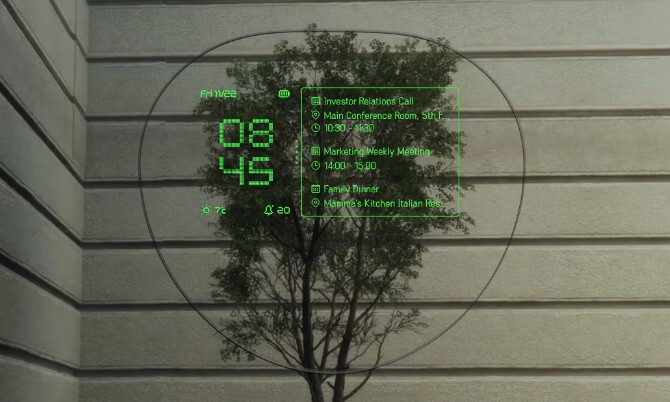
The Even G2, the company's latest model, features microphones, speakers, and a display integrated into the lens, allowing users to access information discreetly. Without a camera, the glasses rely on voice commands and audio feedback, reducing the risk of unwanted recording.
This design choice not only addresses privacy concerns but also aligns with social norms, as wearing a camera in public can be perceived as intrusive. Even Realities is betting that consumers will prioritize comfort and privacy over the ability to capture photos and videos.
Market Implications: A Fork in the Road for AI Glasses
If Even Realities' strategy succeeds, the AI glasses market could split into two categories: camera-equipped devices like Meta's Ray-Ban and camera-free options like the Even G2. This division would cater to different consumer preferences, with privacy-conscious users gravitating toward the latter.
Meta's recent controversies may accelerate this split. The revelation that Ray-Ban Meta glasses can record without user knowledge and that footage was reviewed by contractors has damaged trust. Even Realities is capitalizing on this by emphasizing its own privacy safeguards.
Key Takeaways for Consumers
- Privacy first: Even Realities' glasses avoid cameras to prevent social friction and data misuse.
- User consent: Data is only stored in the cloud with explicit permission and is always encrypted.
- Social acceptance: Camera-free design reduces awkwardness in public spaces.
- Market shift: The AI glasses market may split into camera and camera-free segments.
- Trust factor: Meta's privacy scandals give Even Realities a competitive edge.
Comparison: Even G2 vs. Ray-Ban Meta
| Feature | Even G2 | Ray-Ban Meta |
|---|---|---|
| Camera | No | Yes |
| Data Storage | Encrypted, user consent required | Cloud storage, privacy concerns |
| Social Friction | Low (no camera) | High (camera on face) |
| AI Features | Voice commands, audio feedback | Visual recognition, photo/video capture |
| Privacy Focus | High | Low (due to controversies) |
The table highlights the fundamental differences between the two approaches. Even Realities prioritizes privacy and social comfort, while Meta focuses on advanced features like visual recognition and content capture. The background to this story is set out in Technology: latest articles. A related thread runs through Meta's Smart Glasses Could Soon Recognize Faces for You.
What to Watch Next
As Even Realities rolls out the Even G2, industry observers will be watching to see if consumers embrace camera-free AI glasses. The company's success could hinge on its ability to educate users about privacy benefits and deliver a seamless experience. Earlier coverage in Smart Glasses Privacy Concerns Rise as Google and Samsung Launch shows how the argument developed. A closer look at the same subject appears in Meta and Anduril's Smart Glasses Turn War Into a Video Game.
Meanwhile, Meta may need to address privacy concerns to maintain trust. If it fails, competitors like Even Realities could gain significant market share. The AI glasses war is just beginning, and privacy is emerging as a key battleground. Anyone following the wider picture can start with Ray-Ban Meta Smart Glasses Price War Hits Retailers. The same theme surfaces in Smart Glasses Like Crossover 1x44 Could Replace Your Smartphone, which takes a different angle.
FAQ
What are Even Realities' AI glasses?
Even Realities' AI glasses are camera-free smart glasses that offer voice commands and audio feedback while prioritizing user privacy. The latest model, the Even G2, features microphones, speakers, and a lens-integrated display.
Why did Even Realities' CEO criticize Ray-Ban Meta users?
CEO Will Wang called Ray-Ban Meta users "idiots with a camera on their face" to highlight the social friction and privacy issues associated with camera-equipped glasses. He argues that cameras on faces make people uncomfortable and can lead to data misuse.
How do Even Realities' glasses protect privacy?
Even Realities' glasses only collect essential data and do not store information in the cloud unless the user explicitly consents. When data is stored, it is encrypted, and sensitive information is deleted.
Will camera-free AI glasses become a trend?
It's possible, as privacy concerns grow and consumers seek socially acceptable wearables. If Even Realities succeeds, the market could split into camera and camera-free segments, catering to different preferences.
Browse the Shop
 Acacia frida deluxe solid wood bed frame |
Bedroom bench |
Bed chest drawers |
Lingerie dresser |
Frame base |
Mirror with jewelry storage |
30 Bathroom Vanity |
Memory foam queen mattress |
Mattresses for back pain |
Nightstand set of 2 |
Grand Goldman Shop |
Civil Lawyer
Deutschland Trikot WM 2026







